










Attraction
Abbey of Sant’Antimo
A Romanesque abbey set among olive groves and vineyards in the Val d’Orcia.
Attraction
A Romanesque abbey set among olive groves and vineyards in the Val d’Orcia.
Attraction
A historic Apennine mountain resort with seasonal skiing, forests and highland villages.
Attraction
A working Adriatic port city of hilltop monuments, Roman heritage and dramatic coastal viewpoints.
Attraction
A championship golf course set among wooded Umbrian hills beneath a medieval castle.
Attraction
A hilly coastal golf course overlooking the lagoon and landscapes of Monte Argentario.
Attraction
A historic spa town spread along the Lima valley in the hills north of Lucca.
Attraction
A fortified Maremma village near the coast and Niki de Saint Phalle’s Tarot Garden.
Attraction
A lakeside Lazio village set on a promontory above the clear waters of Lake Bolsena.
Attraction
A tiny Apennine village overlooking the broad plateaux famous for seasonal flowering.
Attraction
A medieval Tuscan hill town overlooking the celebrated landscapes of the Val d’Orcia.
Attraction
A privately managed medieval castle estate in the countryside east of Siena.
Attraction
A UNESCO-listed Etruscan necropolis of monumental tombs cut into the volcanic landscape.
Attraction
A compact Tuscan village beneath Monte Cetona, close to important prehistoric sites.
Attraction
A fragile medieval village perched on a tuff ridge above the Valle dei Calanchi.
Attraction
A Marche coastal city combining Roman remains, Renaissance monuments and an Adriatic seafront.
Attraction
An Umbrian city of medieval streets, civic museums and a central position in the Valle Umbra.
Attraction
A vast limestone cave system explored through guided underground routes in the Marche.
Attraction
A romantic garden where plants, waterways and medieval ruins form an exceptionally atmospheric landscape.
Attraction
A golf course set among the gentle Umbrian hills near Lake Trasimeno.
Attraction
A fortified medieval village dominated by a castle associated with history and Dantean legend.
Attraction
A monumental Umbrian hill town of medieval palaces, stone streets and enduring civic traditions.
Attraction
Emperor Hadrian’s vast Roman villa complex of palaces, gardens, baths and experimental architecture.
Attraction
A volcanic lake in northern Lazio ringed by historic towns, beaches and fertile countryside.
Attraction
A broad Umbrian lake surrounded by islands, historic towns and gentle countryside.
Attraction
A walled medieval town among olive groves and vineyards in the Tuscan Maremma.
Attraction
A medieval Maremma town overlooking the countryside between Saturnia and the Tuscan coast.
Attraction
A wooded Umbrian mountain landscape closely connected with Assisi and Franciscan history.
Attraction
A Renaissance hill town renowned for Vino Nobile and panoramic views across southern Tuscany.
Attraction
A small Sienese village enclosed by a complete medieval ring of walls and towers.
Attraction
An extinct volcanic mountain covered by beech and chestnut forests in southern Tuscany.
Attraction
A walled Umbrian hill town of stone streets, springs and wide Apennine views.
Attraction
A lagoon town linking the Tuscan mainland with Monte Argentario and its coastal nature reserves.
Attraction
Umbria’s regional capital, rich in Etruscan remains, medieval streets and important art collections.
Attraction
An Adriatic city where Rossini’s musical heritage meets museums, beaches and a walkable centre.
Attraction
Tuscany’s busiest airport, connected directly with Pisa Centrale by the PisaMover.
Attraction
A striking hill town built on volcanic tuff, with a historic Jewish quarter and nearby Vie Cave.
Attraction
A historic harbour beneath Spanish fortresses on the Monte Argentario peninsula.
Attraction
Monte Argentario’s principal port, shaped by fishing, ferries and a busy Mediterranean waterfront.
Attraction
A dramatic tuff-built town of fortifications, steep lanes and ancient rock-cut routes.
Attraction
A compact medieval village beside an important landscape of Etruscan tombs and rock-cut roads.
Attraction
An Umbrian hill city known for its cathedral, hilltop fortress and major performing-arts festival.
Attraction
A fortified harbour village overlooking the Maremma coast and the Gulf of Argentario.
Attraction
Niki de Saint Phalle’s monumental sculpture garden of mosaics, mirrors and vivid symbolic forms.
Attraction
A compact Umbrian hill town of medieval palaces, churches and expansive valley views.
Attraction
A Lazio hill town distinguished by Romanesque churches and a rich Etruscan heritage.
Attraction
The world’s smallest independent state, home to major religious monuments and art collections.
Attraction
A quiet mountain village surrounded by springs, woodland and the upper slopes of Monte Amiata.
Italy’s green heart — medieval hill towns, sacred art and quiet countryside, one region east of Tuscany and a world away from its crowds.
Umbria is the only Italian region with neither coastline nor international border, and that seclusion has shaped its character. Between the Tiber valley and the Apennine ridge, the landscape rolls through oak woods, olive groves and sunflower fields, punctuated by hill towns that have kept their medieval form: Assisi, Perugia, Orvieto, Spoleto, Todi and Gubbio. Pilgrims have walked these roads since the age of St Francis, and the region’s basilicas and fresco cycles — by Giotto, Cimabue, Perugino and Signorelli — rank among the most important in Italy.
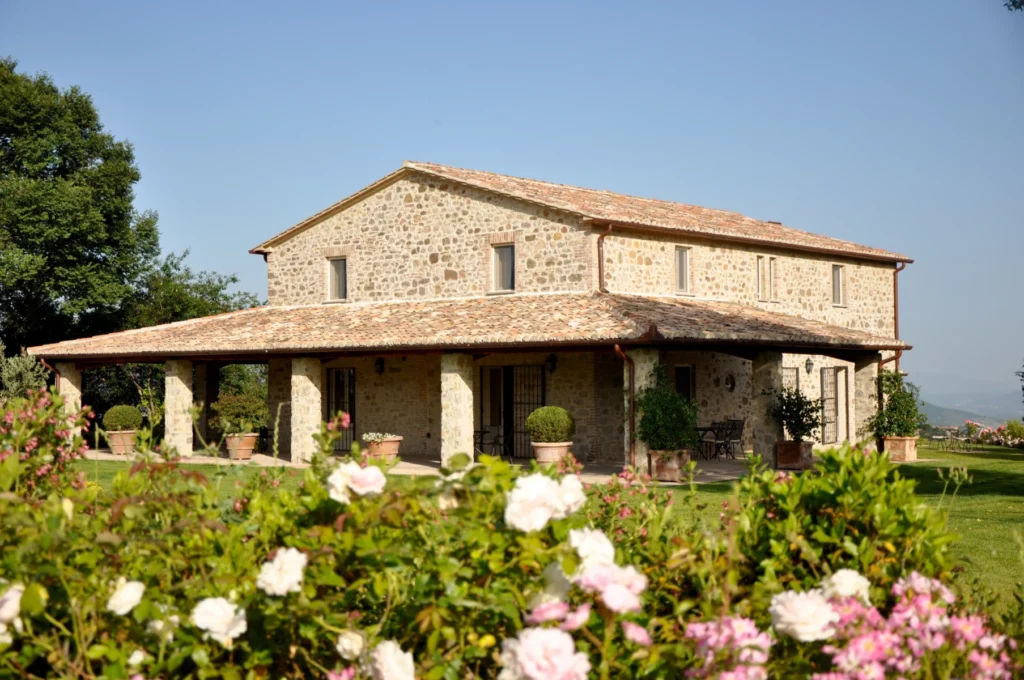
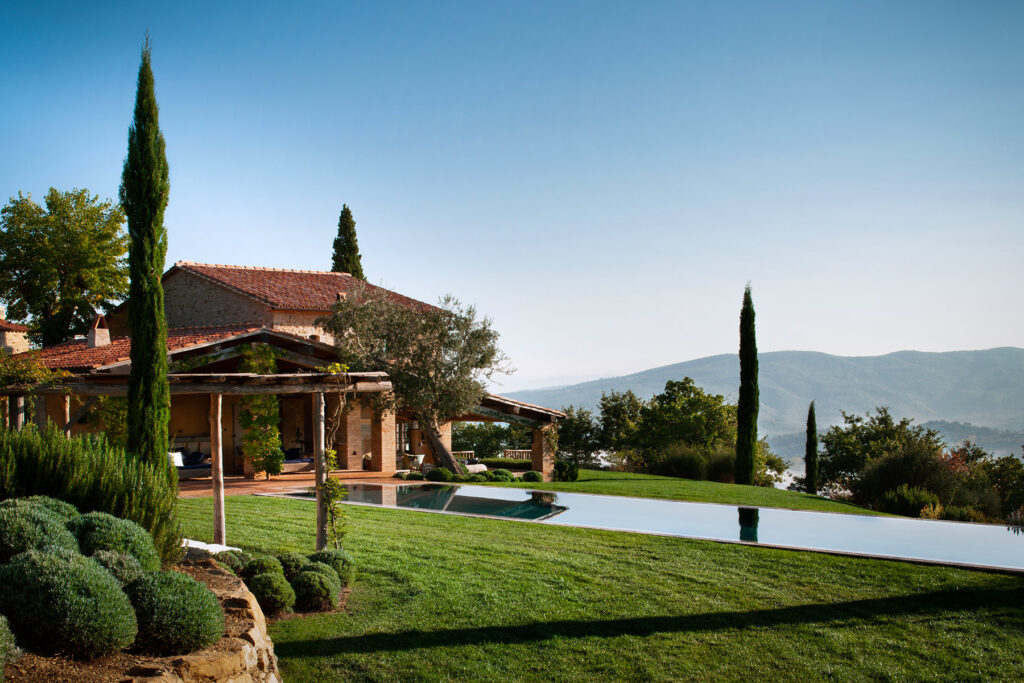
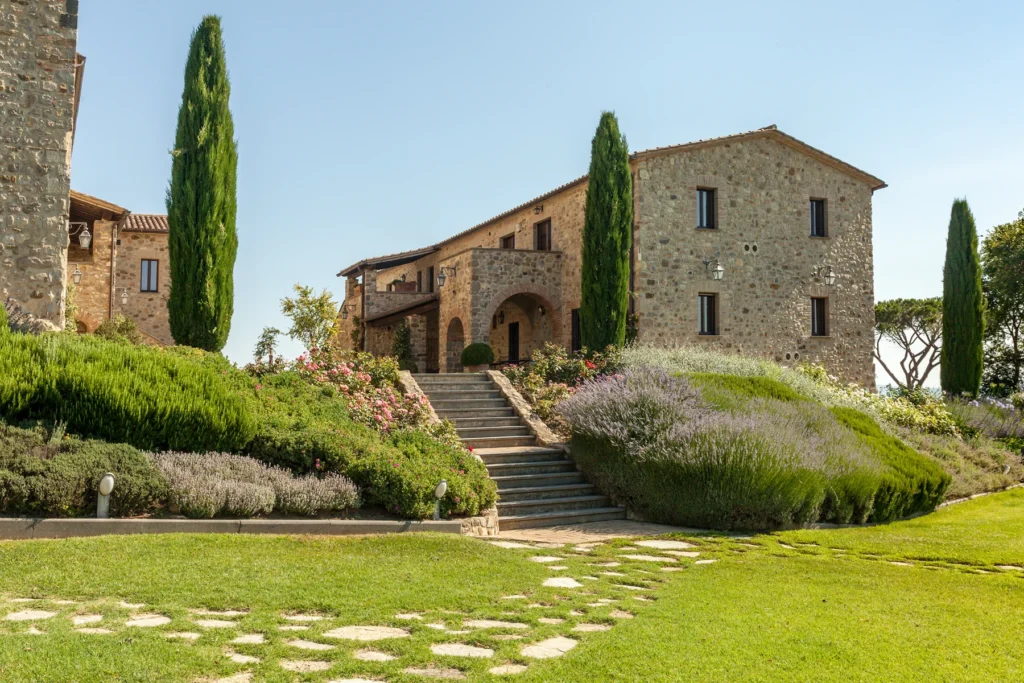
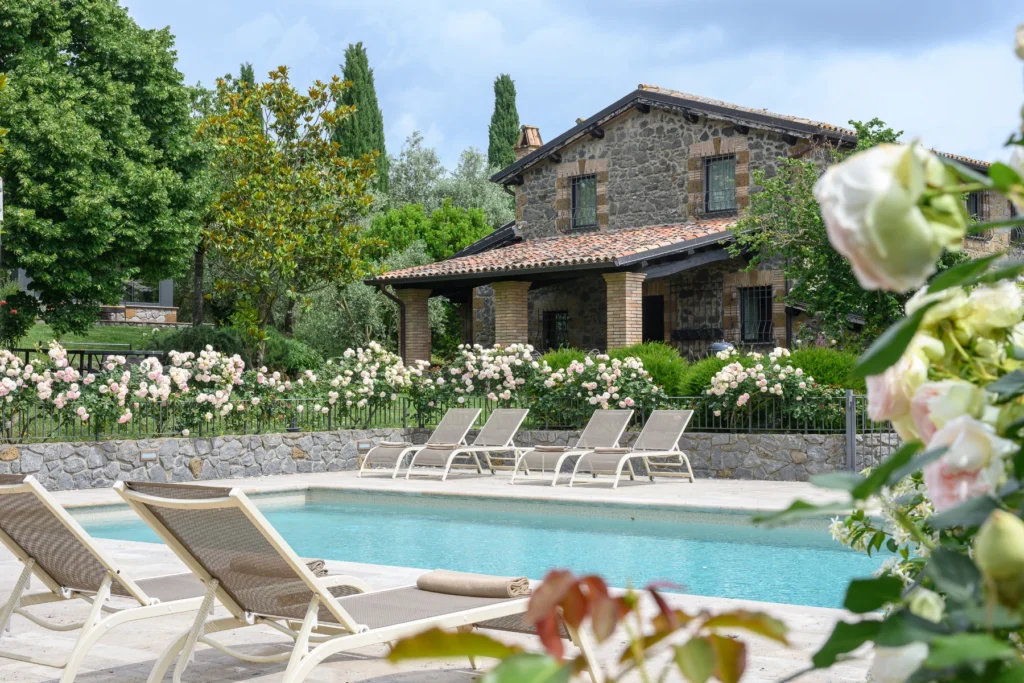
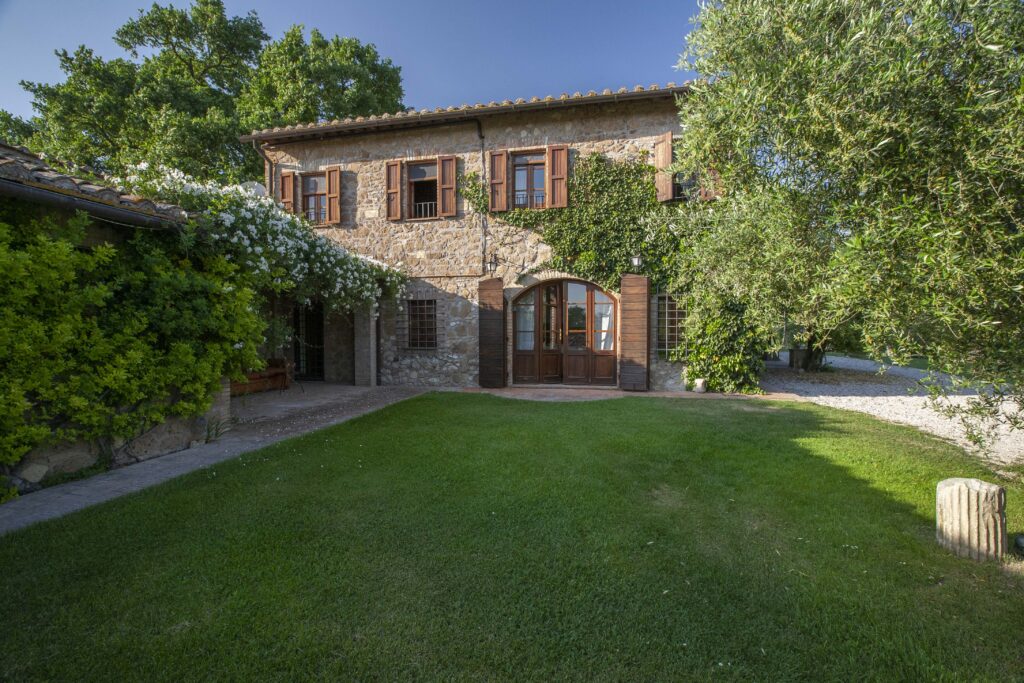
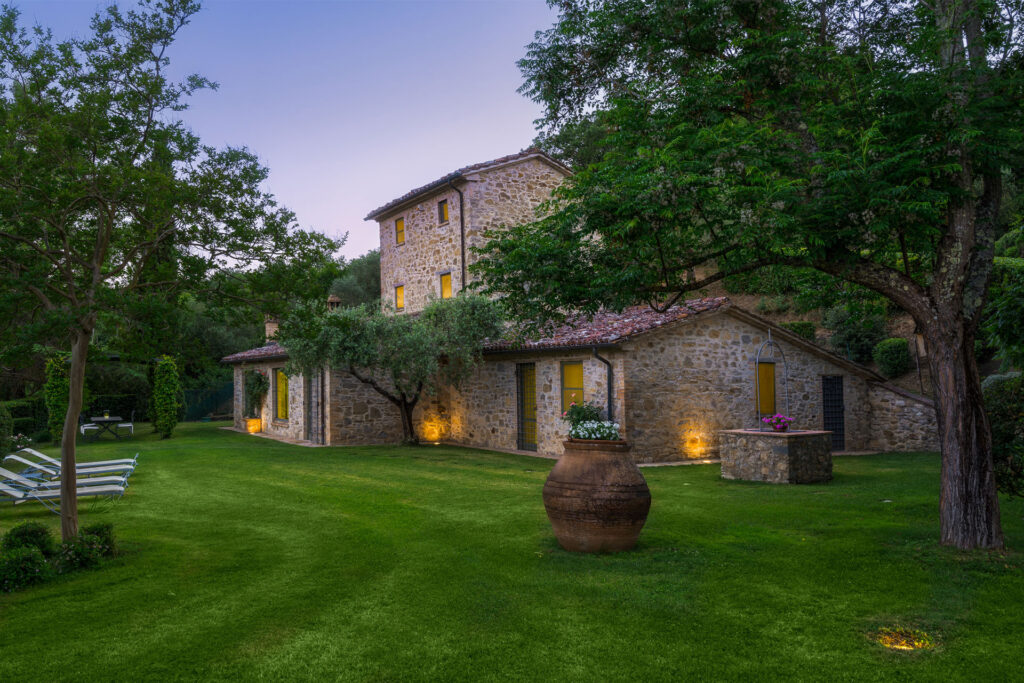
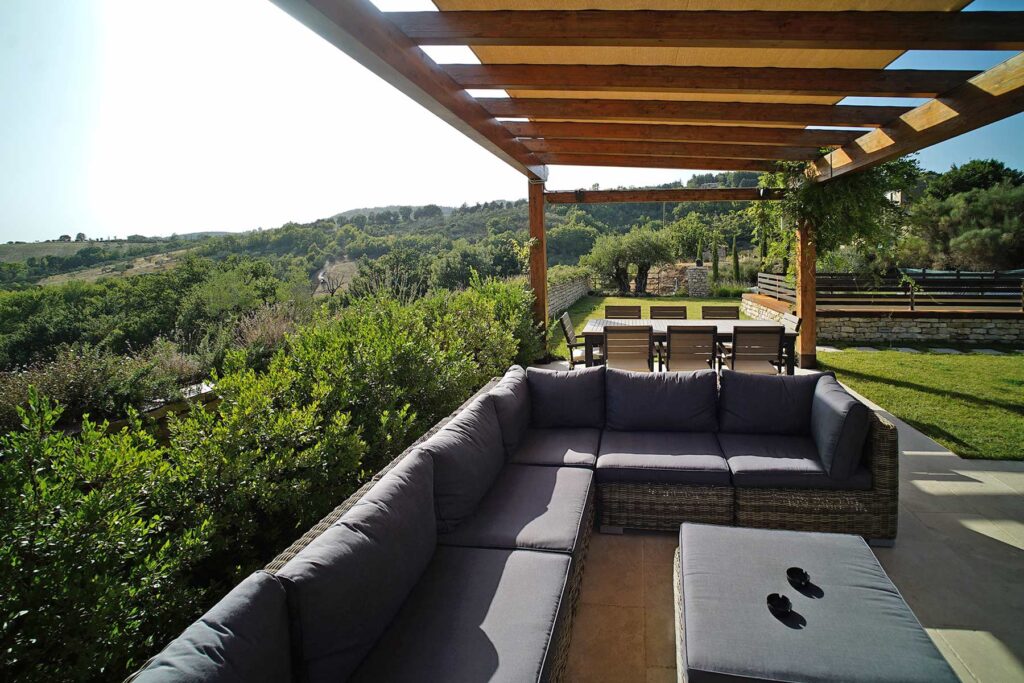
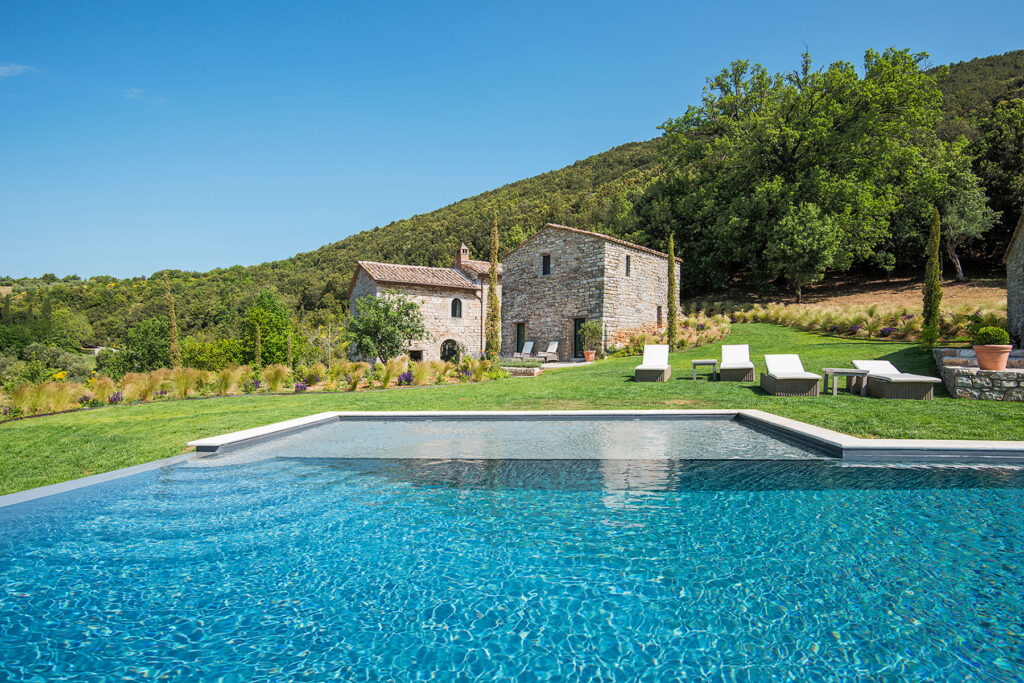
For the villa guest, Umbria means space and silence: restored stone farmhouses and country estates set on hilltops with long views, often with more land and privacy than an equivalent property across the Tuscan border. The region’s central position works in its favour — Rome and Florence are both within about two hours — yet the countryside empties of visitors by dusk.
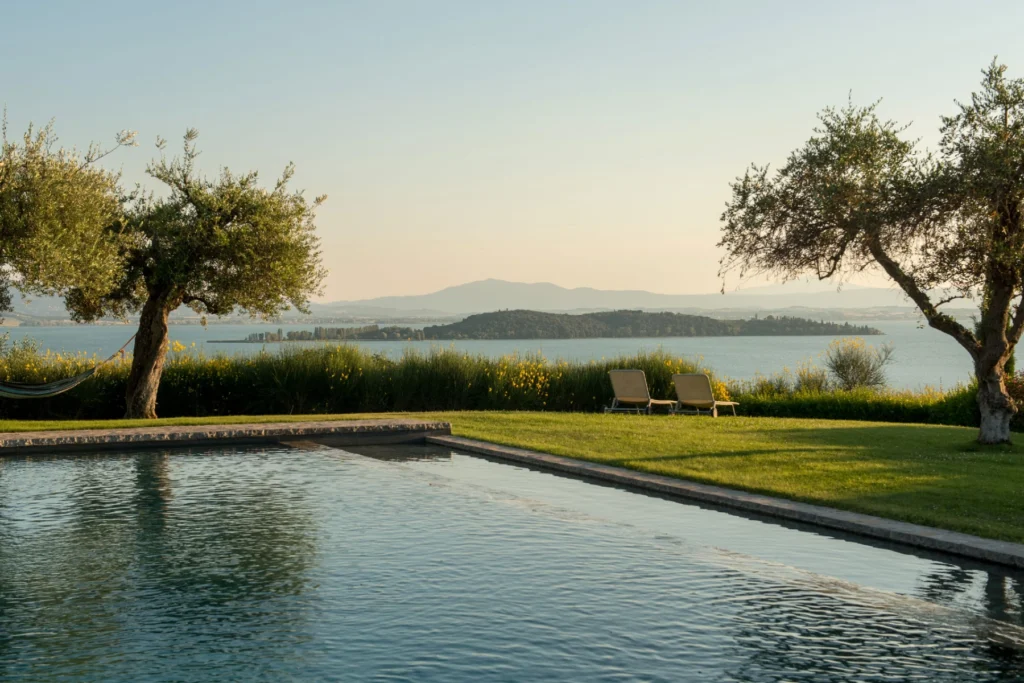
SopranoVillas properties in Umbria concentrate around Lake Trasimeno and the countryside near Orvieto and Todi — areas chosen for their landscape, their access to the region’s main sights, and the quality of the houses themselves.
Umbria is at its best from May to June and again in September, when the days are warm, the hills are green and the towns are comfortable to explore. July and August bring the hottest weather — reliably in the low thirties — which is exactly when a villa with a pool earns its keep; it is also festival season, with Umbria Jazz filling Perugia in mid-July and the Festival dei Due Mondi closing in Spoleto in early July.
Autumn is the connoisseur’s season: the olive harvest begins in October, truffles arrive in the markets and the vineyards around Montefalco turn copper and gold. Winter is quiet and often misty, and many countryside restaurants keep reduced hours between November and Easter.
Rome Fiumicino (FCO) is the most practical gateway for most visitors — southern Umbria is about 90 minutes away by car, Perugia around two hours. Florence airport serves the north of the region at a similar distance, and Perugia’s own San Francesco d’Assisi airport (PEG) offers a handful of low-cost European routes. By train, Orvieto sits on the Rome–Florence main line, about an hour from Rome; Perugia, Assisi and Spoleto are reached on regional lines.
A car is essential for a villa stay: properties are rural and the hill towns are spread across the region. Roads are good and traffic light, but note that most historic centres are ZTL restricted zones — park in the signed lots outside the walls and walk in.
Assisi is the essential visit: the Basilica of St Francis, a UNESCO World Heritage Site, holds Giotto’s fresco cycle on the life of the saint. Orvieto pairs one of Italy’s great cathedral façades with Signorelli’s Last Judgement in the San Brizio chapel — and an entire second city of Etruscan tunnels underground. Perugia, Gubbio, Spoleto and Todi each reward a half day of unhurried walking.
Beyond the towns, boats cross Lake Trasimeno to Isola Maggiore; the Cascata delle Marmore, a Roman-engineered waterfall, thunders on a timetable; and the Piano Grande di Castelluccio offers vast high-plateau walking, famous for its wildflower bloom in June and July. A former railway between Assisi and Spoleto is now one of central Italy’s most pleasant cycling routes.
Umbrian cooking is built on the pig, the truffle and the olive. Norcia gave its name to the norcineria — the pork butcher’s art — and its black truffles appear on strangozzi pasta year-round. The lentils of Castelluccio, the DOP olive oils of the Trevi and Spoleto belt, and porchetta from any weekly market complete the picture.
The region’s flagship wine is Sagrantino di Montefalco, one of Italy’s most structured and age-worthy reds; Orvieto Classico is the historic white, and the Trasimeno hills produce a distinctive local Gamay. Most producers welcome visits with a day’s notice — cellar tours here remain personal, often with the winemaker pouring.
How far is Umbria from Rome and Florence? Orvieto is about an hour from Rome by car or train; Perugia is roughly two hours from both cities. Most villas sit within 30–45 minutes of a main-line station.
Do I need a car? Yes — villas are rural and the sights are spread out. Roads are good and traffic is light; allow extra time on winding secondary roads.
Umbria or Tuscany? The landscapes are comparable; Umbria is quieter, greener and generally better value, while Tuscany offers more famous names and a coastline. Many guests combine the two — Cortona and the Val d’Orcia lie just across the border.
Where is the best base? Lake Trasimeno suits families and first visits; the Orvieto and Todi countryside is best for reaching Rome; the Assisi–Spoleto valley puts the great art towns closest. SopranoVillas can advise based on your itinerary.
San Francesco d'Assisi Recommended
On the doorstep when a route happens to work. Check first: the schedule is thin.
Fiumicino Recommended
The realistic default for most guests, and the only option from the US.
Amerigo Vespucci
Comparable to Rome for northern Umbria and Lake Trasimeno.
Local knowledge Assisi, Spoleto and Todi all restrict traffic around their historic centres.
Journey times are approximate and vary according to the villa location, traffic and local road conditions. Flight routes: Summer 2026. Routes are the one thing here that changes every year, which is why they carry a date and the drive times do not.

Get in touch with us. Tell us dates, guests, and style — we’ll help you find the most suitable villas for your trip to Umbria.
Ask our concierge