



Attraction
Abbey of Sant’Antimo
A Romanesque abbey set among olive groves and vineyards in the Val d’Orcia.
Attraction
A Romanesque abbey set among olive groves and vineyards in the Val d’Orcia.
Attraction
A working Adriatic port city of hilltop monuments, Roman heritage and dramatic coastal viewpoints.
Attraction
A championship golf course set among wooded Umbrian hills beneath a medieval castle.
Attraction
A hilly coastal golf course overlooking the lagoon and landscapes of Monte Argentario.
Attraction
A fortified Maremma village near the coast and Niki de Saint Phalle’s Tarot Garden.
Attraction
A lakeside Lazio village set on a promontory above the clear waters of Lake Bolsena.
Attraction
A tiny Apennine village overlooking the broad plateaux famous for seasonal flowering.
Attraction
A medieval Tuscan hill town overlooking the celebrated landscapes of the Val d’Orcia.
Attraction
A privately managed medieval castle estate in the countryside east of Siena.
Attraction
A UNESCO-listed Etruscan necropolis of monumental tombs cut into the volcanic landscape.
Attraction
A compact Tuscan village beneath Monte Cetona, close to important prehistoric sites.
Attraction
A fragile medieval village perched on a tuff ridge above the Valle dei Calanchi.
Attraction
A Marche coastal city combining Roman remains, Renaissance monuments and an Adriatic seafront.
Attraction
An Umbrian city of medieval streets, civic museums and a central position in the Valle Umbra.
Attraction
A vast limestone cave system explored through guided underground routes in the Marche.
Attraction
A romantic garden where plants, waterways and medieval ruins form an exceptionally atmospheric landscape.
Attraction
A golf course set among the gentle Umbrian hills near Lake Trasimeno.
Attraction
A fortified medieval village dominated by a castle associated with history and Dantean legend.
Attraction
A monumental Umbrian hill town of medieval palaces, stone streets and enduring civic traditions.
Attraction
Emperor Hadrian’s vast Roman villa complex of palaces, gardens, baths and experimental architecture.
Attraction
A volcanic lake in northern Lazio ringed by historic towns, beaches and fertile countryside.
Attraction
A broad Umbrian lake surrounded by islands, historic towns and gentle countryside.
Attraction
A walled medieval town among olive groves and vineyards in the Tuscan Maremma.
Attraction
A medieval Maremma town overlooking the countryside between Saturnia and the Tuscan coast.
Attraction
A wooded Umbrian mountain landscape closely connected with Assisi and Franciscan history.
Attraction
A Renaissance hill town renowned for Vino Nobile and panoramic views across southern Tuscany.
Attraction
A small Sienese village enclosed by a complete medieval ring of walls and towers.
Attraction
An extinct volcanic mountain covered by beech and chestnut forests in southern Tuscany.
Attraction
A walled Umbrian hill town of stone streets, springs and wide Apennine views.
Attraction
A lagoon town linking the Tuscan mainland with Monte Argentario and its coastal nature reserves.
Attraction
Umbria’s regional capital, rich in Etruscan remains, medieval streets and important art collections.
Attraction
An Adriatic city where Rossini’s musical heritage meets museums, beaches and a walkable centre.
Attraction
A striking hill town built on volcanic tuff, with a historic Jewish quarter and nearby Vie Cave.
Attraction
A historic harbour beneath Spanish fortresses on the Monte Argentario peninsula.
Attraction
Monte Argentario’s principal port, shaped by fishing, ferries and a busy Mediterranean waterfront.
Attraction
A dramatic tuff-built town of fortifications, steep lanes and ancient rock-cut routes.
Attraction
A compact medieval village beside an important landscape of Etruscan tombs and rock-cut roads.
Attraction
An Umbrian hill city known for its cathedral, hilltop fortress and major performing-arts festival.
Attraction
A fortified harbour village overlooking the Maremma coast and the Gulf of Argentario.
Attraction
Niki de Saint Phalle’s monumental sculpture garden of mosaics, mirrors and vivid symbolic forms.
Attraction
A compact Umbrian hill town of medieval palaces, churches and expansive valley views.
Attraction
A Lazio hill town distinguished by Romanesque churches and a rich Etruscan heritage.
Attraction
The world’s smallest independent state, home to major religious monuments and art collections.
Attraction
A quiet mountain village surrounded by springs, woodland and the upper slopes of Monte Amiata.
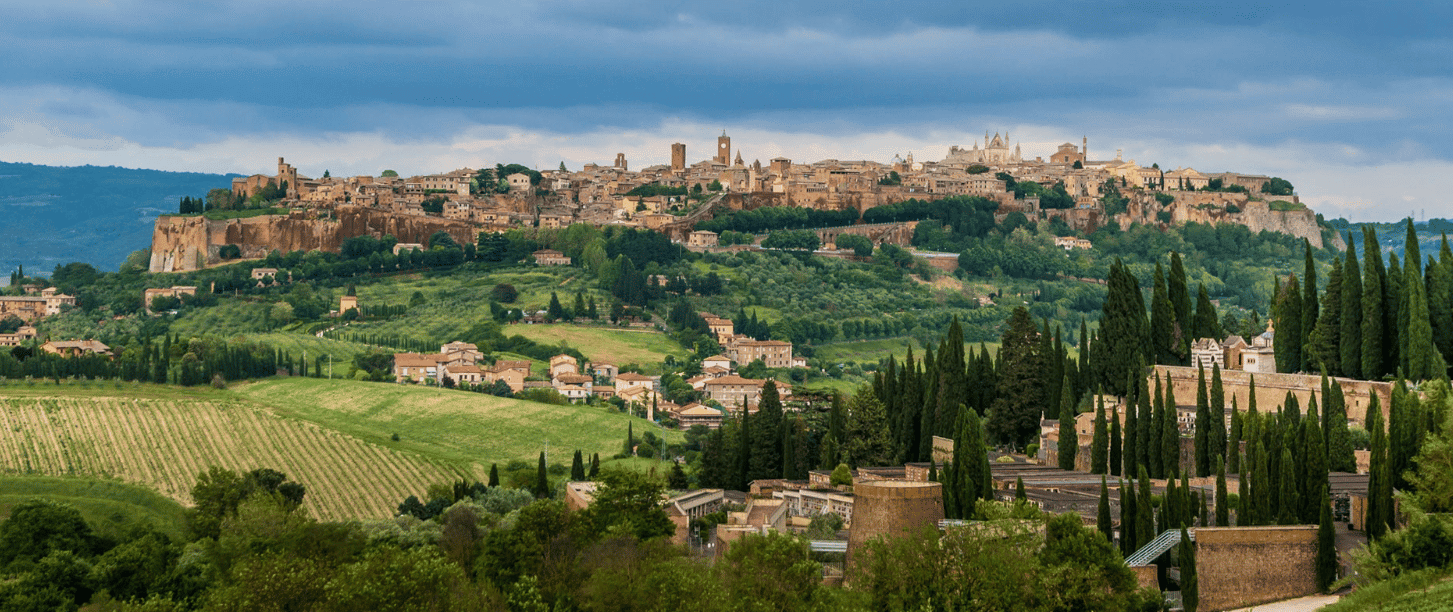
Perched on its volcanic tufa rock above the Umbrian plain, Orvieto offers something increasingly rare in central Italy — a medieval city of the first order with a fraction of the crowds.
Orvieto stands on a dramatic plateau of tufa rock rising 325 metres above the surrounding countryside — a position that has made it one of central Italy’s most visually arresting destinations since the Etruscans established their city here in the 9th century BC. The cathedral, begun in 1290, is widely considered the finest Gothic facade in Italy: a golden mosaic frontage that catches the afternoon light with extraordinary effect. The city’s Etruscan heritage runs literally underground — a labyrinth of tunnels, cellars and cisterns carved directly into the tufa beneath the streets. For the villa guest based in Umbria or northern Lazio, Orvieto functions both as a compelling day-trip destination and as a practical hub with a direct high-speed rail link to Rome.
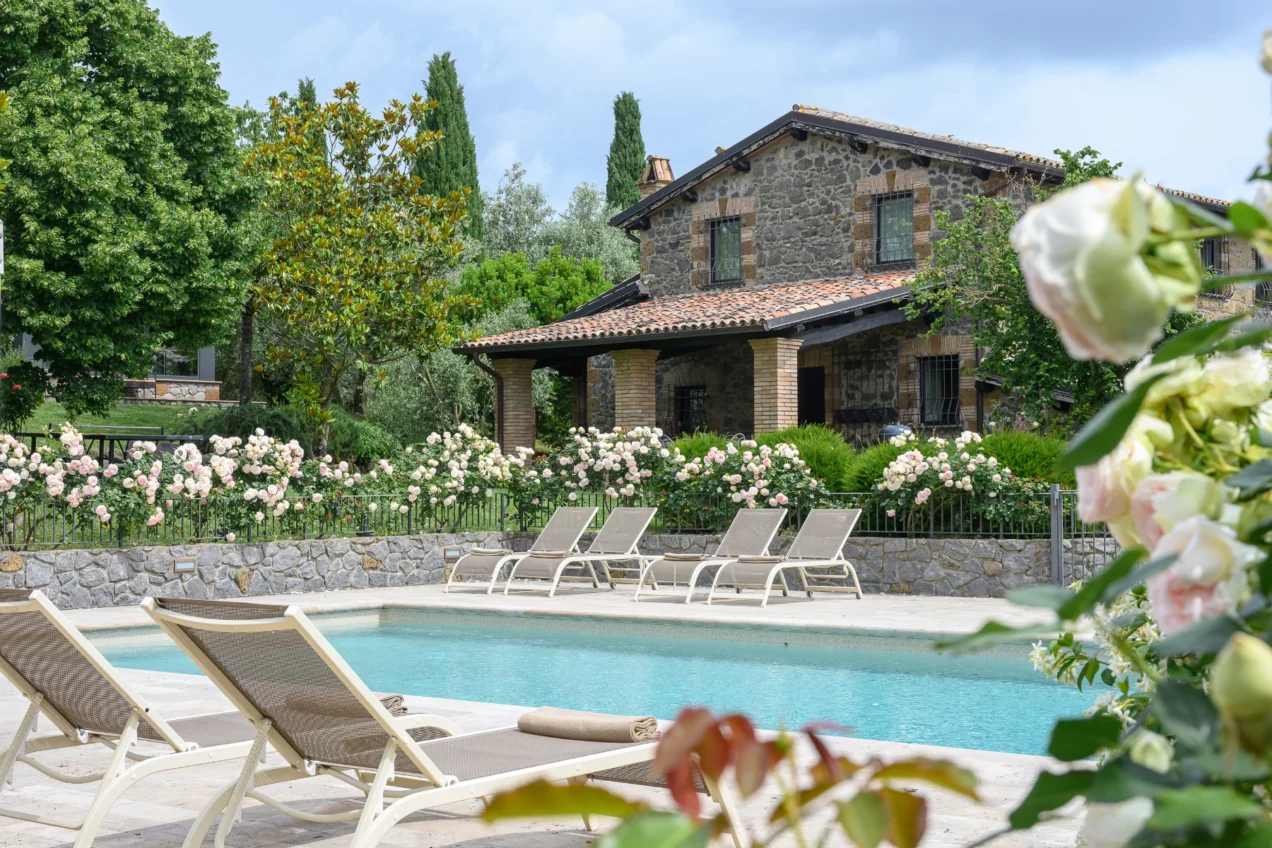
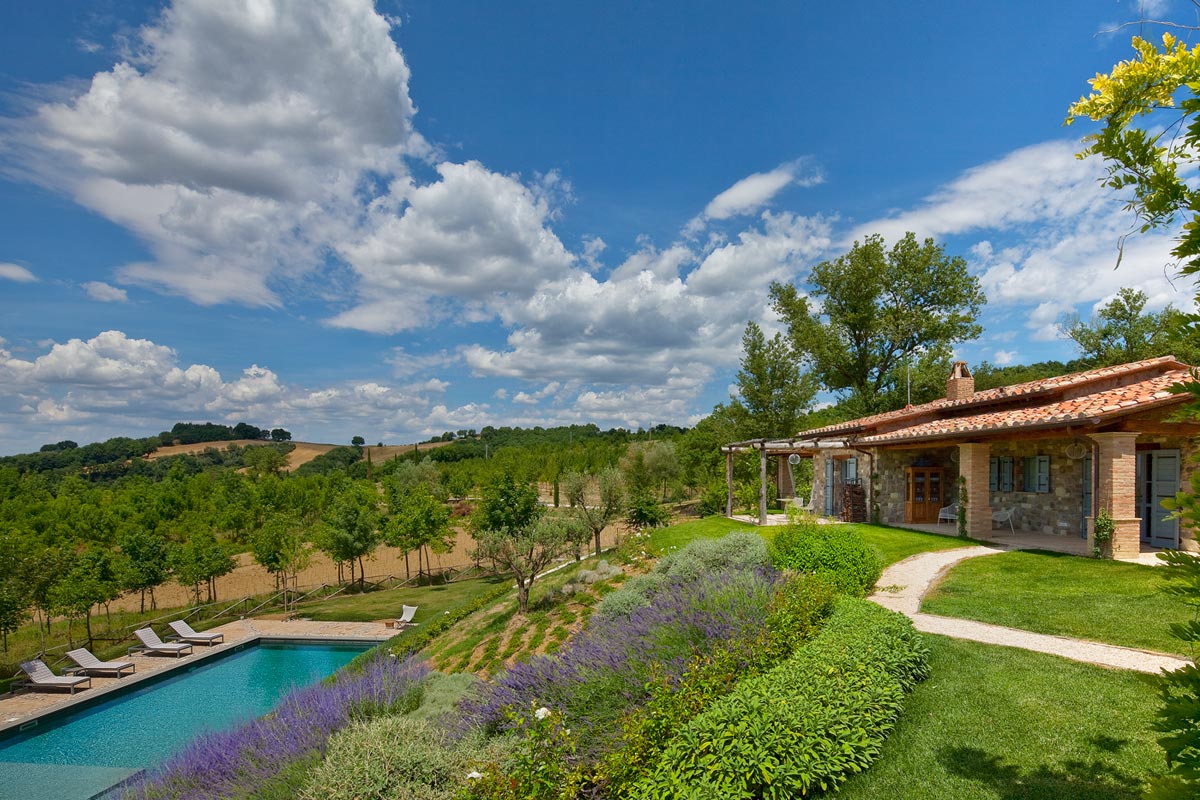
SopranoVillas properties in the Orvieto area occupy the agricultural countryside of the southern Umbria and northern Lazio border zone — a landscape of vineyards, olive groves, and medieval hill towns little touched by mass tourism. The region produces Orvieto Classico, one of central Italy’s oldest and most distinctive white wines; guests staying nearby have the opportunity to visit producers and taste directly from the barrel in cantinas that welcome advance bookings. The combination of world-class medieval art, Etruscan history, exceptional local wine, and genuine tranquillity makes this one of the most underrated villa destinations in Italy.
Orvieto is a year-round destination, though spring (April–June) and autumn (September–October) offer the most pleasant conditions for exploring the city on foot. Summer temperatures in Umbria can be intense in July and August, though the altitude of the tufa plateau provides some relief compared to the surrounding plain. The Umbria Jazz Winter festival brings world-class music to the city between Christmas and New Year — an increasingly popular reason to visit in the quieter months.
The Orvieto area’s wine harvest runs through September and October, making autumn an excellent time to visit local producers. Spring sees the Etruscan Necropolis gardens in full bloom and the cathedral’s mosaics at their most luminous in the clear light. The city is busy but never overwhelmed — even in peak season it retains an authentic civic life that the most visited Tuscan towns have long lost.
Orvieto is exceptionally well connected by rail: it lies on the main Rome–Florence high-speed line, with regular services placing it 75 minutes from Roma Termini and 90 minutes from Florence Santa Maria Novella. The station sits at the base of the rock; a funicular connects it to the old town in three minutes. By car from Rome, allow 90 minutes via the A1 autostrada; from Florence around 2 hours.
The nearest airports are Rome Fiumicino (FCO), approximately 90 minutes by car, and Rome Ciampino (CIA), 80 minutes. Perugia Airport (PEG) serves a handful of European routes and is 75 minutes away. For villa guests based in the surrounding countryside, a car is essential — the area’s farmhouses and estate properties are typically reached by country roads not served by public transport. Orvieto itself is best explored on foot; electric minibuses serve the main streets within the city walls.
The Duomo di Orvieto demands unhurried time: the golden mosaic facade and Lorenzo Maitani’s bas-relief panels on the exterior pilasters rank among the supreme achievements of Italian Gothic art. Inside, the Cappella di San Brizio contains a cycle of frescoes by Luca Signorelli (1499–1502) that directly influenced Michelangelo’s Sistine Chapel ceiling. The Orvieto Underground tour explores the Etruscan and medieval tunnel system beneath the city — over 1,200 caves, wells and galleries carved into the tufa over 2,500 years.
The Necropoli Etrusca del Crocifisso del Tufo, just outside the city walls, preserves a 6th-century BC Etruscan cemetery in remarkable condition. The Museo Faina displays one of Italy’s finest collections of Etruscan artefacts. The surrounding countryside rewards exploration: the lake of Bolsena lies 30 minutes south; the thermal baths of Saturnia are 90 minutes; Civita di Bagnoregio — the “dying city” on its eroding tufa pinnacle — is 40 minutes away.
Orvieto Classico, the DOC white wine produced from the volcanic soils of the surrounding hills, has been made here since Etruscan times — one of the longest continuous wine-producing traditions in Italy. The local style ranges from crisp, mineral-driven whites for summer drinking to the rare muffa nobile (noble rot) dessert wines produced in exceptional vintages. Local producers including Barberani, Palazzone and Decugnano dei Barbi welcome visitors by appointment.
Umbrian cuisine in this corner of the region draws on both the local larder and the influence of nearby Lazio: cinghiale (wild boar) in various forms, black truffle from nearby Norcia, porchetta from the Castelli Romani tradition, and the freshwater fish of Lake Bolsena — coregone, anguilla and pike — in preparations unchanged for centuries. The weekly market in Piazza del Popolo on Thursday and Saturday mornings is a reliable source of local cheese, cured meats and seasonal produce.
How close is Orvieto to Rome? Approximately 90 minutes by car or 75 minutes by high-speed train — close enough for a day trip to Rome from an Orvieto-area villa, or vice versa.
Is Orvieto suitable as a base for exploring Tuscany and Umbria? Yes — its position on the Umbria–Lazio border places it within 90 minutes of Siena, 2 hours of Florence, 60 minutes of Perugia, and 45 minutes of the southern Val d’Orcia. It is one of the most central bases in central Italy.
What makes Orvieto different from other Umbrian cities? Its Etruscan heritage is deeper and better preserved than most, its cathedral is arguably the finest in Umbria, and its visitor numbers remain far below those of Assisi or Perugia. It offers the cultural weight of a major medieval city with the atmosphere of a provincial town.
Can I visit truffle markets from Orvieto? The Norcia truffle market is approximately 2 hours away; the truffle fair in Città di Castello runs in October. Local restaurants use black truffle from the Umbrian hills throughout the year.
San Francesco d'Assisi Recommended
On the doorstep when a route happens to work. Check first: the schedule is thin.
Fiumicino Recommended
The realistic default for most guests, and the only option from the US.
Amerigo Vespucci
Comparable to Rome for northern Umbria and Lake Trasimeno.
Local knowledge Assisi, Spoleto and Todi all restrict traffic around their historic centres.
Journey times are approximate and vary according to the villa location, traffic and local road conditions. Flight routes: Summer 2026. Routes are the one thing here that changes every year, which is why they carry a date and the drive times do not.
Get in touch with us. Tell us dates, guests, and style — we’ll help you find and the most suitable villas for your trip to Orvieto.
Ask our concierge