



Attraction
Capelli di Venere Waterfall
A delicate waterfall framed by maidenhair fern in the protected Cilento landscape.
Attraction
A delicate waterfall framed by maidenhair fern in the protected Cilento landscape.
Attraction
A monumental Carthusian monastery known for its vast cloister and richly layered architecture.
Attraction
A Puglian town between the Adriatic coast, ancient olive groves and the hills of the Valle d’Itria.
Attraction
A WWF-managed wetland reserve protecting coastal habitats and migratory birdlife near Lecce.
Attraction
A Salento city celebrated for exuberant limestone Baroque architecture and Roman remains.
Attraction
A whitewashed Valle d’Itria town known for stone courtyards, rural traditions and local cuisine.
Attraction
Puglia’s hilltop White City, a maze of limewashed lanes overlooking ancient olive groves.
Attraction
A guided cave system where an underground river forms part of the visitor route.
Attraction
A Salento coastal town surrounded by sandy beaches and a protected marine environment.
Attraction
A protected Ionian landscape of pine forest, rocky paths and a clear-water bay.
Attraction
A scenic Ionian beach of rocky coves and clear water south of Gallipoli.
Attraction
A long stretch of pale sand and shallow Ionian water in northern Salento.
Attraction
A sheltered Gargano bay near Peschici, framed by rocky headlands and Mediterranean vegetation.
Attraction
A ceremonial coastal town at the southern tip of Salento, marked by a lighthouse and sea caves.
Attraction
A relaxed Adriatic seaside district with beaches, holiday homes and access to the Brindisi coast.
Attraction
A Salento village where Griko heritage and local Baroque architecture remain visible.
Attraction
A broad sandy beach on the Ionian coast within the Porto Cesareo area.
Attraction
A sequence of rocky coves and small beaches along Puglia’s Adriatic coast.
Attraction
A small Adriatic seaside village centred on beaches and a distinctive coastal watchtower.
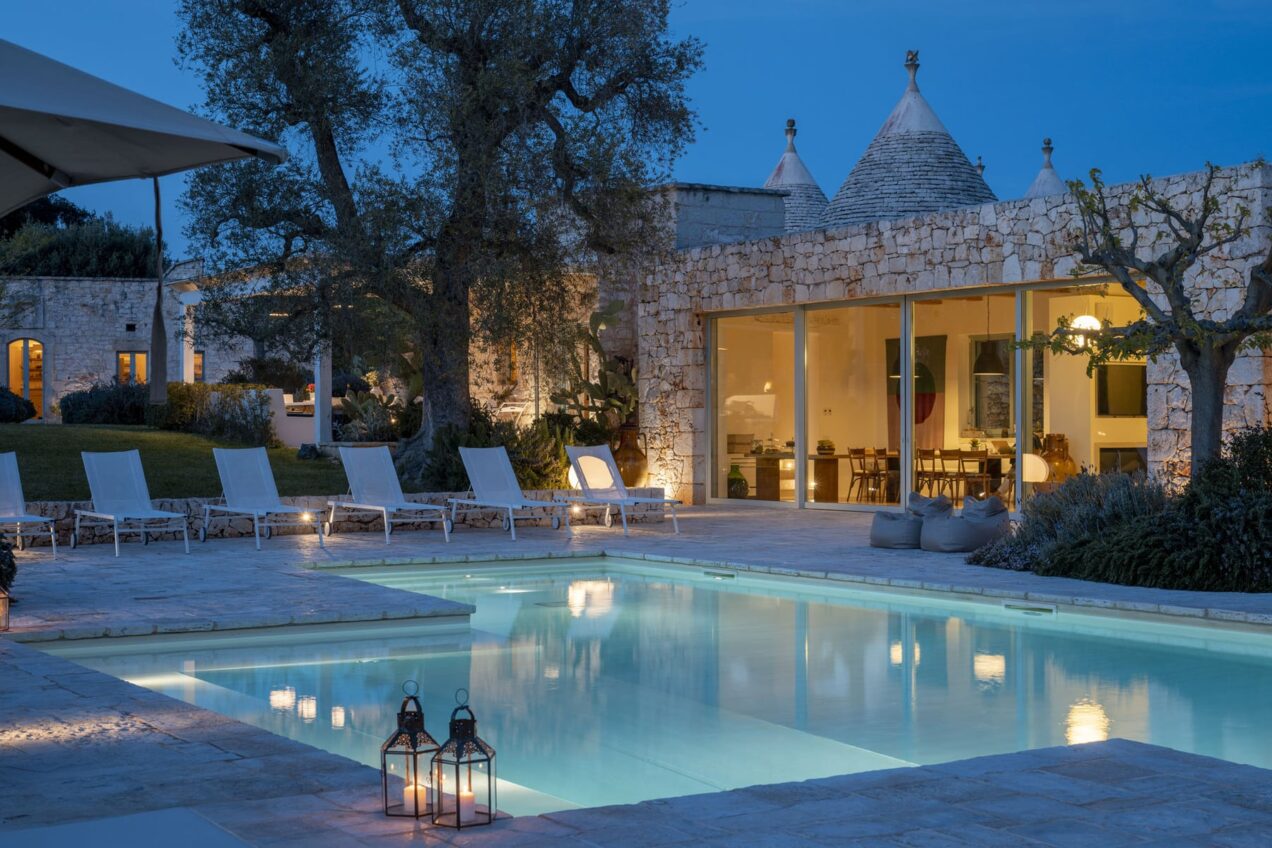
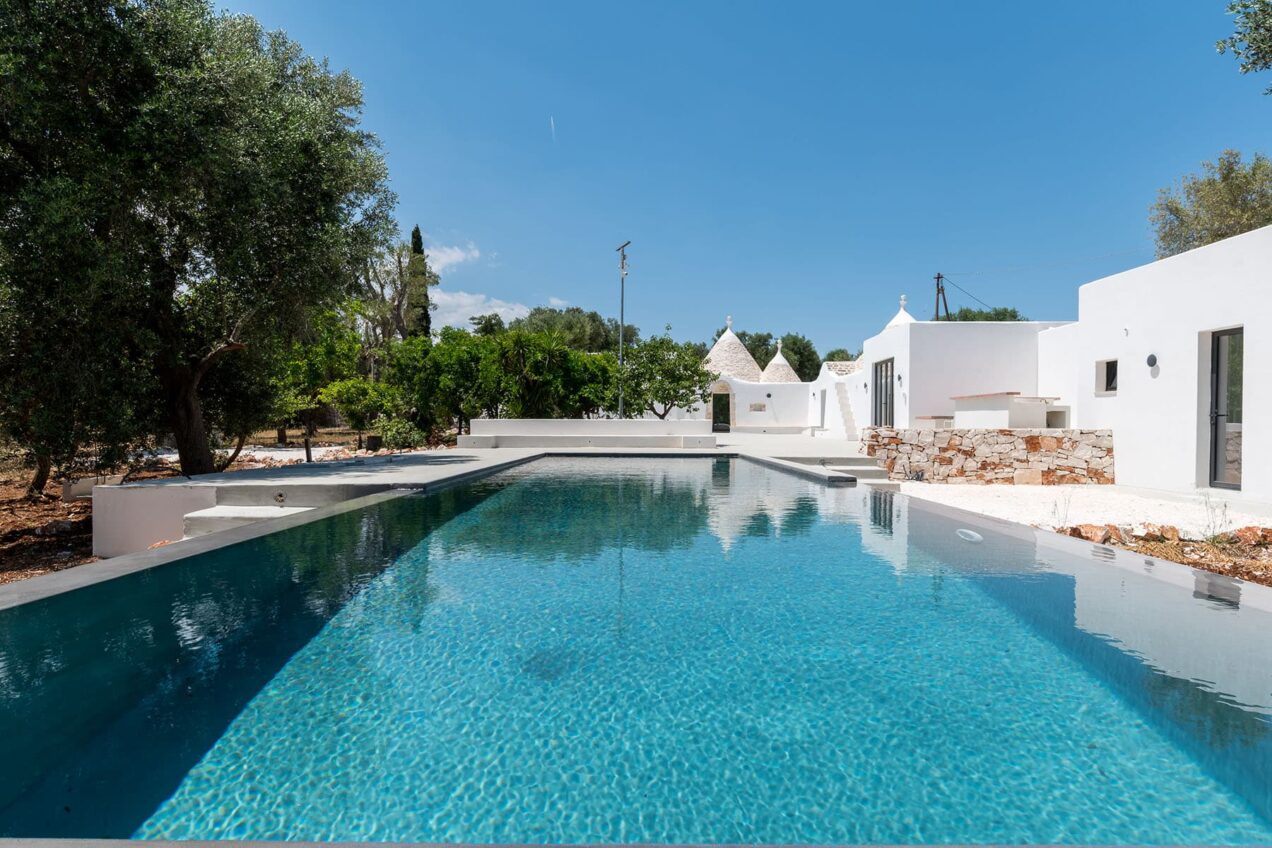
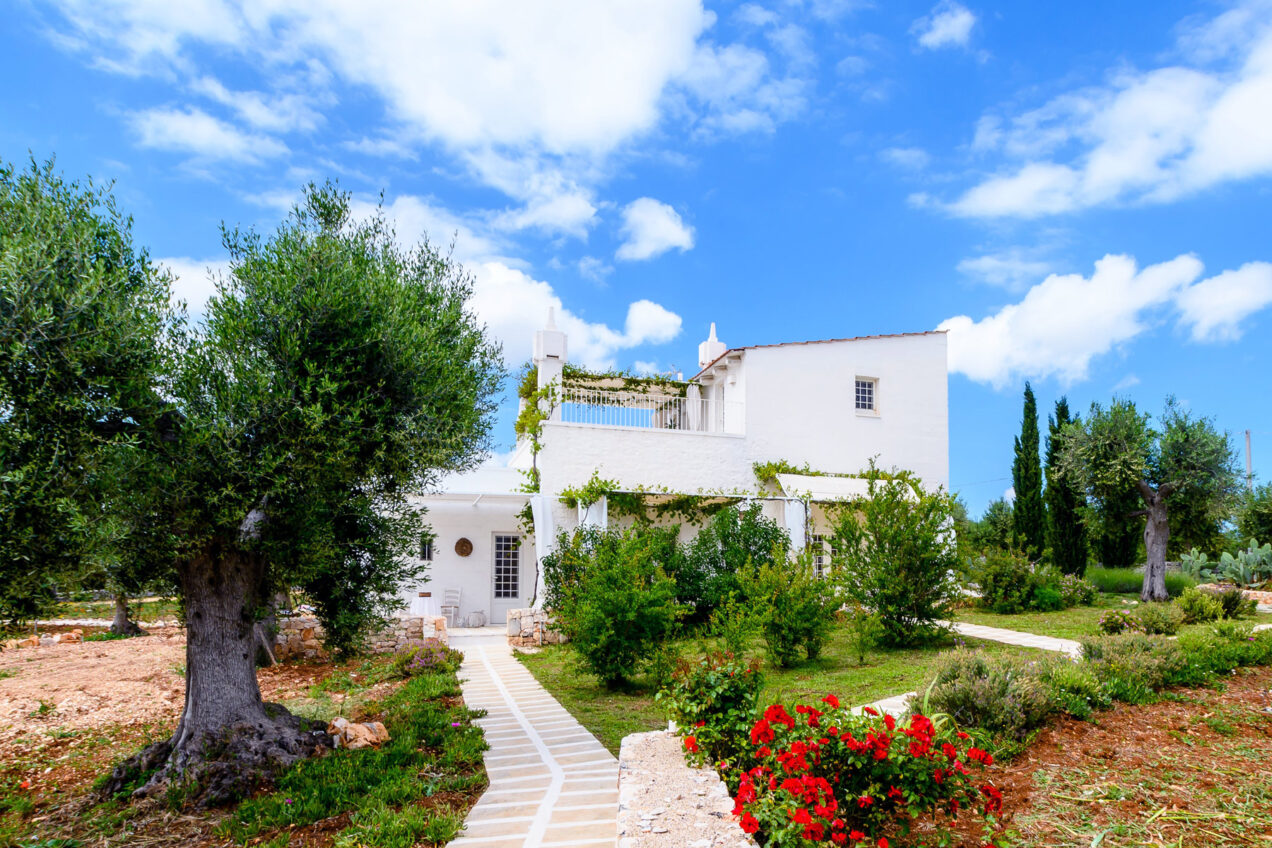
The trullo heartland of Puglia — a plateau of pale limestone, dry-stone walls and the iconic whitewashed conical dwellings that make the Valle d’Itria one of the most distinctive landscapes in Italy.
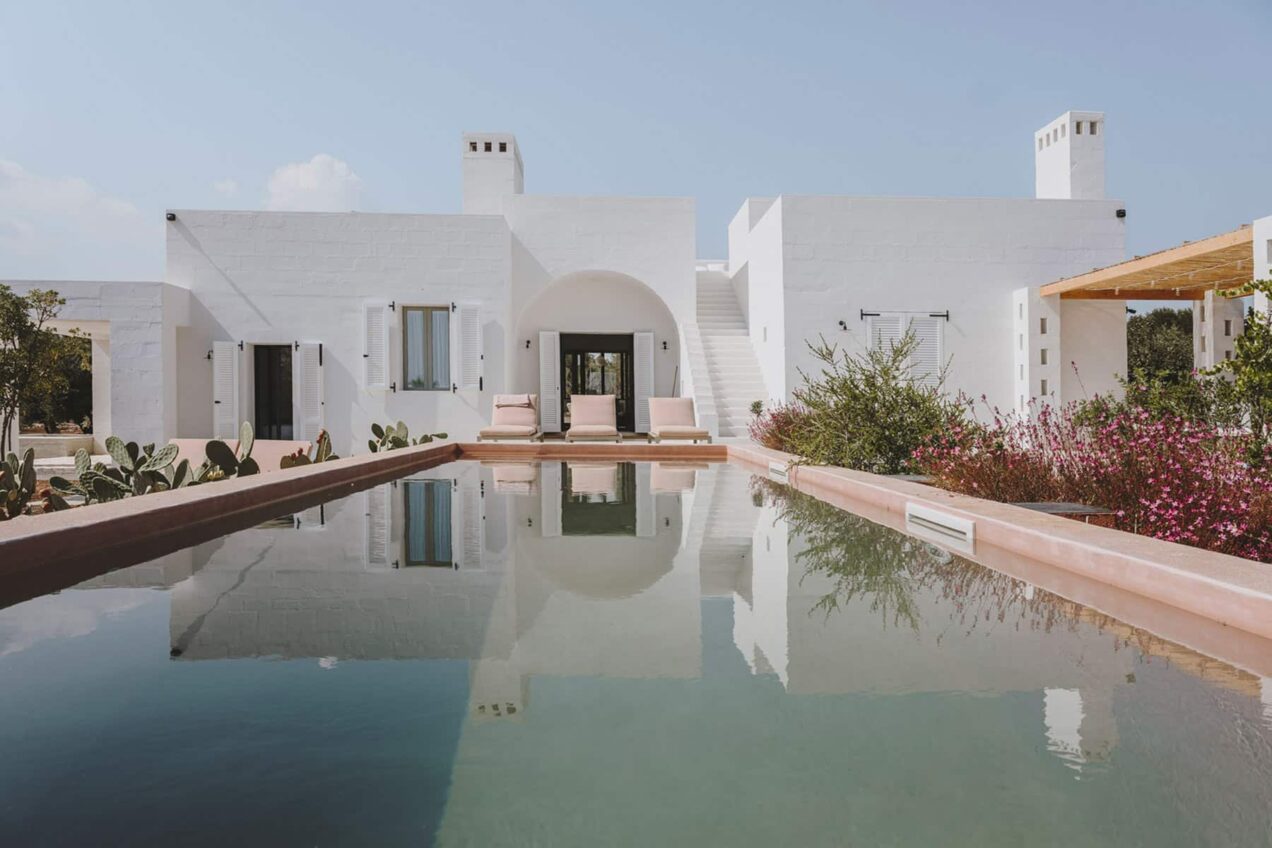
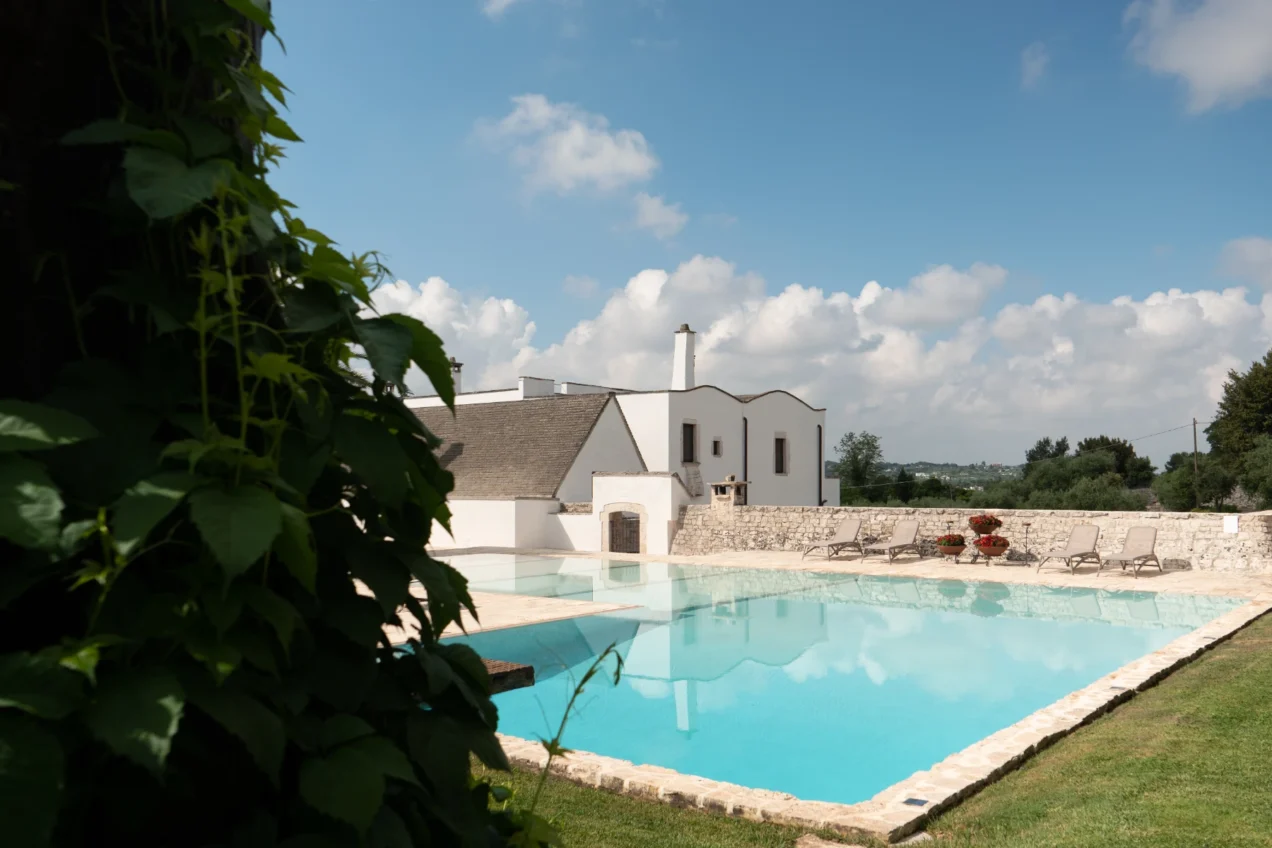
The Valle d’Itria occupies the upland plateau of the Murge in central Puglia, centred on the three white towns of Alberobello, Locorotondo and Cisternino and stretching east towards Martina Franca and Ostuni. Its defining feature is the trullo — a dry-stone dwelling with a conical roof of corbelled limestone slabs, built without mortar in a technique unique to this territory. Several thousand survive in working use; the finest concentration, at Alberobello, is a UNESCO World Heritage Site. For villa guests, the Valle d’Itria offers something genuinely unlike anywhere else in Italy: whitewashed masserie (fortified farmhouses) and restored trulli complexes in a landscape of olive groves, vineyards and wild orchids, with the Adriatic coast 30 minutes to the east.
The Valle d’Itria sits at the productive intersection of two of Puglia’s finest food and wine cultures. The Primitivo and Negroamaro grapes that define southern Puglia are grown here alongside the native Verdeca for white wines, and the local food — orecchiette with turnip tops, braised lampascioni (wild hyacinth bulbs), burrata made fresh daily in Andria — is among the most authentic in the south. A masseria or trullo complex here is the ideal base for guests who want the full Puglia experience: sea, culture, wine and cooking, without the package-holiday crowds of the Salento peninsula.
The Valle d’Itria is best visited in May, June and September. Late spring brings the plateau to vivid life — the limestone is softened by wildflowers, the olive groves are bright green, and temperatures (20–26 °C) are ideal for exploring the trullo villages and the masseria farmhouses without the mid-summer heat. June is the last comfortable month before the intense Pugliese summer sets in, and the evenings are long enough for dinner outdoors until 10 pm.
September is arguably the finest month: the grape harvest begins in the Itria Valley and the Salento, the summer crowds have thinned, sea temperatures on the Adriatic coast (30 minutes east) remain warm from summer, and the food markets in Alberobello and Martina Franca are at their most abundant. July and August are hot (32–38 °C) but the masserie are built for the heat — thick stone walls, shaded courtyards and private pools make villa life perfectly comfortable. The Valle d’Itria at this time has a lively social scene in the trullo towns and good restaurants open late into the night. Winter (November–March) is mild, quiet and ideal for those interested in cooking courses, olive oil production and the extraordinary Carnival of Putignano — one of the oldest and most elaborate in Italy, running from December through February.
The Valle d’Itria is most conveniently reached via Bari Karol Wojtyła (BRI), about 60–80 km north, which handles direct flights from most major European cities and connects to Rome and Milan. Brindisi (BDS) to the south-east is a closer option for guests focusing on the Salento or the eastern Valle d’Itria, with a growing number of European connections. Transfer time from Bari to Alberobello or Locorotondo is about 60–75 minutes; from Brindisi, approximately 45–60 minutes. A private chauffeur transfer is the most comfortable arrival — the drive through the olive groves and the first sight of trullo rooftops dotting the plateau is a memorable introduction to the territory.
A car is essential for exploring the Valle d’Itria. The trullo villages, the masserie, the coastal beaches of Fasano and Monopoli, and the wine estates of the Primitivo and Locorotondo DOC zones are all spread across a network of minor roads through the olive groves that rewards unhurried exploration. The Fasano–Alberobello–Martina Franca triangle forms the core of the area and is easily navigated. For day trips to Lecce (90 minutes south), Matera (90 minutes west) or Bari (60 minutes north), the SS16 and E55 motorways provide fast connections.
Alberobello, the UNESCO World Heritage trullo town, is the obvious starting point — its Rione Monti and Rione Aia Piccola districts concentrate over a thousand trulli on narrow stone lanes, creating a landscape that feels genuinely prehistoric despite the gift shops at ground level. Visit at dawn or in the evening to see it without the day-trippers. Locorotondo, on a circular hilltop above the valley, is one of the most perfectly preserved white towns in Puglia — its circular layout of whitewashed facades and external staircases visible for miles from the plateau below. Martina Franca is larger and more sophisticated, with a handsome Baroque centre, a summer opera festival (Festival della Valle d’Itria, July–August) of international standing, and excellent restaurants and food shops.
The Fasano Zoo Safari and the nearby Gnathia archaeological site are worthwhile family excursions. The coast at Polignano a Mare — a dramatic cliff-town above sea caves, 40 km north — is one of the most photographed locations in Puglia and worth a half-day visit. The UNESCO Sassi of Matera, the ancient cave-city carved into a ravine in neighbouring Basilicata, is about 90 minutes west and makes an exceptional full-day excursion — the new Musma sculpture museum and the cave churches of the Murgia Park are highlights alongside the famous Sassi neighbourhoods themselves.
The Valle d’Itria sits at the centre of one of Italy’s most compelling food cultures. Orecchiette con le cime di rapa — the ear-shaped pasta with bitter turnip tops, garlic and anchovy — is the emblematic dish of Puglia and is made daily in every good trattoria in the valley. Burrata from Andria (30 km north) is arguably the world’s finest fresh cheese — the outer shell of mozzarella encasing a heart of stracciatella and cream that must be eaten within 24 hours of production; many masserie receive it directly from the dairy each morning. Lampascioni (wild hyacinth bulbs, bitter and caramelised in olive oil), fava bean purée with cicory, and the extraordinary local focaccia (focaccia barese with tomatoes, olives and dried oregano) round out a food culture of real depth.
The valley’s wines are experiencing a serious quality revolution. Locorotondo DOC white wine — from Verdeca and Bianco d’Alessano — is a crisp, mineral white well-suited to the local seafood. The valley sits near the northern edge of the Primitivo di Manduria DOC zone, which produces rich, sun-baked reds of considerable power; the best estates — Gianfranco Fino (producer of the celebrated Es), Pervini and Felline — accept private visits by appointment. The local extra virgin olive oil, pressed from centuries-old Ogliarola and Coratina trees in November, is superlative and available directly from masserie throughout the valley.
What exactly is a trullo, and can we stay in one?
A trullo is a dry-stone dwelling with a conical roof built from corbelled limestone slabs without mortar, using a construction technique unique to the Murge plateau of Puglia. They were originally agricultural structures and modest homes; many have been extensively restored as luxury accommodation. Staying in a trullo complex — several interconnected cones forming a suite of rooms around a shared outdoor space — is one of the more memorable accommodation experiences in Italy. Our trullo properties combine the architectural experience with the comfort levels expected by our guests.
How far is the Valle d’Itria from the sea?
The Adriatic coast is approximately 25–35 km east of the valley centre, depending on your specific villa location — about 30–40 minutes by car. The beaches at Monopoli, Fasano (Torre Canne), Savelletri and Polignano a Mare are the most accessible; Savelletri in particular has excellent seafood restaurants directly on a small working harbour. The Ionian coast to the south-west (Taranto, the Salento) is 60–90 minutes.
Is the Valle d’Itria suitable for a multi-generational family group?
Ideally so. The masseria format — a large farmhouse estate with multiple accommodation units, a shared pool, extensive grounds and often on-site restaurant or catering — is perfectly designed for large groups. Children enjoy the farm animals, the trullo architecture and the easy coastal access; adults have wine, food and cultural excursions. Several of our larger masserie accommodate 15–25 guests across interconnected buildings with complete privacy.
Salento Recommended
The closest, and pleasantly small. UK routes are summer-only, so check the calendar before confirming the villa.
Karol Wojtyła Recommended
Thirty minutes further, but flying year-round with far more choice. Usually the better answer outside July and August.
Capodichino
Only worth it when combining Puglia with the Amalfi Coast, or flying direct from the US in summer.
Local knowledge Distances between the white towns are short, but the lanes are narrow and unlit. A smaller car is a real advantage here.
Journey times are approximate and vary according to the villa location, traffic and local road conditions. Flight routes: Summer 2026. Routes are the one thing here that changes every year, which is why they carry a date and the drive times do not.

Get in touch with us. Tell us dates, guests, and style — we’ll help you find and the most suitable villas for your trip to Valle d'Itria.
Ask our concierge