






Attraction
Abbey of Sant’Antimo
A Romanesque abbey set among olive groves and vineyards in the Val d’Orcia.
Attraction
A Romanesque abbey set among olive groves and vineyards in the Val d’Orcia.
Attraction
A working Adriatic port city of hilltop monuments, Roman heritage and dramatic coastal viewpoints.
Attraction
A championship golf course set among wooded Umbrian hills beneath a medieval castle.
Attraction
A hilly coastal golf course overlooking the lagoon and landscapes of Monte Argentario.
Attraction
A fortified Maremma village near the coast and Niki de Saint Phalle’s Tarot Garden.
Attraction
A lakeside Lazio village set on a promontory above the clear waters of Lake Bolsena.
Attraction
A tiny Apennine village overlooking the broad plateaux famous for seasonal flowering.
Attraction
A medieval Tuscan hill town overlooking the celebrated landscapes of the Val d’Orcia.
Attraction
A privately managed medieval castle estate in the countryside east of Siena.
Attraction
A UNESCO-listed Etruscan necropolis of monumental tombs cut into the volcanic landscape.
Attraction
A compact Tuscan village beneath Monte Cetona, close to important prehistoric sites.
Attraction
A fragile medieval village perched on a tuff ridge above the Valle dei Calanchi.
Attraction
A Marche coastal city combining Roman remains, Renaissance monuments and an Adriatic seafront.
Attraction
An Umbrian city of medieval streets, civic museums and a central position in the Valle Umbra.
Attraction
A vast limestone cave system explored through guided underground routes in the Marche.
Attraction
A golf course set among the gentle Umbrian hills near Lake Trasimeno.
Attraction
A fortified medieval village dominated by a castle associated with history and Dantean legend.
Attraction
A monumental Umbrian hill town of medieval palaces, stone streets and enduring civic traditions.
Attraction
Emperor Hadrian’s vast Roman villa complex of palaces, gardens, baths and experimental architecture.
Attraction
A volcanic lake in northern Lazio ringed by historic towns, beaches and fertile countryside.
Attraction
A broad Umbrian lake surrounded by islands, historic towns and gentle countryside.
Attraction
A walled medieval town among olive groves and vineyards in the Tuscan Maremma.
Attraction
A medieval Maremma town overlooking the countryside between Saturnia and the Tuscan coast.
Attraction
A wooded Umbrian mountain landscape closely connected with Assisi and Franciscan history.
Attraction
A Renaissance hill town renowned for Vino Nobile and panoramic views across southern Tuscany.
Attraction
A small Sienese village enclosed by a complete medieval ring of walls and towers.
Attraction
An extinct volcanic mountain covered by beech and chestnut forests in southern Tuscany.
Attraction
A walled Umbrian hill town of stone streets, springs and wide Apennine views.
Attraction
A lagoon town linking the Tuscan mainland with Monte Argentario and its coastal nature reserves.
Attraction
Umbria’s regional capital, rich in Etruscan remains, medieval streets and important art collections.
Attraction
An Adriatic city where Rossini’s musical heritage meets museums, beaches and a walkable centre.
Attraction
A striking hill town built on volcanic tuff, with a historic Jewish quarter and nearby Vie Cave.
Attraction
A historic harbour beneath Spanish fortresses on the Monte Argentario peninsula.
Attraction
Monte Argentario’s principal port, shaped by fishing, ferries and a busy Mediterranean waterfront.
Attraction
A dramatic tuff-built town of fortifications, steep lanes and ancient rock-cut routes.
Attraction
A compact medieval village beside an important landscape of Etruscan tombs and rock-cut roads.
Attraction
An Umbrian hill city known for its cathedral, hilltop fortress and major performing-arts festival.
Attraction
A fortified harbour village overlooking the Maremma coast and the Gulf of Argentario.
Attraction
Niki de Saint Phalle’s monumental sculpture garden of mosaics, mirrors and vivid symbolic forms.
Attraction
A compact Umbrian hill town of medieval palaces, churches and expansive valley views.
Attraction
A Lazio hill town distinguished by Romanesque churches and a rich Etruscan heritage.
Attraction
The world’s smallest independent state, home to major religious monuments and art collections.
Attraction
A quiet mountain village surrounded by springs, woodland and the upper slopes of Monte Amiata.
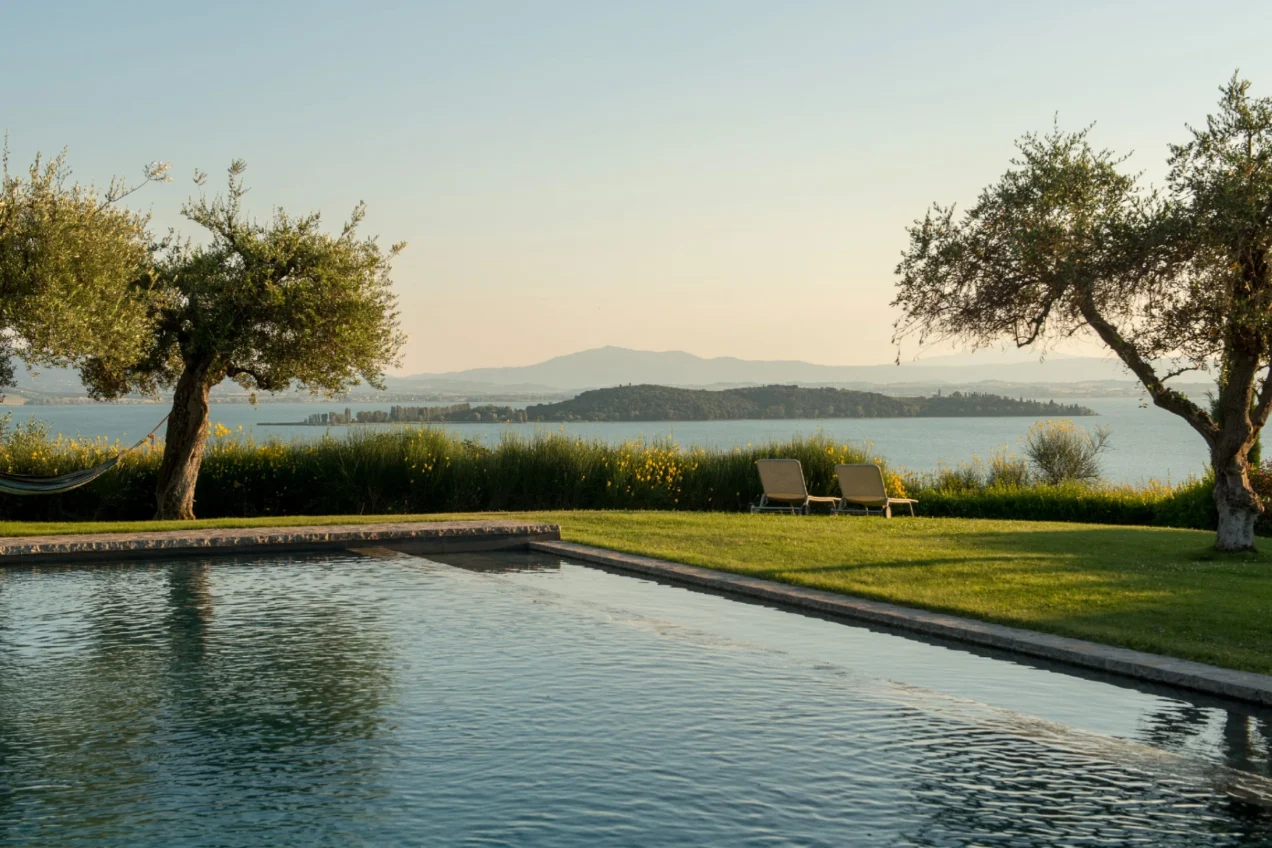
Central Italy’s largest lake — a serene, reed-fringed expanse on the Umbria–Tuscany border, surrounded by hilltowns, olive groves and some of the region’s most peaceful villas.
Lake Trasimeno is one of Italy’s best-kept secrets for villa holidays. Measuring roughly 15 km across, the lake sits at the meeting point of Umbria and Tuscany, its western shores calm and reed-lined, its hilltowns — Castiglione del Lago, Passignano, Panicale — watching over the water from ancient promontories. The lake has no dramatic mountain backdrop but possesses an extraordinary quality of light, especially in the early morning and at dusk, that has attracted painters and writers for centuries. For villa guests, it offers complete tranquillity combined with exceptional access to two of Italy’s most beautiful regions.
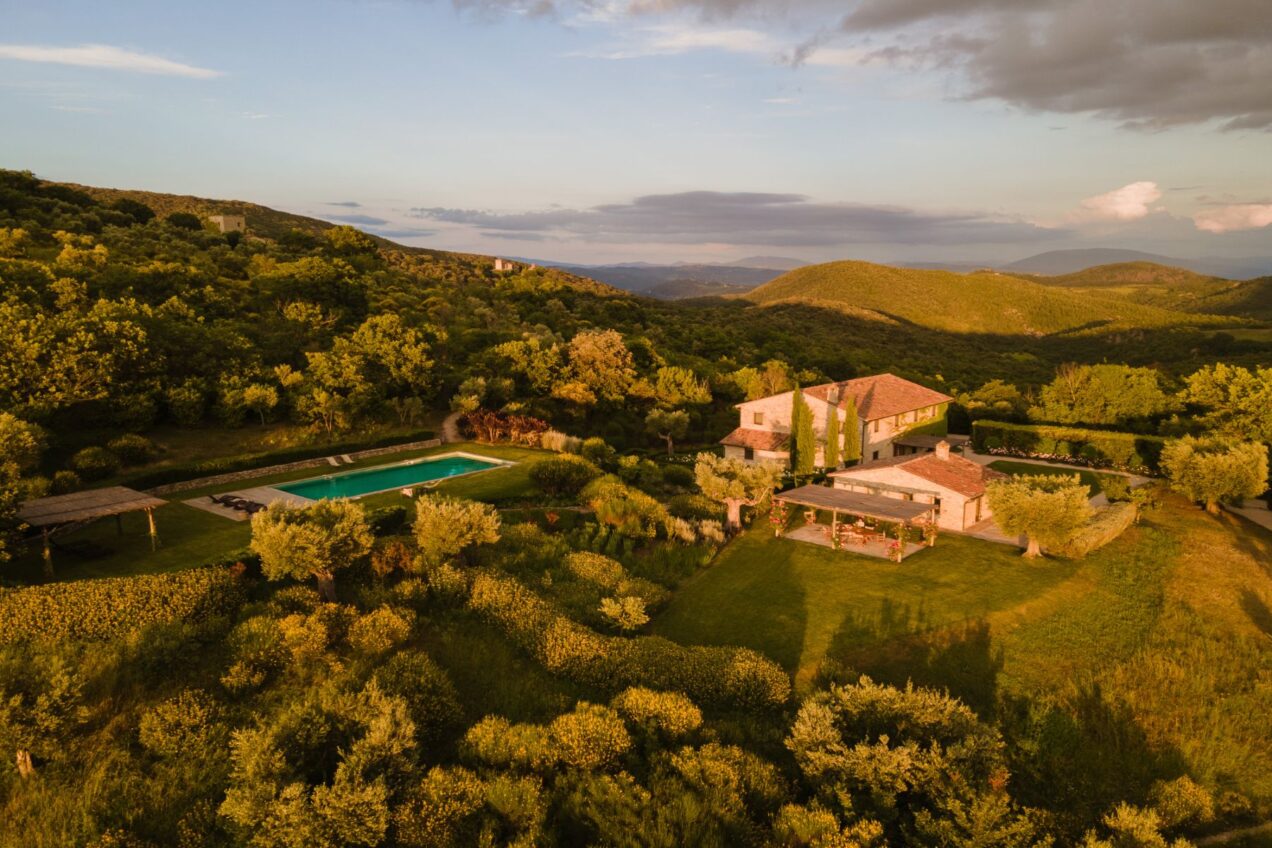
Properties around Lake Trasimeno range from restored stone farmhouses with private lake views to elegant country estates with vines, olive groves and formal gardens. The surrounding territory is ideal for cycling — the flat lake circuit is one of Central Italy’s finest rides — and the towns of Perugia, Assisi, Cortona and Orvieto are all within easy reach. This is the right choice for guests who want Umbria’s pace of life combined with the cooling presence of water in summer.
Lake Trasimeno is at its most beautiful in May, June and September. Spring brings the surrounding hills to life with wildflowers and fresh green vines, the lake surface is calm and mirrored, and temperatures (18–24 °C) are ideal for cycling the flat lake circuit or taking a boat to the islands. June is the last month before the summer heat peaks — evenings are long, warm and perfect for lakeside dining.
September is the finest month of all: the vendemmia begins in the surrounding Umbrian wine zones, the harvest light turns the landscape gold, daytime temperatures drop to a comfortable 22–26 °C and the lake itself is at its warmest for swimming. July and August are hot (often 32–36 °C inland) but perfectly enjoyable for villa stays with pools, and the lake provides an important cooling effect. Winter (November–February) is quiet and mild compared to northern Italy, ideal for truffle season (November) and the completely crowd-free hilltowns.
Lake Trasimeno lies almost exactly halfway between Florence and Rome on the A1 motorway. The nearest exit is Valdichiana (for the eastern and southern lake) or Chiusi-Chianciano Terme, placing the lake within about 90 minutes of Florence and 2 hours of Rome. The closest major airport is Perugia Sant’Egidio (PEG), a small regional hub with connections to Rome and some European cities; Florence (FLR) and Rome Fiumicino (FCO) are the main international gateways. A chauffeur transfer from either city makes an excellent arrival, ideally via Cortona or the Valdichiana motorway exit for a scenic introduction to the landscape.
The lake shore road (SP599) circles the entire lake in about 50 km — flat, scenic and ideal for cycling. Castiglione del Lago on the western promontory is the main town, with a medieval castle, ferry services to the islands of Maggiore and Polvese, and good restaurants on the lakefront. A car is useful for day trips to Perugia (40 km), Assisi (45 km), Cortona (25 km) and Orvieto (70 km), all easily reached on good roads through gentle countryside.
The lake itself offers rewarding exploration by hired boat or ferry. The Isola Maggiore retains a tiny fishing village and the Villa Isabella (former home of a Florentine marchioness), reachable in 20 minutes from Passignano or Tuoro. The Isola Polvese, the largest island, is an ecological reserve with medieval ruins and walking trails — utterly peaceful and rarely crowded. Sailing, stand-up paddleboarding and windsurfing are all available from the lake’s several water sports centres.
On shore, Castiglione del Lago‘s Rocca Medievale commands spectacular views over the lake and is one of the best-preserved fortresses in Umbria. Panicale, perched on a hill above the south-western shore, is one of Italy’s most beautiful small villages — its Perugino fresco in the parish church is exceptional and largely overlooked by tourists. Cortona (25 km east, over the Tuscany border) offers one of the finest small-city experiences in Central Italy: the MAEC museum of Etruscan artefacts, the Diocesan Museum with its Fra Angelico Annunciation, and the panoramic terrace above the town with views across the Chiana Valley to Lake Trasimeno. Perugia, Assisi, Spello and Todi are all within an easy day’s drive.
Lake Trasimeno has a distinctive food culture built around its freshwater catch. Tegamaccio — a slow-cooked stew of mixed lake fish (perch, tench, pike, eel) in white wine and herbs — is the defining dish of the shore, best eaten at a lakeside trattoria in Passignano or San Feliciano. Freshwater crayfish, smoked eel and bottarga from tench roe are further specialities rarely encountered outside the immediate area.
The surrounding hills produce excellent Umbrian wines: the Colli del Trasimeno DOC covers both red (Gamay-based blends, locally called Trasimeno Gamay) and white wines from the slopes above the lake. For more serious wine, the Montefalco Sagrantino DOCG zone is about 60 km east — one of Italy’s most powerful and age-worthy reds, from the native Sagrantino grape. Local olive oil from the Colli Trasimeno hills is among the finest in Umbria; November pressing visits can be arranged. The black truffle from the Spoleto and Norcia zones (60–90 km east) is at its best from November through March, and white truffles appear around San Miniato in October–November.
Is Lake Trasimeno suitable for families with children?
Very much so. The lake is shallow (maximum depth around 6 m), calm and warm in summer, making it safe for children to swim and kayak. The flat lake circuit is ideal for family cycling, and the ferry to the Isola Maggiore or Isola Polvese makes a memorable half-day excursion. The hilltowns and countryside are entirely manageable with children, and the pace of life around the lake is relaxed and unhurried.
How does Lake Trasimeno compare to the Italian Lakes (Como, Garda, Maggiore)?
Trasimeno is significantly smaller, quieter and less developed than the northern lakes. It lacks the drama of Alpine scenery but compensates with an authentically Umbrian atmosphere, lower prices, fewer tourists and exceptional access to two of Italy’s richest cultural regions. It is the right choice for guests who prioritise peace, cycling and cultural exploration over lakefront glamour.
What are the best day trips from the lake?
The finest day trips are to Cortona (25 km, Tuscany), Assisi (45 km), Perugia (40 km), Orvieto (70 km) and Montefalco (60 km). Siena is reachable in about 90 minutes, Florence in under 2 hours. The lake’s central position between Tuscany and Umbria makes it one of the best-located bases for wide-ranging cultural exploration in Central Italy.
San Francesco d'Assisi Recommended
On the doorstep when a route happens to work. Check first: the schedule is thin.
Fiumicino Recommended
The realistic default for most guests, and the only option from the US.
Amerigo Vespucci
Comparable to Rome for northern Umbria and Lake Trasimeno.
Local knowledge Assisi, Spoleto and Todi all restrict traffic around their historic centres.
Journey times are approximate and vary according to the villa location, traffic and local road conditions. Flight routes: Summer 2026. Routes are the one thing here that changes every year, which is why they carry a date and the drive times do not.
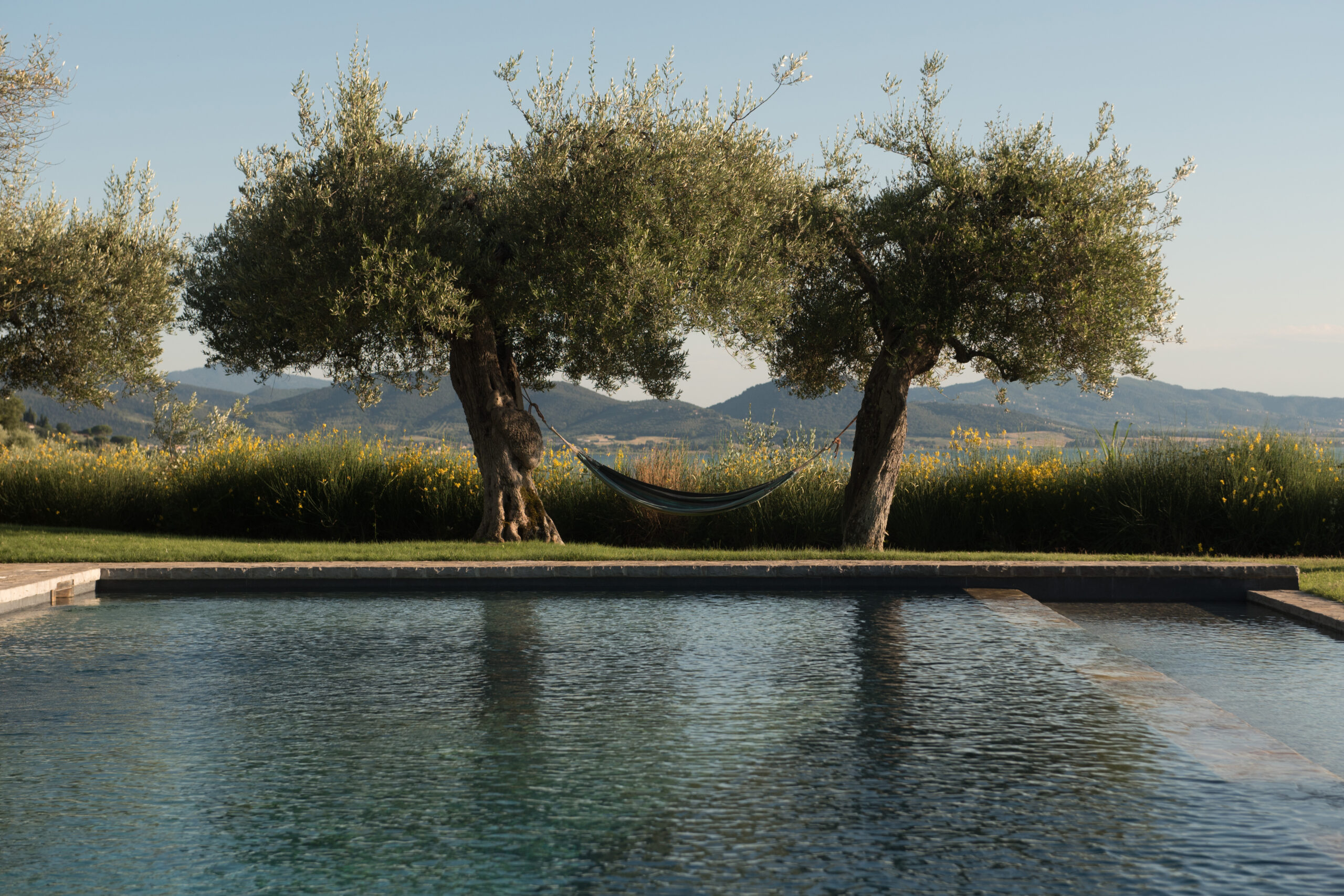
Get in touch with us. Tell us dates, guests, and style — we’ll help you find and the most suitable villas for your trip to Lake Trasimeno.
Ask our concierge