




Attraction
Abbey of Sant’Antimo
A Romanesque abbey set among olive groves and vineyards in the Val d’Orcia.
Attraction
A Romanesque abbey set among olive groves and vineyards in the Val d’Orcia.
Attraction
A championship golf course set among wooded Umbrian hills beneath a medieval castle.
Attraction
A hilly coastal golf course overlooking the lagoon and landscapes of Monte Argentario.
Attraction
A fortified Maremma village near the coast and Niki de Saint Phalle’s Tarot Garden.
Attraction
A lakeside Lazio village set on a promontory above the clear waters of Lake Bolsena.
Attraction
A tiny Apennine village overlooking the broad plateaux famous for seasonal flowering.
Attraction
A medieval Tuscan hill town overlooking the celebrated landscapes of the Val d’Orcia.
Attraction
A privately managed medieval castle estate in the countryside east of Siena.
Attraction
A UNESCO-listed Etruscan necropolis of monumental tombs cut into the volcanic landscape.
Attraction
A compact Tuscan village beneath Monte Cetona, close to important prehistoric sites.
Attraction
A fragile medieval village perched on a tuff ridge above the Valle dei Calanchi.
Attraction
An Umbrian city of medieval streets, civic museums and a central position in the Valle Umbra.
Attraction
A golf course set among the gentle Umbrian hills near Lake Trasimeno.
Attraction
A monumental Umbrian hill town of medieval palaces, stone streets and enduring civic traditions.
Attraction
Emperor Hadrian’s vast Roman villa complex of palaces, gardens, baths and experimental architecture.
Attraction
A volcanic lake in northern Lazio ringed by historic towns, beaches and fertile countryside.
Attraction
A broad Umbrian lake surrounded by islands, historic towns and gentle countryside.
Attraction
A walled medieval town among olive groves and vineyards in the Tuscan Maremma.
Attraction
A medieval Maremma town overlooking the countryside between Saturnia and the Tuscan coast.
Attraction
A wooded Umbrian mountain landscape closely connected with Assisi and Franciscan history.
Attraction
A Renaissance hill town renowned for Vino Nobile and panoramic views across southern Tuscany.
Attraction
A small Sienese village enclosed by a complete medieval ring of walls and towers.
Attraction
An extinct volcanic mountain covered by beech and chestnut forests in southern Tuscany.
Attraction
A walled Umbrian hill town of stone streets, springs and wide Apennine views.
Attraction
A lagoon town linking the Tuscan mainland with Monte Argentario and its coastal nature reserves.
Attraction
Umbria’s regional capital, rich in Etruscan remains, medieval streets and important art collections.
Attraction
Tuscany’s busiest airport, connected directly with Pisa Centrale by the PisaMover.
Attraction
A striking hill town built on volcanic tuff, with a historic Jewish quarter and nearby Vie Cave.
Attraction
A historic harbour beneath Spanish fortresses on the Monte Argentario peninsula.
Attraction
Monte Argentario’s principal port, shaped by fishing, ferries and a busy Mediterranean waterfront.
Attraction
A dramatic tuff-built town of fortifications, steep lanes and ancient rock-cut routes.
Attraction
A compact medieval village beside an important landscape of Etruscan tombs and rock-cut roads.
Attraction
An Umbrian hill city known for its cathedral, hilltop fortress and major performing-arts festival.
Attraction
A fortified harbour village overlooking the Maremma coast and the Gulf of Argentario.
Attraction
Niki de Saint Phalle’s monumental sculpture garden of mosaics, mirrors and vivid symbolic forms.
Attraction
A compact Umbrian hill town of medieval palaces, churches and expansive valley views.
Attraction
A Lazio hill town distinguished by Romanesque churches and a rich Etruscan heritage.
Attraction
The world’s smallest independent state, home to major religious monuments and art collections.
Attraction
A quiet mountain village surrounded by springs, woodland and the upper slopes of Monte Amiata.
A dramatic granite peninsula jutting into the Tyrrhenian — where Tuscany meets the sea in its most exclusive form, with turquoise coves, pine forests and some of Italy’s most sought-after villas.
Monte Argentario is unlike any other stretch of the Tuscan coast. This ancient volcanic promontory, connected to the mainland by three thin causeways, rises steeply from the sea to 635 metres and remains — despite its fame — genuinely wild and unspoiled. The towns of Porto Ercole and Porto Santo Stefano cling to its flanks, their harbours busy with superyachts and wooden fishing boats in equal measure. The waters off Argentario are among the clearest in Italy; the marine reserve around the island of Giglio, 14 km offshore, offers some of the finest snorkelling and diving in the Tyrrhenian Sea.
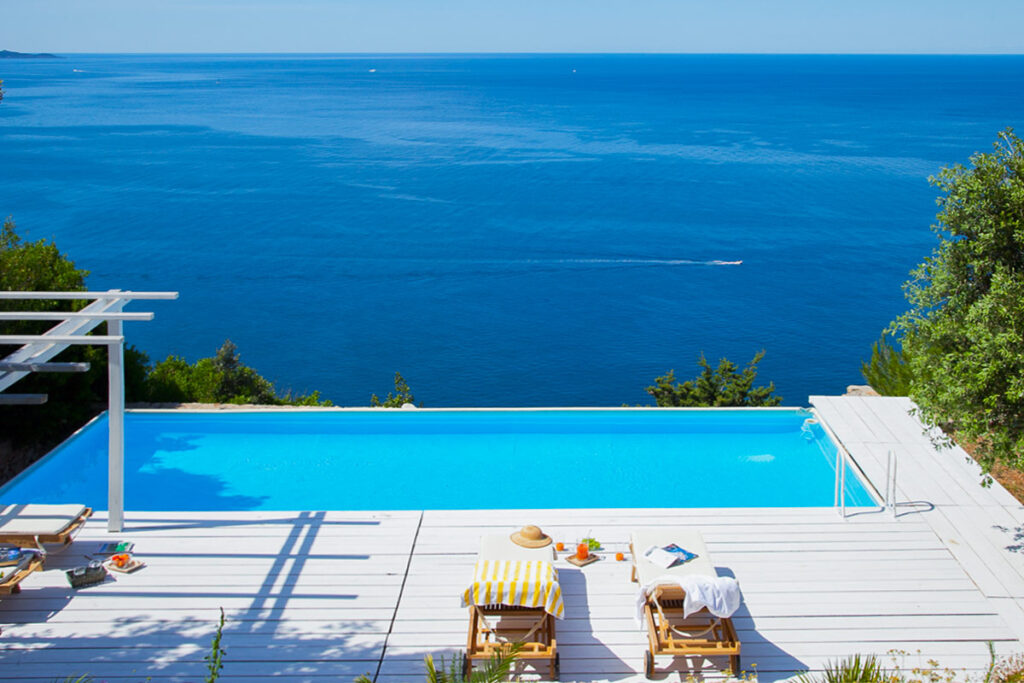
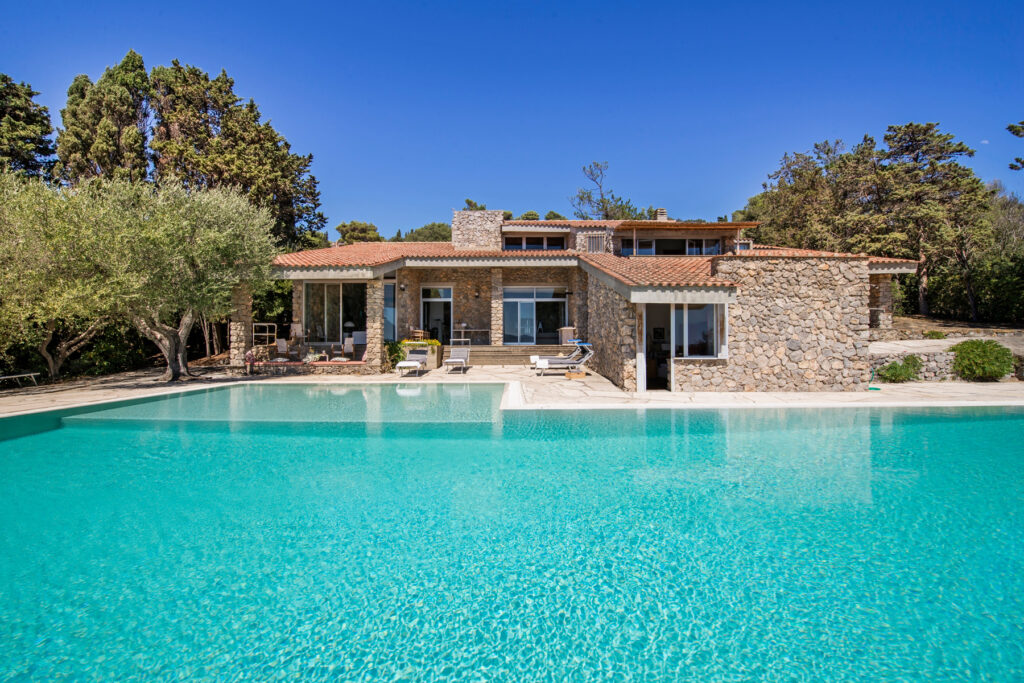
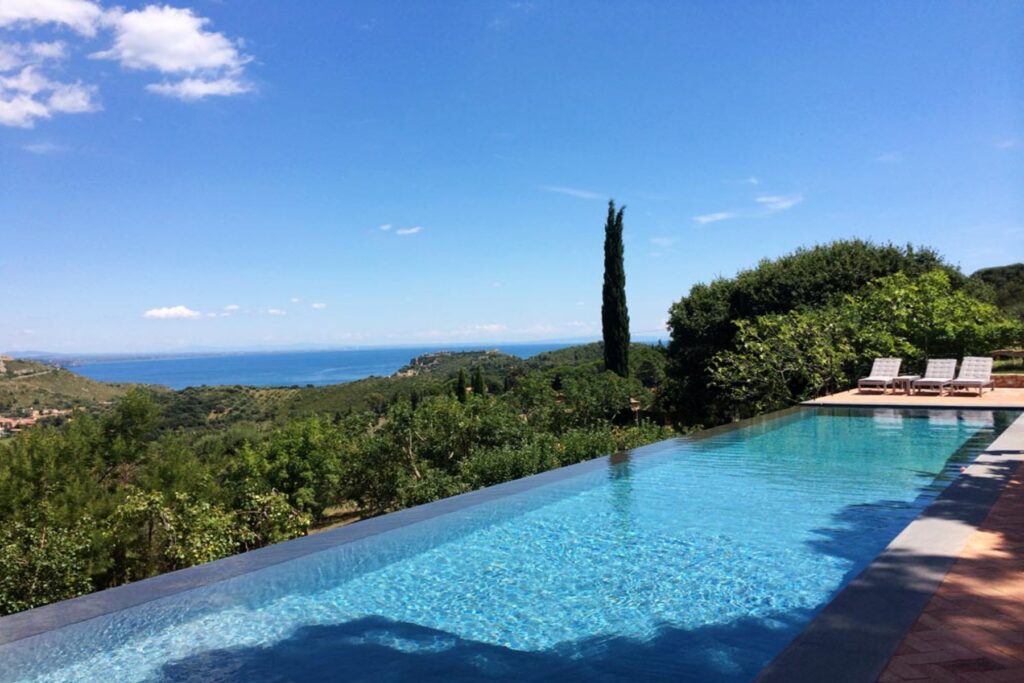
Argentario villas command some of the most spectacular sea views on the Italian coast — many perched on the rocky slopes above the water with direct access to private coves, infinity pools positioned to catch the sunset over the islands of Giglio and Giannutri, and gardens of fragrant macchia mediterranea. The peninsula sits at the southern edge of the Maremma, Tuscany’s wild coast, with easy access to the Etruscan archaeological sites of Cosa and Ansedonia, the lagoon of Orbetello (a flamingo habitat of European importance), and the thermal springs at Saturnia just 40 km inland.
Argentario is a genuine year-round destination, but two seasons stand out. June and early July offer the best balance of warm sea temperatures (22–24 °C), settled weather, long evenings and a lively but not yet overwhelming social atmosphere in Porto Ercole and Porto Santo Stefano. The water is brilliantly clear before the August jellyfish season, and the hillside vegetation is still green and fragrant. This is the period when the peninsula is at its most beautiful and most liveable.
September is arguably even better: the sea remains warm from summer, the harbour towns empty slightly after Ferragosto, restaurants are operating at their peak and the sunsets over the Tyrrhenian in the long September evenings are extraordinary. August is the busiest and most expensive month — the peninsula is extremely popular with the Roman and Florentine upper-middle classes — but the quality of the light, the sea and the food makes it entirely worthwhile for guests who book well in advance. Spring (April–May) and late autumn (October) are ideal for those who combine the coast with Saturnia thermal baths, Etruscan sites or the Maremma wildlife reserve — the temperatures are mild and the roads quiet.
Argentario is most conveniently reached from Rome Fiumicino (FCO), about 160 km south via the Via Aurelia (SS1) or the A12 motorway to Civitavecchia then the SS1. The drive takes approximately 2 hours in normal traffic — or longer in August when the coastal road becomes a car park. A private chauffeur transfer is strongly recommended for arrivals in peak season; many guests travelling from Rome time their arrival for the early morning or after 7 pm to avoid the congestion. Florence Peretola (FLR) is also viable, about 200 km north (2–2.5 hours), and the route via the Val d’Orcia offers an exceptionally scenic alternative to the motorway.
Orbetello, on the mainland causeway, has a small train station on the Rome–Pisa coastal line — useful for guests travelling without a car, though a taxi or hire car will still be needed to reach specific villa locations on the peninsula. On Argentario itself, the coastal roads are steep and winding; a small car or scooter is ideal for navigating between coves. Water taxis between Porto Ercole, Porto Santo Stefano and the offshore islands (Giglio, Giannutri) operate throughout the season and are often the most pleasurable way to move around.
The primary pleasure of Argentario is its coastline — rocky coves, hidden beaches accessible only by boat, and a clarity of water that recalls the Aegean more than the Adriatic. The Cala Grande, Cala dei Gabbiani and the beaches below the Punta Telegrafo are among the finest on the peninsula, many accessible only by sea. Hiring a day boat with skipper — available from both Porto Ercole and Porto Santo Stefano — is the single most rewarding activity on Argentario; a full day spent circling the peninsula, swimming at remote coves and lunching at a beach restaurant accessible only by water is a defining Italian summer experience.
Porto Ercole‘s Spanish forts — built during the 16th-century Presidio garrison — are among the best-preserved examples of Hapsburg military architecture in Italy and offer magnificent views from their ramparts. Caravaggio died here in 1610; the Parrocchiale di Sant’Erasmo may hold his remains. Porto Santo Stefano is larger, livelier and the departure point for ferries to Giglio and Giannutri. The Laguna di Orbetello on the mainland is a flamingo and heron reserve of international importance — a surreal flat landscape of water, salt pans and medieval towers that contrasts strikingly with the granite drama of the peninsula. The thermal baths at Terme di Saturnia (40 km inland) and the Etruscan ruins of Cosa above Ansedonia make excellent half-day excursions.
Argentario’s food scene is built around the sea — specifically around the exceptional fish and shellfish of the Tyrrhenian, which arrive daily at the Porto Santo Stefano fish market on the harbour front. The local speciality is acquacotta — a Maremma peasant soup of wild herbs, eggs and stale bread that has nothing to do with seafood but everything to do with the agricultural hinterland. More typically, restaurant menus feature raw Argentario prawns, spaghetti alle vongole with clams from the lagoon, grilled spigola (sea bass) from the day’s catch, and bottarga from the tuna once fished in the Orbetello trap.
The most celebrated restaurant on the peninsula is Il Pellicano at Hotel Il Pellicano in Porto Ercole — one of the defining dining experiences of the Italian Tyrrhenian coast, combining impeccable service with a terrace positioned above the sea. For more casual excellence, the restaurants along the Porto Ercole harbour front and the fish restaurants on the Porto Santo Stefano waterfront offer good-value fish simply prepared. The local wine is the Morellino di Scansano DOCG from the Maremma hills inland — a Sangiovese-based red that pairs well with the bold flavours of Maremman cooking; estates such as Erik Banti, Moris Farms and Le Pupille produce excellent bottles at accessible prices.
Is Argentario suitable for families with children?
Yes, with appropriate expectations. The rocky coastline and cliff-accessed coves are more suitable for older children and strong swimmers; families with young children are better served by the sandy beaches at Feniglia (a spectacular pine-shaded spit south of Orbetello) or Giannella on the northern causeway. Villa pools are the most practical solution for families with very young children. The towns of Porto Ercole and Porto Santo Stefano are entirely safe and walkable for families.
How far is Argentario from the Tuscan interior?
Saturnia thermal springs are about 40 km (50 minutes); Pitigliano, the extraordinary Etruscan tufa-carved town, is 55 km (70 minutes); Siena is about 130 km (90 minutes). Argentario makes an excellent base for combining a sea holiday with cultural and gastronomic excursions into the Maremma and southern Tuscany.
Can we take a boat to the island of Giglio?
Yes — regular ferries depart from Porto Santo Stefano year-round (approximately 1 hour), with increased frequency in summer. Giglio is a largely unspoiled island with excellent diving, a fortified medieval town (Giglio Castello) and beautiful clear water. Day trips are easy; overnight stays are also possible with advance booking. The smaller island of Giannutri (an ancient Roman estate, mostly uninhabited) can be reached by private boat and is one of the finest snorkelling sites in the Tyrrhenian.
Fiumicino Recommended
Clearly the right airport for this stretch of coast, whatever the guidebooks say about Tuscany meaning Pisa.
Galileo Galilei
Reasonable from the UK when the fare is right.
Amerigo Vespucci
Rarely the best choice for the Maremma.
Local knowledge The coast road fills badly in August. Add an hour to any Saturday transfer in high season.
Journey times are approximate and vary according to the villa location, traffic and local road conditions. Flight routes: Summer 2026. Routes are the one thing here that changes every year, which is why they carry a date and the drive times do not.
Get in touch with us. Tell us dates, guests, and style — we’ll help you find the most suitable villas for your trip to Argentario.
Ask our concierge