





Attraction
Abbey of Sant’Antimo
A Romanesque abbey set among olive groves and vineyards in the Val d’Orcia.
Attraction
A Romanesque abbey set among olive groves and vineyards in the Val d’Orcia.
Attraction
A working Adriatic port city of hilltop monuments, Roman heritage and dramatic coastal viewpoints.
Attraction
A championship golf course set among wooded Umbrian hills beneath a medieval castle.
Attraction
A hilly coastal golf course overlooking the lagoon and landscapes of Monte Argentario.
Attraction
A fortified Maremma village near the coast and Niki de Saint Phalle’s Tarot Garden.
Attraction
A lakeside Lazio village set on a promontory above the clear waters of Lake Bolsena.
Attraction
A tiny Apennine village overlooking the broad plateaux famous for seasonal flowering.
Attraction
A medieval Tuscan hill town overlooking the celebrated landscapes of the Val d’Orcia.
Attraction
A privately managed medieval castle estate in the countryside east of Siena.
Attraction
A UNESCO-listed Etruscan necropolis of monumental tombs cut into the volcanic landscape.
Attraction
A compact Tuscan village beneath Monte Cetona, close to important prehistoric sites.
Attraction
A fragile medieval village perched on a tuff ridge above the Valle dei Calanchi.
Attraction
A Marche coastal city combining Roman remains, Renaissance monuments and an Adriatic seafront.
Attraction
An Umbrian city of medieval streets, civic museums and a central position in the Valle Umbra.
Attraction
A vast limestone cave system explored through guided underground routes in the Marche.
Attraction
A golf course set among the gentle Umbrian hills near Lake Trasimeno.
Attraction
A fortified medieval village dominated by a castle associated with history and Dantean legend.
Attraction
A monumental Umbrian hill town of medieval palaces, stone streets and enduring civic traditions.
Attraction
Emperor Hadrian’s vast Roman villa complex of palaces, gardens, baths and experimental architecture.
Attraction
A volcanic lake in northern Lazio ringed by historic towns, beaches and fertile countryside.
Attraction
A broad Umbrian lake surrounded by islands, historic towns and gentle countryside.
Attraction
A walled medieval town among olive groves and vineyards in the Tuscan Maremma.
Attraction
A medieval Maremma town overlooking the countryside between Saturnia and the Tuscan coast.
Attraction
A wooded Umbrian mountain landscape closely connected with Assisi and Franciscan history.
Attraction
A Renaissance hill town renowned for Vino Nobile and panoramic views across southern Tuscany.
Attraction
A small Sienese village enclosed by a complete medieval ring of walls and towers.
Attraction
An extinct volcanic mountain covered by beech and chestnut forests in southern Tuscany.
Attraction
A walled Umbrian hill town of stone streets, springs and wide Apennine views.
Attraction
A lagoon town linking the Tuscan mainland with Monte Argentario and its coastal nature reserves.
Attraction
Umbria’s regional capital, rich in Etruscan remains, medieval streets and important art collections.
Attraction
An Adriatic city where Rossini’s musical heritage meets museums, beaches and a walkable centre.
Attraction
A striking hill town built on volcanic tuff, with a historic Jewish quarter and nearby Vie Cave.
Attraction
A historic harbour beneath Spanish fortresses on the Monte Argentario peninsula.
Attraction
Monte Argentario’s principal port, shaped by fishing, ferries and a busy Mediterranean waterfront.
Attraction
A dramatic tuff-built town of fortifications, steep lanes and ancient rock-cut routes.
Attraction
A compact medieval village beside an important landscape of Etruscan tombs and rock-cut roads.
Attraction
An Umbrian hill city known for its cathedral, hilltop fortress and major performing-arts festival.
Attraction
A fortified harbour village overlooking the Maremma coast and the Gulf of Argentario.
Attraction
Niki de Saint Phalle’s monumental sculpture garden of mosaics, mirrors and vivid symbolic forms.
Attraction
A compact Umbrian hill town of medieval palaces, churches and expansive valley views.
Attraction
A Lazio hill town distinguished by Romanesque churches and a rich Etruscan heritage.
Attraction
The world’s smallest independent state, home to major religious monuments and art collections.
Attraction
A quiet mountain village surrounded by springs, woodland and the upper slopes of Monte Amiata.
Umbria’s Hidden Heartland – Hilltop Villages, Tobacco Fields and the Upper Tiber Valley
Umbertide is a small medieval town in the upper Tiber valley, 25km north of Perugia — far enough from the tourist circuit to feel genuinely local, close enough to reach every major Umbrian destination with ease. The surrounding countryside is among the most underrated in central Italy: rolling hills covered in tobacco, sunflowers and woodland, punctuated by hilltop villages, Romanesque churches and Renaissance fortresses that see almost no visitors.
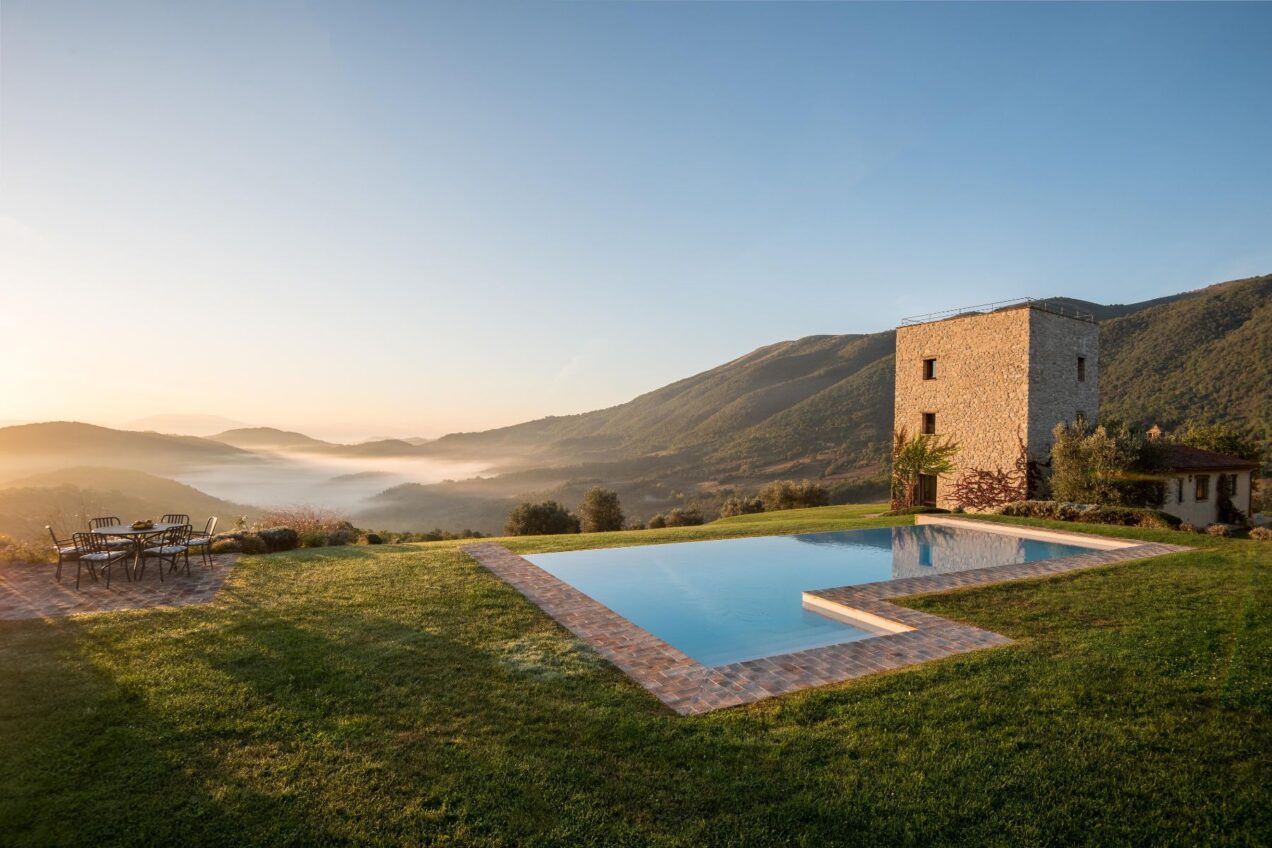
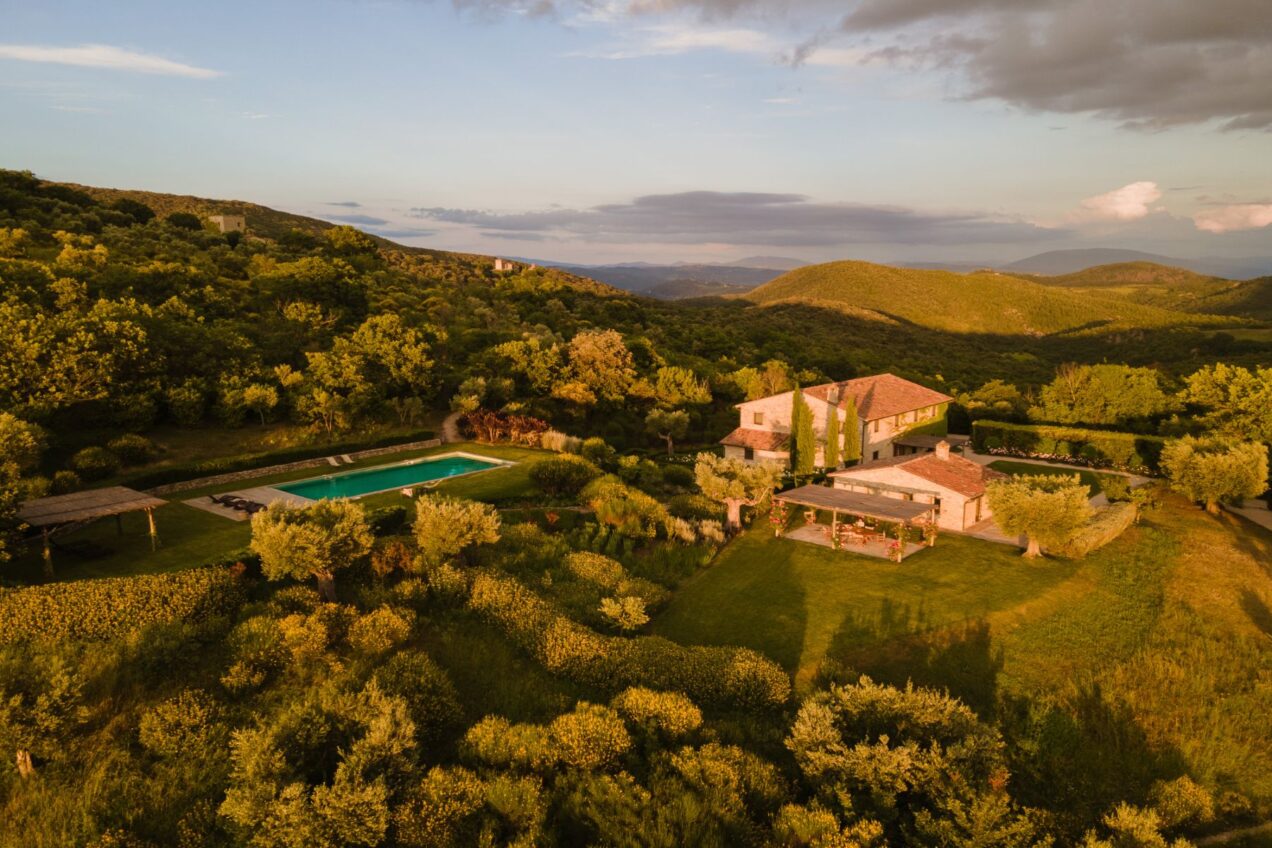
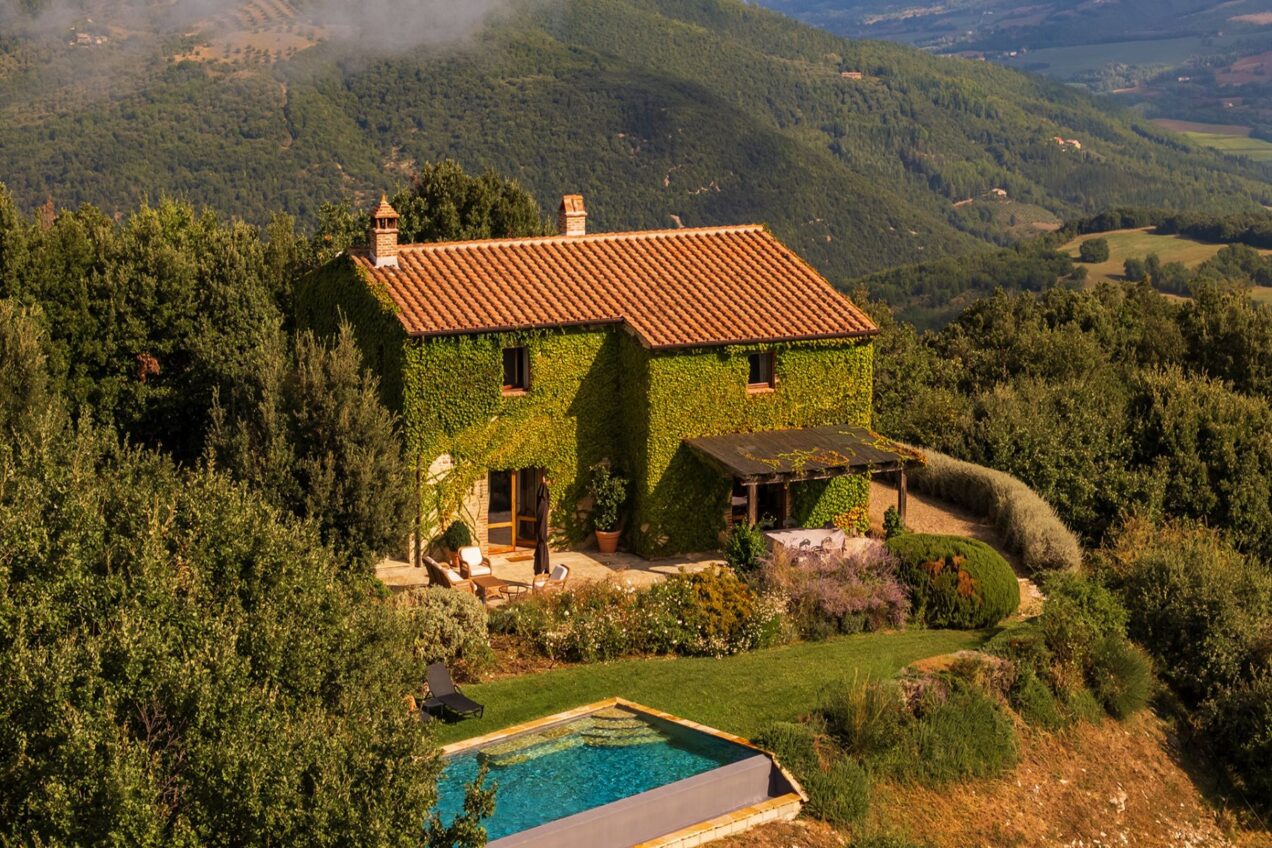
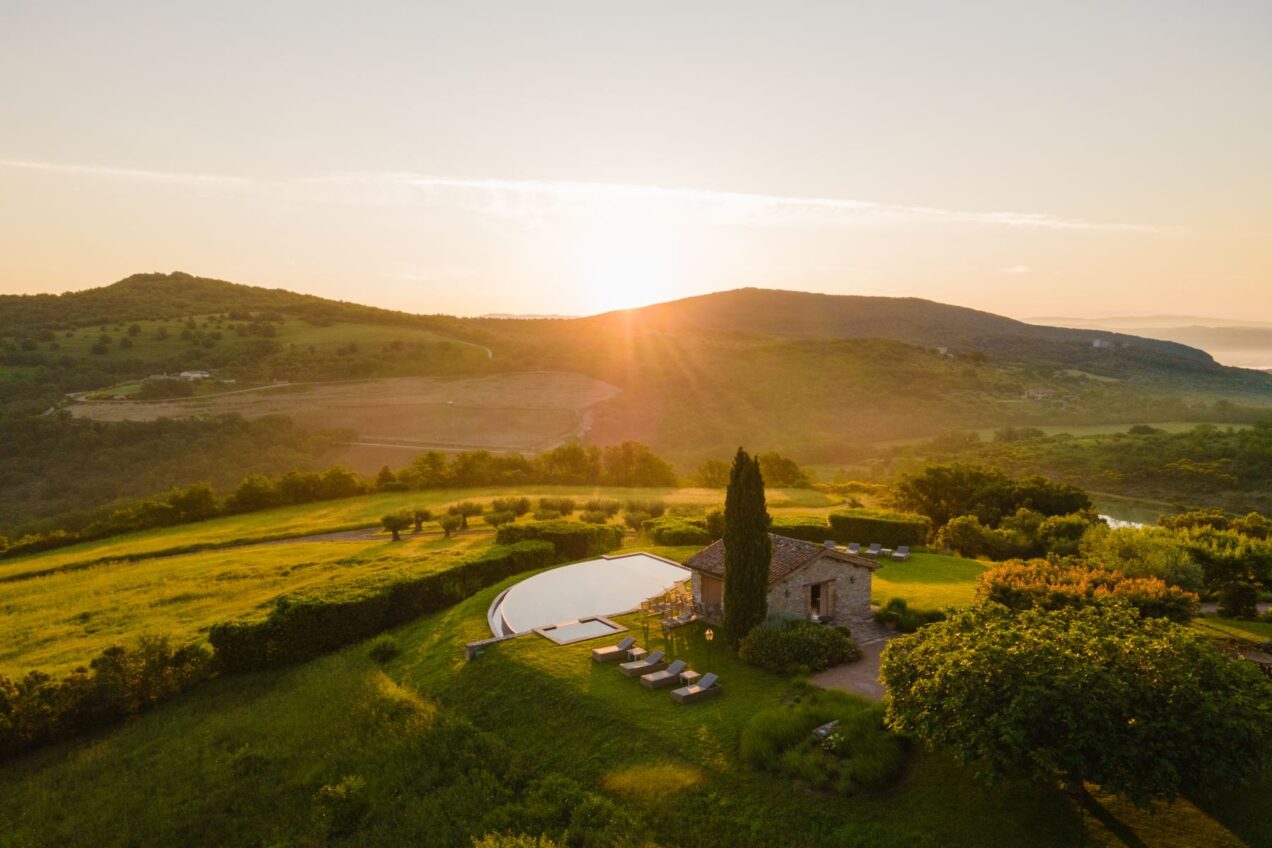
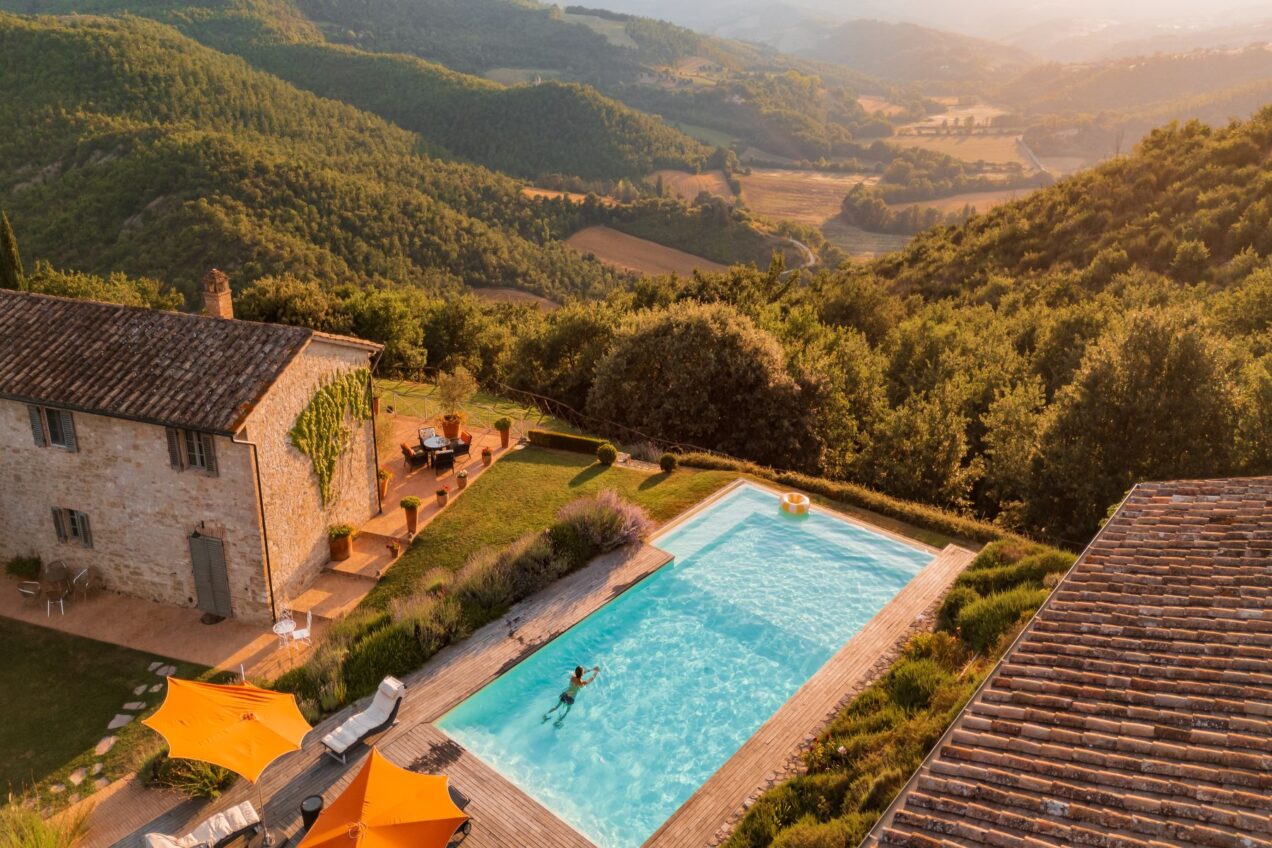
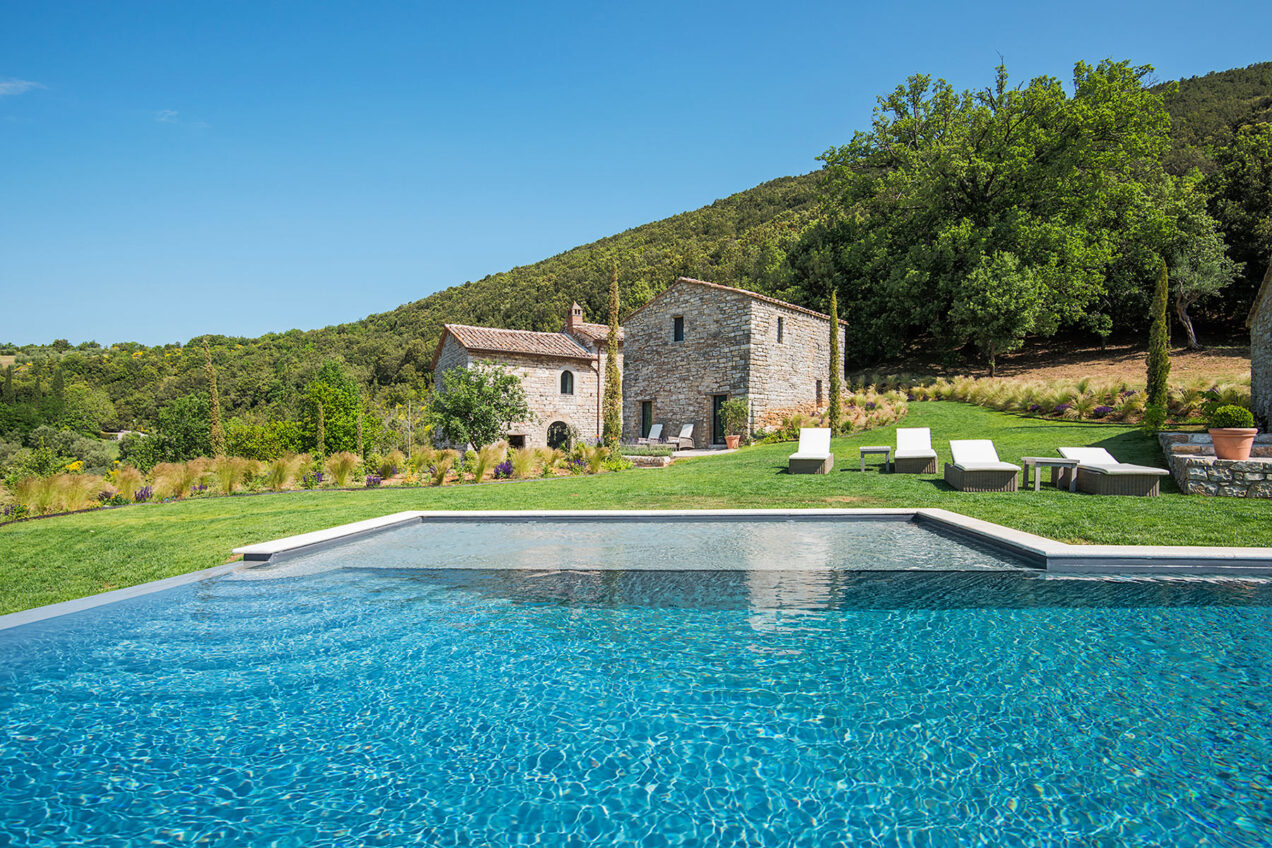
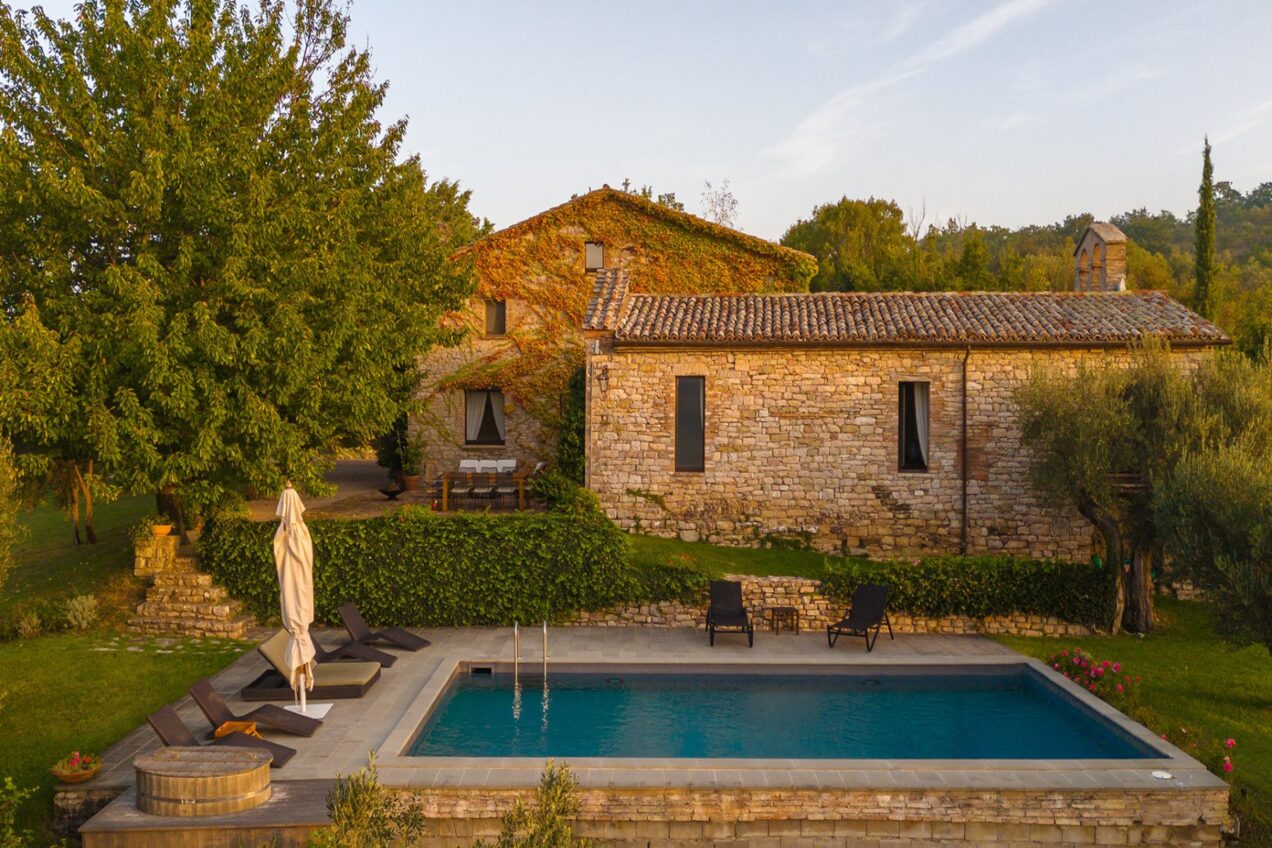
The villas in the Umbertide area offer a particularly authentic Umbrian experience — converted farmhouses and stone case coloniche in working agricultural landscapes, with views over the Tiber valley and the Apennine foothills. For guests who want the real Umbria without the crowds of Assisi or the summer queues of Perugia, this corner of the region is exceptional. Perugia, Assisi, Cortona (in Tuscany) and Città di Castello are all within 45 minutes.
Umbertide’s inland position in the upper Tiber valley gives it a classic central Italian climate — warm, dry summers and cool winters, with the best periods for villa holidays concentrated in spring and autumn. Being off the main tourist circuit means it never feels overcrowded, even in August.
April & May — Excellent
The Umbrian countryside around Umbertide is at its most beautiful in spring: the tobacco seedlings are emerging, the hillsides are intensely green, wildflowers cover the verges of the country roads. Temperatures are comfortable (15–22°C / 59–72°F) and the roads and restaurants are unhurried. The perfect season for cyclists and walkers — the Tiber valley cycling routes are at their finest in May.
June to August — Summer
Warm to hot (26–33°C / 79–91°F) with long evenings and the full Italian summer atmosphere. The tobacco fields reach their full height in July and August — the valley landscape is distinctive and dramatic. Villa pools come into their own. Umbertide itself is a working town and doesn’t empty in August the way tourist resorts do; the local market, the bars and the restaurants remain open and lively throughout summer.
September & October — Outstanding
The best months to visit. Temperatures drop to a perfect 18–25°C, the tobacco harvest begins in September, grape picking follows in the Tiber valley vineyards, and the truffle season opens in the surrounding hills. The golden light of October on the Umbrian hillsides is exceptional. Far fewer visitors than the peak summer months.
November to March — Off Season
Quiet, cool (5–12°C) and authentic. The white truffle season peaks in November and the local markets fill with forest produce. Villa rates are at their lowest. Worth considering for truffle enthusiasts and those who want Umbria entirely to themselves.
| Month | Avg. Temp | Crowds | Highlights |
|---|---|---|---|
| April | 15°C / 59°F | Very Low | Spring countryside, cycling |
| May | 20°C / 68°F | Low | Ideal weather, green hills |
| June | 25°C / 77°F | Low | Long evenings, outdoor dining |
| July | 29°C / 84°F | Low–Medium | Tobacco fields in full height |
| August | 29°C / 84°F | Low–Medium | Pool season, local festivals |
| September | 23°C / 73°F | Very Low | Harvest season — highly recommended |
| October | 17°C / 63°F | Very Low | Truffle markets, olive harvest |
| November | 11°C / 52°F | Very Low | White truffle season |
Umbertide is easily accessible from the main Umbrian road network and is well-placed for exploring the entire region. A car is essential — this is rural Umbria, and the most rewarding experiences are found on the minor roads between the hilltop villages.
Getting to Umbertide
Perugia Airport (San Francesco d’Assisi) is 35km south — approximately 35–40 minutes by car. It handles direct flights from London, Brussels and several other European cities, particularly in summer. Alternatively, Florence Airport is 120km north (1 hour 20 minutes by car), and Rome Fiumicino is 210km south (2 hours 15 minutes). The Ferrovia Centrale Umbra regional train line connects Umbertide to Perugia (45 minutes) and Città di Castello (20 minutes), but for villa guests with luggage a private transfer or hire car is far more practical.
Car Hire — Essential
A car is the only meaningful way to experience the countryside around Umbertide. The villages of Montone, Pietralunga, Citerna and Monte Santa Maria Tiberina — each worth a morning’s exploration — are not served by public transport. Pick up your car at Perugia Airport or Perugia Fontivegge station. Country roads in this part of Umbria are well-surfaced and lightly trafficked.
Day Trips by Car
From an Umbertide villa, you are within easy reach of: Perugia (25–35 minutes), Assisi (45 minutes), Cortona in Tuscany (35 minutes), Città di Castello (20 minutes), Gubbio (40 minutes), Arezzo (55 minutes), and the Lago Trasimeno (40 minutes). The E45 superstrada connects Umbertide to both Perugia and the north efficiently; most cross-country routes are on well-maintained provincial roads.
Cycling
The upper Tiber valley has developed an excellent network of cycling routes in recent years — both road cycling on quiet provincial roads and mountain biking on the Apennine trails above the valley. Several of our villa guests arrive with bikes; others hire locally. The terrain ranges from gentle valley cycling to serious Apennine climbs depending on your preference.
The Umbertide area rewards a different kind of traveller from the Assisi or Orvieto visitor — one who prefers empty roads, unhurried villages and the pleasure of discovery over a checklist of famous sights. That said, the local area has considerable historical and natural depth.
In and Around Umbertide
The Rocca di Umbertide
The town’s 14th-century circular fortress, recently restored, now houses a contemporary art gallery and offers views over the Tiber valley from its towers. The historic centre around Piazza Matteotti — with its medieval loggia and the church of Santa Maria della Reggia (containing a significant Signorelli altarpiece) — is compact but quietly impressive.
Montone
One of the loveliest villages in Umbria and one of the least visited: a perfectly intact medieval hilltop town 8km north of Umbertide with panoramic views, a good enoteca, a small ethnographic museum and an annual film festival (Umbria Film Festival, July). Worth a morning at any time of year.
Città di Castello
The largest town in the upper Tiber valley, 20 minutes north of Umbertide, with a fine Pinacoteca Comunale (including works by Raphael and Signorelli), an excellent Alberto Burri museum (one of Italy’s most important 20th-century artists was born here), and the Mostra del Tartufo truffle fair in October–November. More rewarding than most visitors expect.
Gubbio
40 minutes east of Umbertide, Gubbio is one of Umbria’s most dramatic medieval towns — perched steeply against Monte Ingino, with a monumental Palazzo dei Consoli dominating the Piazza Grande. The town is famous for the Corsa dei Ceri (15 May), a frenetic race up the mountain with enormous wooden candles, and for its ceramic tradition. A full morning’s excursion.
Cortona (Tuscany)
Just 35 minutes from Umbertide across the Tuscan border, Cortona is an Etruscan hilltop town with an outstanding Diocesan Museum (Fra Angelico, Pietro Lorenzetti), spectacular valley views, and the MAEC (Etruscan Museum) — one of the finest collections of Etruscan art in Italy. The town has a lively passeggiata and good restaurants. Extremely easy to combine with an Umbertide villa stay.
Lago Trasimeno
40 minutes southwest, Italy’s fourth-largest lake offers boat services to the island of Isola Maggiore, good fish restaurants along the shore, and a cycling route around the entire perimeter. A quiet and underappreciated half-day excursion, particularly in spring and early summer.
The cooking of the upper Tiber valley sits at the boundary of Umbria and Tuscany — sharing ingredients and traditions with both, while maintaining its own distinct character. It is honest, seasonal food rooted in the land: game from the Apennine forests, truffle from the local hillsides, cured pork from the artisan butchers of the valley.
What to Eat
Stringozzi al tartufo nero — Hand-rolled pasta (similar to pici, slightly thicker) tossed with black truffle, good olive oil and a touch of garlic. The black Umbrian truffle (Tuber melanosporum) peaks December–March; the summer black truffle (scorzone) runs May–August. Both are used generously in local cooking and available in trattatorie across the valley. Far better value than in tourist centres.
Porchetta — Whole roast pig stuffed with wild fennel, garlic, rosemary and black pepper, cooked in a wood oven. Bought sliced from a porchettaro at the weekly market and eaten in a bread roll — this is the definitive Umbrian street food, and the quality here, away from tourist areas, is excellent.
Cinghiale in umido — Wild boar slow-braised in red wine, juniper berries, tomato and local herbs. The Apennine hills around Umbertide have substantial wild boar populations; the meat appears on every autumn and winter menu in the area in various forms — ragù, stew, salami.
Piccione arrosto — Roast wood pigeon, a classic central Italian secondo that appears regularly on local menus. Served with lentils, polenta or roasted vegetables depending on the season.
Local Markets
Umbertide’s Thursday morning market covers the central piazza with local produce, cheese, charcuterie and seasonal vegetables. Città di Castello has a larger Saturday market. The annual Mostra del Tartufo in Città di Castello (October–November) is one of the region’s most important truffle fairs — worth timing your visit around if truffles are a priority.
Wines of the Upper Tiber
The upper Tiber valley sits within the broader Umbrian DOC zone. Look for local Colli Altotiberini DOC wines — light reds and whites that work well with the local food. For more serious bottles, the estates of the Montefalco area (an hour south) produce Sagrantino di Montefalco DOCG — one of Italy’s most structured and ageworthy reds. The local vino sfuso (bulk wine bought by the litre from a cantina) is often an excellent and honest everyday option at villa tables.
Olive Oil
The olive oil of the upper Tiber valley — Frantoio, Moraiolo and Leccino varieties, pressed fresh from late October — is among Umbria’s finest: green-gold, peppery, intensely grassy when fresh. If visiting in October or November, seek out olio nuovo direct from a local frantoio. Several of our villa hosts can arrange this.
Why stay in Umbertide rather than Perugia or Assisi?
Umbertide and its surrounding countryside offer an experience that the better-known Umbrian towns cannot: genuine rural quiet, no tourist crowds, and direct immersion in the working agricultural landscape of the upper Tiber valley. You are 25 minutes from Perugia and 45 minutes from Assisi — close enough for day visits — while spending your evenings in a setting that feels completely unhurried and local. Ideal for guests who want the real Umbria rather than a curated version of it.
Do I need a car?
Yes, without question. The countryside around Umbertide is rural and the most rewarding villages, restaurants and landscapes are accessible only by car. A small hire car picked up at Perugia Airport (35 minutes away) is the most practical approach. Country roads in this part of Umbria are quiet and well-maintained.
Is Umbertide a good base for Tuscany as well as Umbria?
Yes — it sits close to the Umbria–Tuscany border. Cortona is 35 minutes, Arezzo 55 minutes, and the southern Chianti area around Montepulciano and Pienza is within 90 minutes. Guests often use an Umbertide villa to explore both regions in the same week, which works very well geographically.
Are there truffle experiences near Umbertide?
Yes — the Apennine hills around Pietralunga and the upper Tiber valley are excellent truffle territory. Both black and white truffle grow in the area; the white truffle peaks October–December, the black winter truffle December–March. Truffle hunts with trained dogs can be arranged through our concierge. The Mostra del Tartufo fair in Città di Castello (20 minutes north) in October–November is worth attending.
What is the minimum stay at Umbertide villas?
Most properties require 7 nights in peak season (June–August). Shorter stays of 3–5 nights are available in spring and autumn. Many of our Umbertide-area villas are working farms or agroturismi with longer minimum stays; check individual listings for details.
Is the area suitable for families?
Yes — the relatively flat Tiber valley terrain is manageable for families with young children, and the rural environment (space, gardens, privacy, pools) suits family villa stays well. The lack of tourist infrastructure means fewer child-specific attractions in the immediate area, but Lago Trasimeno boat trips, Gubbio’s funicular, and the Perugia science museum are all within easy reach.
Get in touch with us. Tell us dates, guests, and style — we’ll help you find the most suitable villas for your trip to Umbertide.
Ask our concierge