






Attraction
Capo Graziano Archaeological Site
A Bronze Age settlement on Filicudi that reveals the island’s earliest organised communities.
Attraction
A Bronze Age settlement on Filicudi that reveals the island’s earliest organised communities.
Attraction
A vibrant Sicilian city of lava-stone Baroque architecture, markets and views towards Mount Etna.
Attraction
A high inland Sicilian city crowned by a castle and overlooking the centre of the island.
Attraction
A stone-built medieval village high above Trapani, with churches, a castle and sweeping coastal views.
Attraction
A Sicilian golf course in the countryside between the Madonie mountains and Cefalù.
Attraction
Sicily’s first nature reserve, linking rugged coastal paths with small coves and mountain scenery.
Attraction
A multicultural Sicilian port known for its Kasbah quarter and the ancient Dancing Satyr.
Attraction
Palermo’s best-known seaside district, centred on a sandy bay beneath Monte Pellegrino.
Attraction
Europe’s most active volcano, offering lava landscapes, high-altitude routes and constantly changing conditions.
Attraction
Sicily’s main western airport and the principal air gateway for Palermo.
Attraction
The principal arrival point for Panarea, linking boats with the island’s main settlement.
Attraction
A vast historic park beneath Monte Pellegrino on the edge of Palermo.
Attraction
A small pebble beach and harbour in the village of Pecorini a Mare on Filicudi.
Attraction
A Sicilian hill town closely associated with the mosaics of the nearby Villa Romana del Casale.
Attraction
Italy’s south-eastern coastal tip, marked by islands, fishing traditions and open-sea landscapes.
Attraction
A tiny fishing harbour on Favignana’s rugged western coast.
Attraction
A low coastal headland on Favignana, known for its lighthouse and open sunset views.
Attraction
A rocky Sicilian reef known for wind, waves and an exposed Mediterranean coastline.
Attraction
A Baroque Sicilian city divided between the hilltop upper town and atmospheric Ragusa Ibla.
Attraction
A hilltop fortress overlooking Favignana and the surrounding Egadi Islands.
Attraction
One of the Mediterranean’s largest archaeological parks, set around the temples of an ancient Greek city.
Attraction
A shallow Sicilian lagoon shaped by salt pans, wind, birdlife and the Phoenician island of Mozia.
Attraction
A remarkably preserved Doric temple overlooking the archaeological landscape of western Sicily.
Attraction
A protected stretch of southern Sicilian coast with dunes, cliffs and an undeveloped beach.
Attraction
A monumental archaeological landscape preserving the temples of ancient Akragas.
Attraction
A protected coastal wetland where salt pans, beaches and migratory bird habitats meet.
Attraction
An abandoned historic settlement on Filicudi, reached through steep and isolated island terrain.
Ancient temples, Norman mosaics, baroque hill towns and a landscape unchanged since antiquity — the Sicily that most visitors never reach.
Inland Sicily is one of the Mediterranean’s most undervisited territories. While the coast fills with summer visitors, the interior remains a place of working farms, volcanic geology, Arab-Norman churches and a culture that feels genuinely apart from the modern world. The great archaeological sites — the Valley of the Temples at Agrigento, the Roman mosaics of Piazza Armerina, the Greek sanctuary at Selinunte — are set in a landscape of wheat fields, almond groves and sulphur-yellow hills that provides a context impossible to appreciate on a day trip from the coast. For villa guests based inland, these monuments become part of the daily rhythm rather than a ticketed excursion.
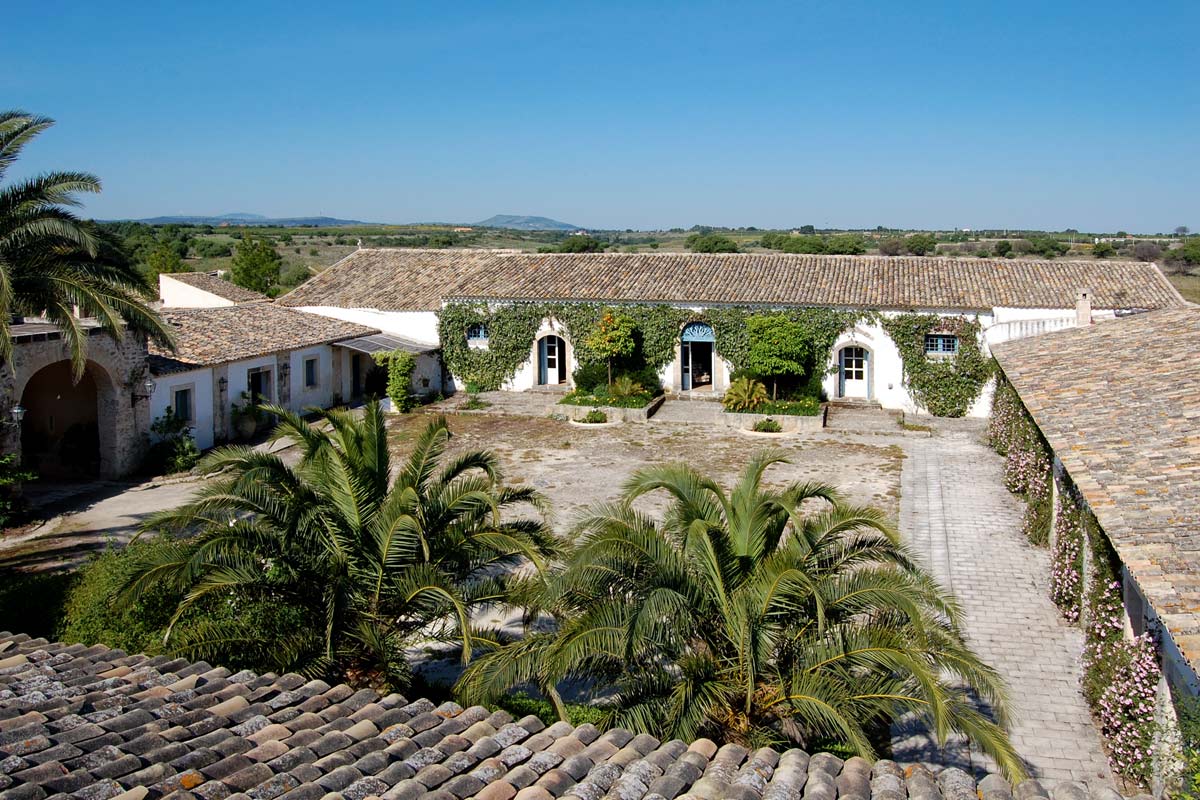
Properties in the Sicilian interior range from restored baglio farmhouses — the fortified agricultural estates typical of western Sicily — to elegant manor houses in the hill towns of the Madonie and Nebrodi mountains. The cooking is among the most complex on the island, drawing on Arab, Norman and Spanish influences: couscous in Trapani, pane cunzato in Palermo’s markets, slow-braised meats with wild herbs. This is Sicily for travellers who want depth over comfort — and who leave knowing the island in a way that the coast can never provide.
The interior of Sicily has a continental climate quite different from the coast — hotter and drier in summer, cooler and occasionally snowy in the Madonie and Nebrodi mountains in winter. The finest seasons for travel are April through early June and September through October. Spring transforms the wheat fields into a rolling green and yellow patchwork, the almond and citrus trees are in blossom, and the archaeological sites can be visited in comfortable warmth (18–24 °C) without the August crowds. The light at this time of year has the quality that made Sicily a magnet for 18th-century Grand Tourists.
September and October bring the grape harvest to the Marsala, Alcamo and Etna wine zones, olive pressing begins in November, and the landscape takes on a warm amber tone against the stark geological formations of the interior. July and August are very hot inland (35–40 °C in the plains), though the Madonie mountains at altitude provide relief. This is also peak season at the coast, meaning the archaeological sites and hill towns are far more peaceful than their coastal counterparts. Winter (November–March) is mild enough for comfortable sightseeing and exceptionally quiet — ideal for those who want the ancient sites entirely to themselves.
The main gateway for inland Sicily is Palermo Falcone-Borsellino (PMO) on the north coast, well connected to major European cities and Rome. Catania Fontanarossa (CTA) serves the eastern interior (Piazza Armerina, Enna) and is the better choice for guests focusing on that area. From Palermo, the A19 motorway runs directly to Enna in the geographic centre of the island (about 90 minutes), with exits for Agrigento (A19 then SS189, about 90 minutes) and Piazza Armerina (just off the A19). A private chauffeur transfer from Palermo airport, stopping at the Norman cathedral of Monreale en route to your villa, makes an exceptional arrival sequence.
A private car is absolutely essential for exploring inland Sicily — the great archaeological sites, the hilltowns and the agricultural estates are spread across a road network where public transport is minimal and infrequent. The roads are generally good, though the routes between inland towns often follow ancient ridgeline paths that reward slow driving rather than GPS efficiency. We can arrange a dedicated driver for the duration of the stay, which is the most practical solution for guests who want to cover serious ground across the island.
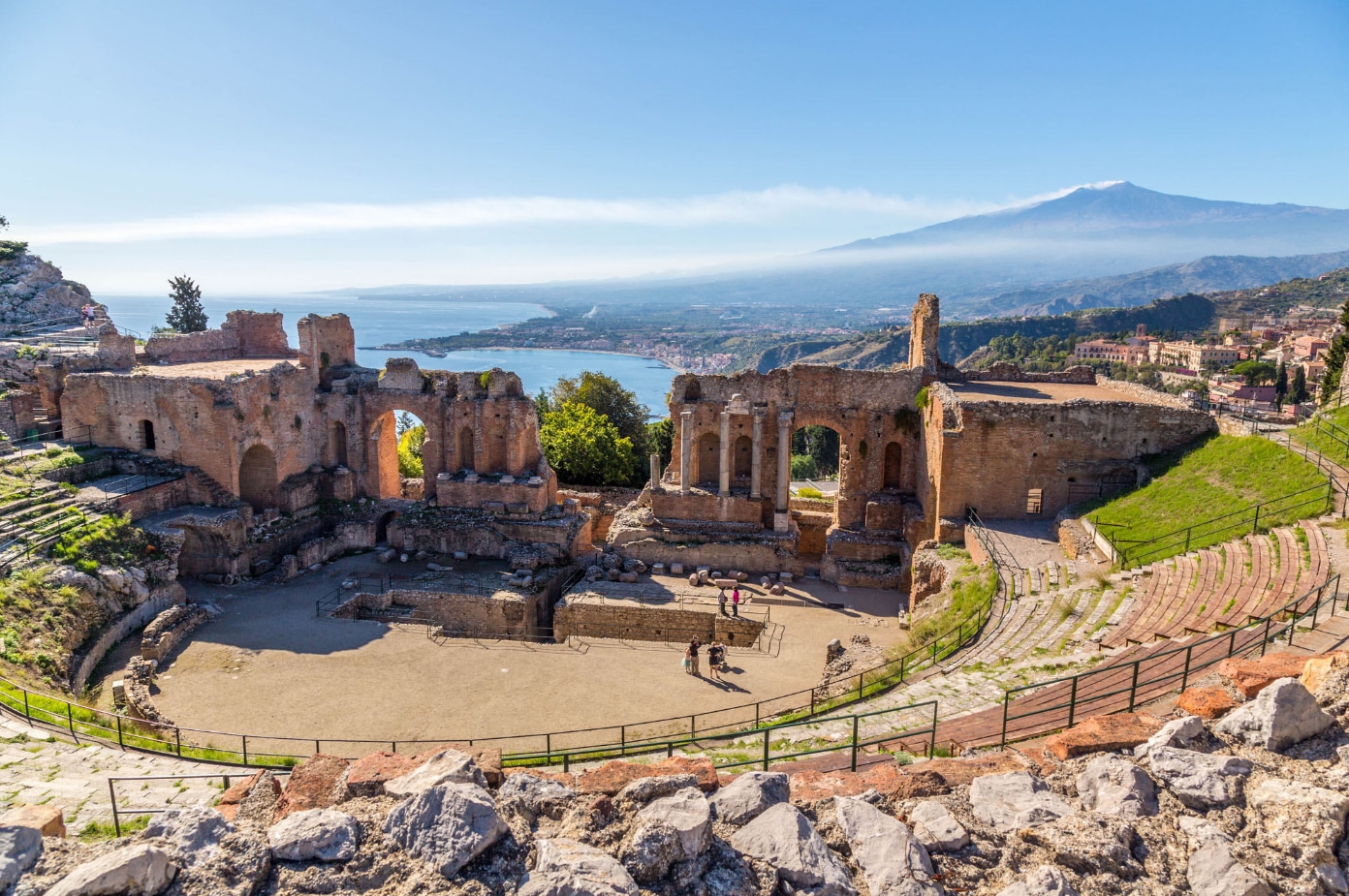
The Valley of the Temples (Valle dei Templi) at Agrigento is the single greatest Greek archaeological site outside Greece — a ridge of Doric temples in honey-coloured limestone overlooking the sea, best seen at dawn before the tour groups arrive or in the evening when the temples are illuminated. The Villa Romana del Casale near Piazza Armerina contains the finest collection of late-Roman floor mosaics in existence — 3,500 square metres of extraordinarily detailed imagery, including the famous “bikini girls” mosaic, preserved under a protective roof. Both sites are UNESCO World Heritage Sites and require at least half a day each.
Agrigento the town, above the temples, is a working Sicilian city with a fine Arab-Norman cathedral and the excellent Archaeological Museum. Enna, at 931 metres the highest provincial capital in Sicily, commands views across the entire interior and retains a largely unvisited old town with a Lombard castle. The Madonie mountains between Palermo and Cefalù offer the island’s finest hiking terrain, with medieval villages such as Petralia Soprana and Castelbuono preserving a traditional mountain culture. The Selinunte archaeological park on the south-west coast contains the largest Greek temple ruins in the world — still only partially excavated, set in a coastal landscape of wild fennel and cistus.
Inland Sicily’s food culture is the island’s most complex and least diluted by tourism. In the west, the Arab influence is directly traceable: couscous di pesce around Trapani and Mazara del Vallo is a living legacy of the Aghlabid occupation; the sweet-and-sour agrodolce cooking style, the use of saffron and cinnamon in savoury dishes, and the extraordinary pastry tradition (cassata, cannoli, marzipan) all reflect centuries of Arab-Norman synthesis. The street food of Palermo — arancini, panelle, pani ca’ meusa (spleen sandwich), sfincione — is among the most democratic and satisfying in Italy.
The wine scene has been transformed in recent decades. Nero d’Avola from the south-east (Pachino, Noto, Avola) is Sicily’s most celebrated red grape, producing wines that range from simple, fruit-forward reds to complex, age-worthy bottles from producers such as Cos, Arianna Occhipinti and Gulfi. Marsala, the fortified wine of western Sicily, is experiencing a serious revival; the historic cellars of Florio and Pellegrino in the town of Marsala are open for visits. The Etna DOC zone, though technically coastal, is increasingly relevant to interior travellers: the altitude-grown Nerello Mascalese from the volcano’s slopes is now one of Italy’s most sought-after red wines, with private cellar visits available at Benanti, Cornelissen and Terre Nere.
Is inland Sicily safe for independent travel?
Entirely so. The interior towns are welcoming, crime directed at tourists is rare, and the landscape — despite its remote feel — is well-travelled by locals and well-served by petrol stations and good local restaurants. The main practical consideration is heat in July and August; always carry water and plan sightseeing for early morning and late afternoon.
Can we combine an inland stay with time on the coast?
Absolutely — and many guests do. Agrigento is 45 minutes from the coast at Porto Empedocle and San Leone, Piazza Armerina is 90 minutes from the Baroque towns of the Val di Noto (Noto, Ragusa, Modica) which are close to excellent beaches. A split stay — a few days inland for archaeology and culture, then a coastal villa for swimming and seafood — is one of the most satisfying Sicily itineraries.
How long do we need to see the main sites?
The Valley of the Temples and the Villa Romana del Casale each deserve a full half-day at minimum; a full day is better. Selinunte, Segesta and the Palermo monuments each warrant at least 3–4 hours. A week based inland allows you to cover all the major sites without rushing, while still leaving time for market visits, cooking experiences and simply driving slowly through the landscape.
Fontanarossa Recommended
The main gateway to this half of the island. Around 45 minutes to Taormina, an hour and a quarter to Noto.
Pio La Torre
Very convenient for Ragusa, Modica and Scicli when a route works. Small, quiet and quick to clear.
Falcone Borsellino
Only if you are crossing the island anyway.
Local knowledge A car is essential once you leave Taormina.
Journey times are approximate and vary according to the villa location, traffic and local road conditions. Flight routes: Summer 2026. Routes are the one thing here that changes every year, which is why they carry a date and the drive times do not.
Get in touch with us. Tell us dates, guests, and style — we’ll help you find the most suitable villas for your trip to Inland Sicily Destinations.
Ask our concierge