








Attraction
Bussento Caves WWF Oasis
A WWF oasis where the Bussento river resurfaces among woodland, paths and historic mills.
Attraction
A WWF oasis where the Bussento river resurfaces among woodland, paths and historic mills.
Attraction
A delicate waterfall framed by maidenhair fern in the protected Cilento landscape.
Attraction
A monumental Carthusian monastery known for its vast cloister and richly layered architecture.
Attraction
A complex Mediterranean city of ancient streets, churches, museums and living neighbourhoods.
Attraction
A guided cave system where an underground river forms part of the visitor route.
Attraction
The excavated Roman city preserved by the eruption of Vesuvius in AD 79.
Attraction
A lively Campanian city combining a medieval cathedral, historic streets and an Adriatic-facing waterfront.
Gateway to the Amalfi Coast – Clifftop Villas, Lemon Groves and the Bay of Naples
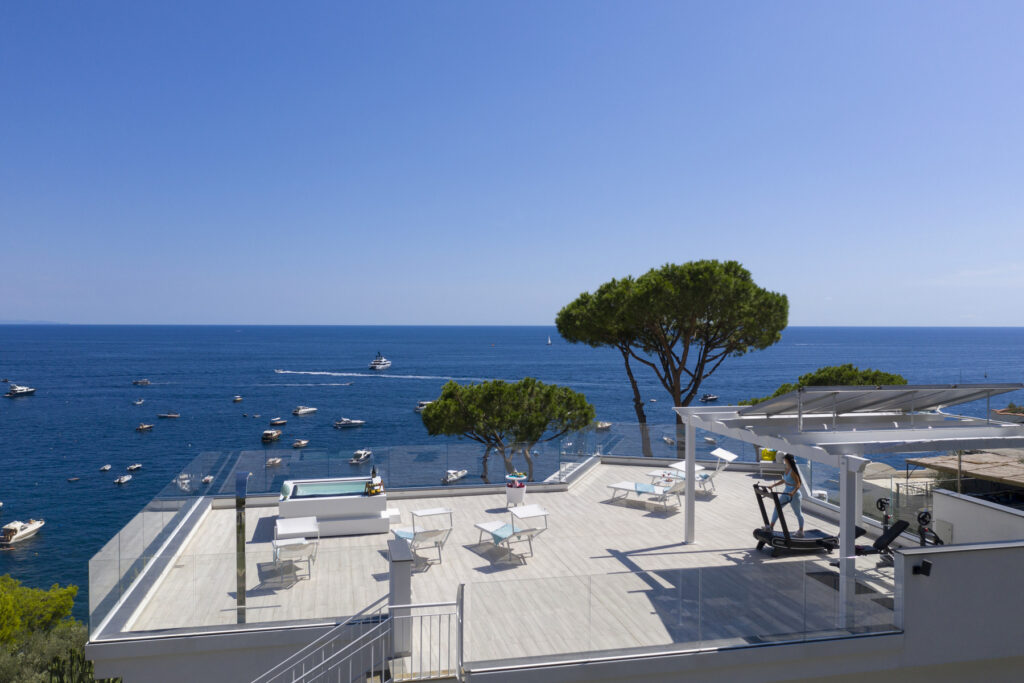
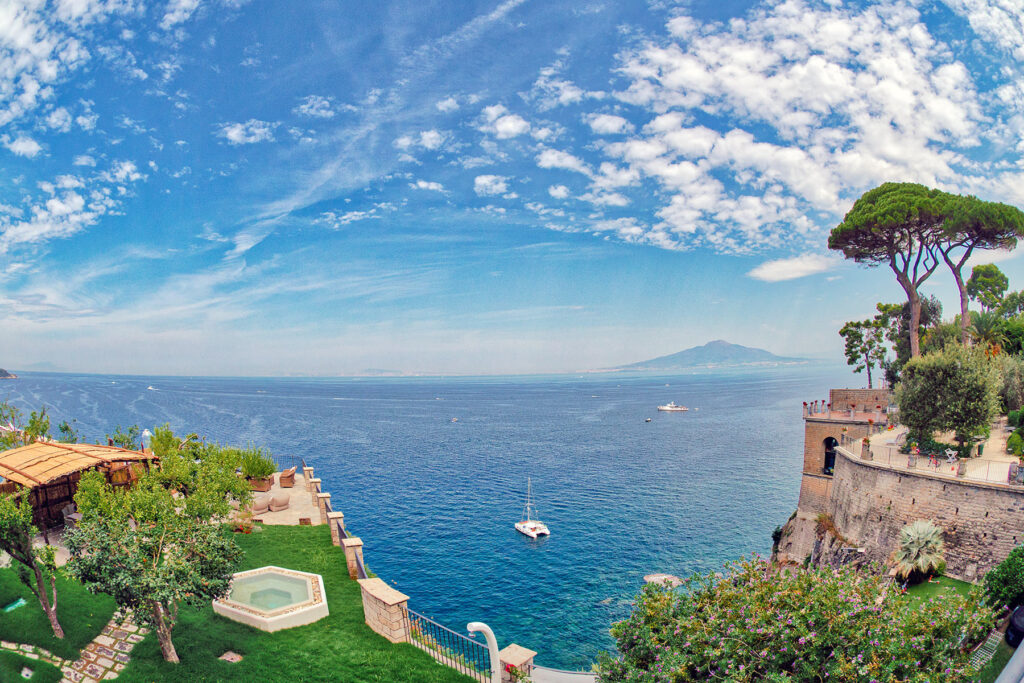
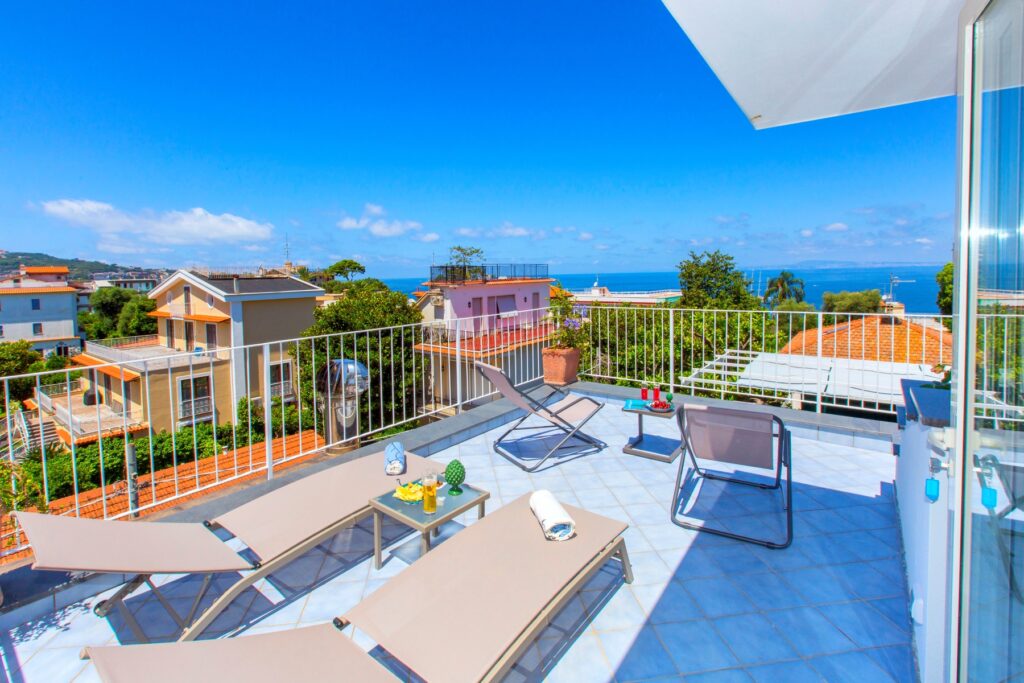
Sorrento sits on the southern lip of the Sorrento Peninsula, perched on cliffs 50 metres above the sea with views across the Bay of Naples to Vesuvius and the islands beyond. It is the natural base for exploring the Amalfi Coast, Capri and Ischia — connected by regular ferry services — while offering considerably more space, better value and quieter streets than the coast towns themselves.
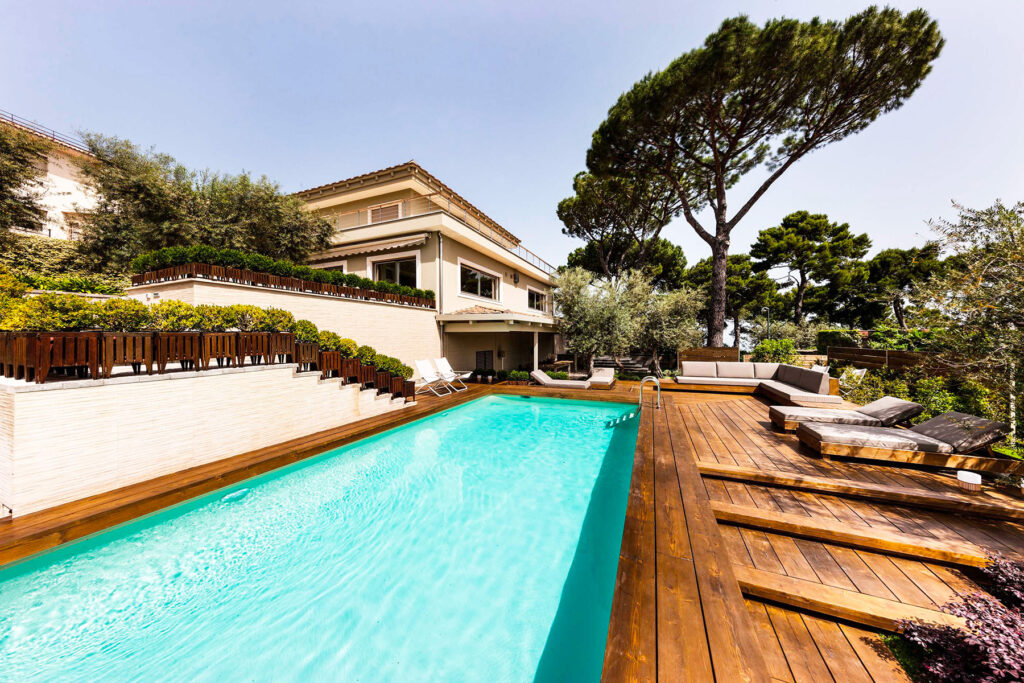
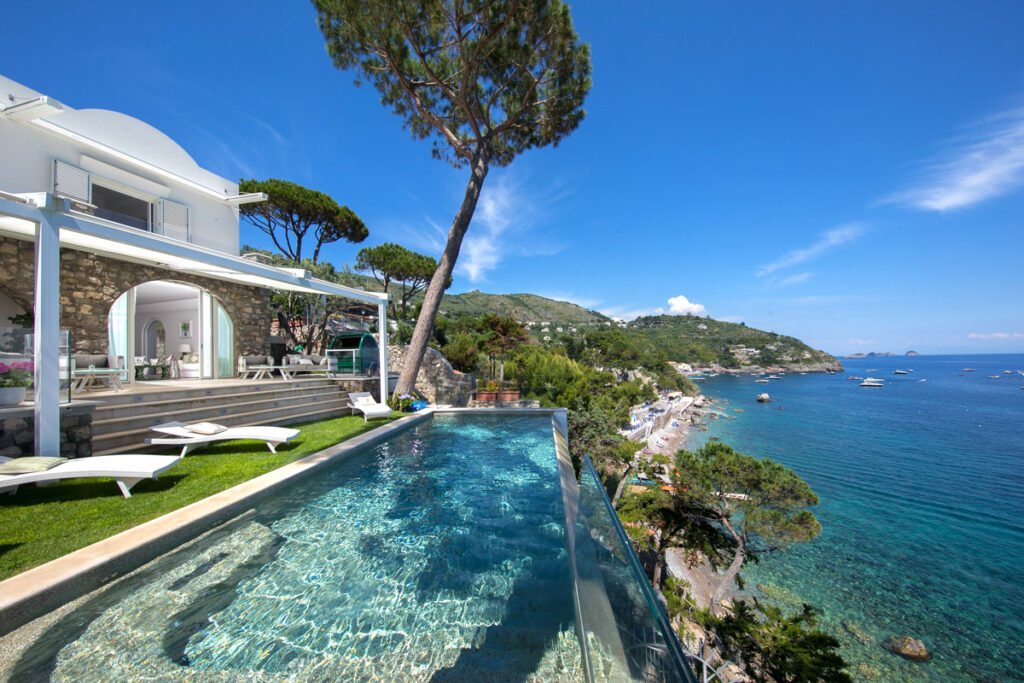
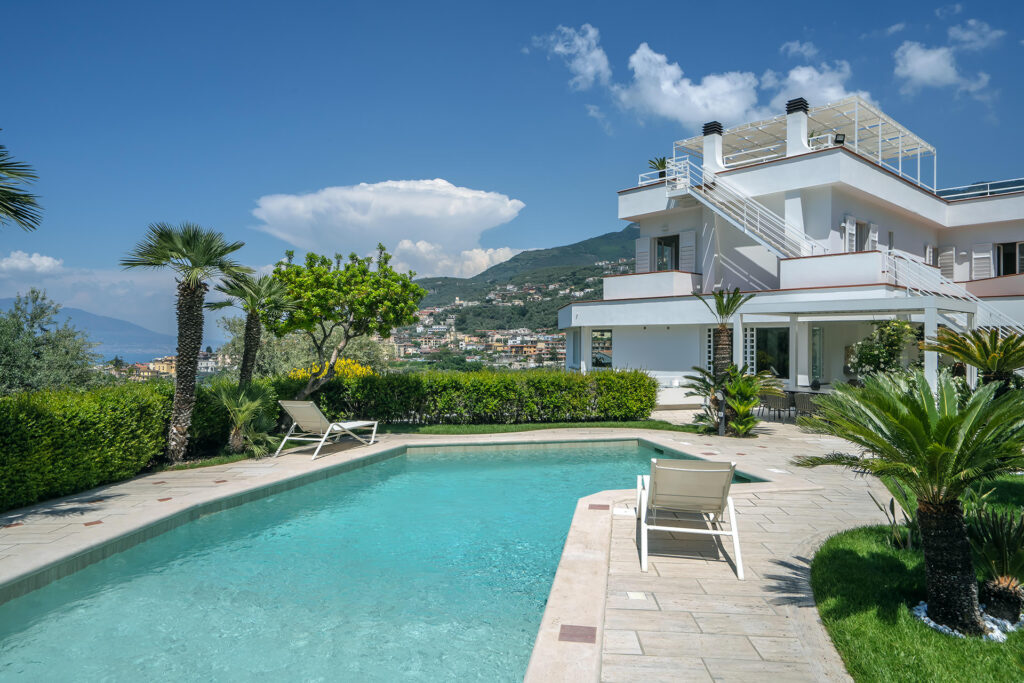
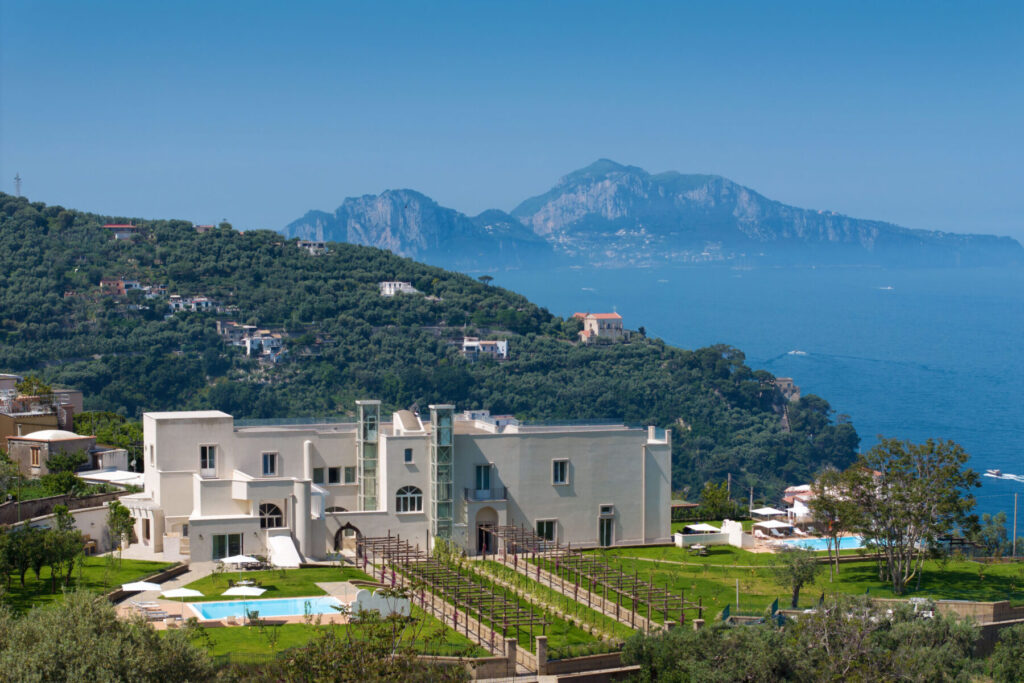
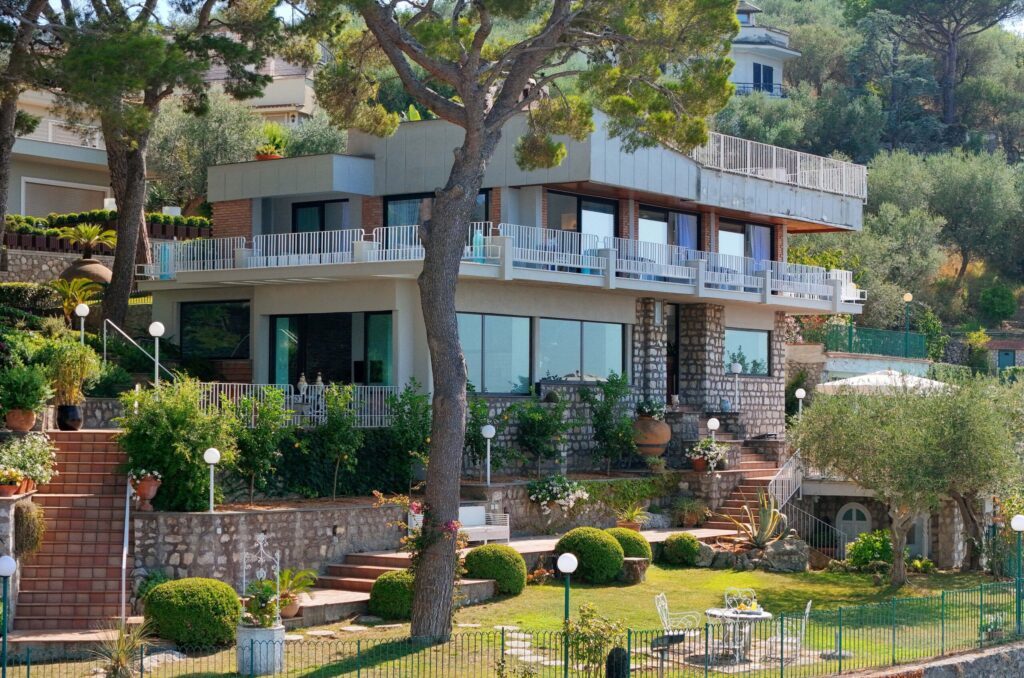
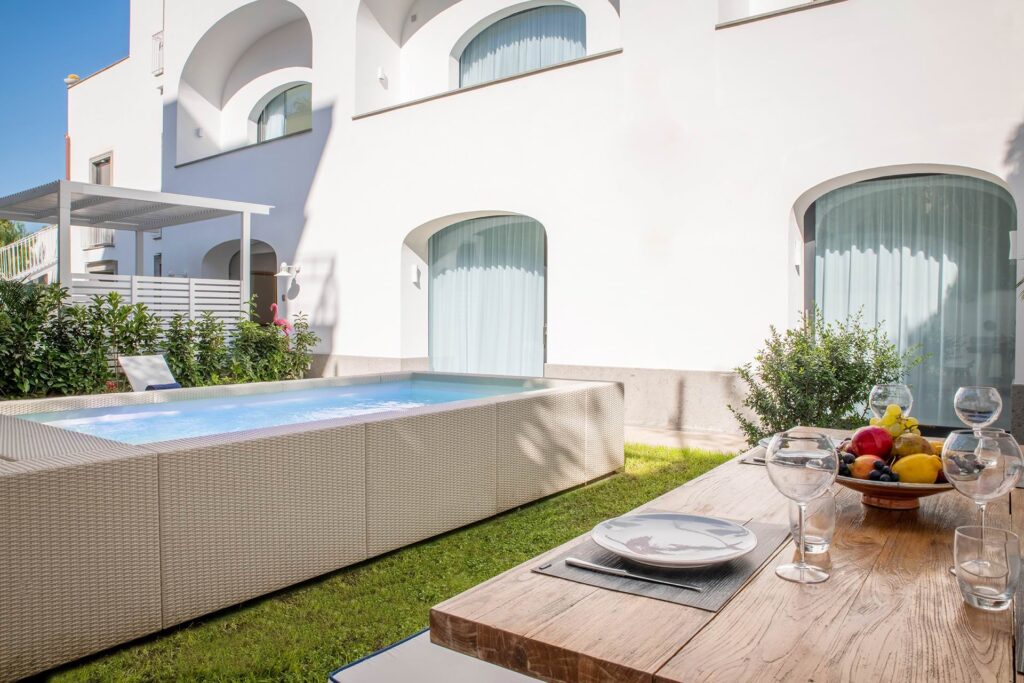
The villas in and around Sorrento range from clifftop estates with direct sea access to hillside properties surrounded by lemon and orange groves. Many have private pools with panoramic views that justify the stay entirely on their own terms. The town itself — Marina Grande, the historic centre, the Correale museum, the Norman cathedral — rewards a morning’s unhurried exploration. But most guests here are using Sorrento as a base, and for that purpose it is one of the finest on the entire southern Italian coast.
Sorrento’s position on a south-facing clifftop gives it one of the mildest microclimates on the Italian peninsula — sheltered from the north by the Lattari mountains, open to the warmth of the Mediterranean. The season here is genuinely long, and each period offers something different.
April & May — The Ideal Window
The lemon groves are in flower, the bougainvillea is coming out, and temperatures are warm without the summer intensity (18–24°C / 64–75°F). The ferries to Capri and the Amalfi Coast run on summer schedules from Easter. Crowds are manageable. Highly recommended — particularly May, which combines ideal weather with the still-green terraces before the summer heat dries the landscape.
June to August — High Season
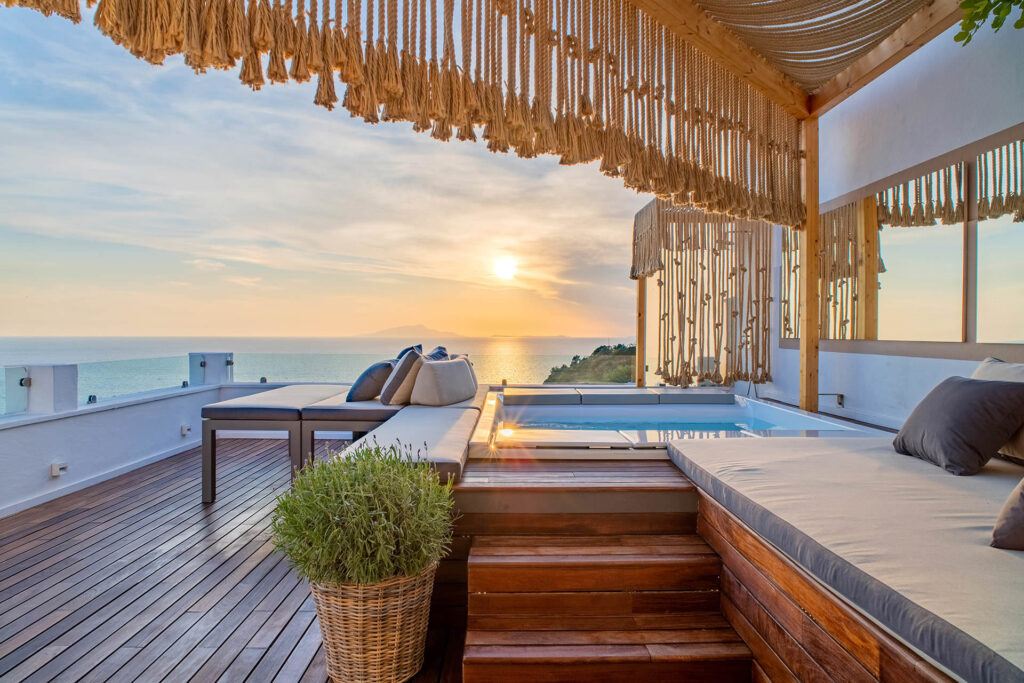
Summer is peak season throughout the Amalfi Coast area. Sorrento’s cliff position means it catches the sea breeze better than many of the coast towns, but July and August still bring temperatures of 28–33°C (82–91°F). The ferries are busy, accommodation fills months in advance, and the town centre can feel crowded in the evenings. A villa with a pool transforms this — you have your own retreat from the heat. Sunsets are exceptional from July onwards.
September & October — A Close Second to Spring
September sees the summer crowds thin while the sea remains warm enough to swim (still 24–25°C). The light turns golden, the ferry queues shorten, and the restaurants begin to feel like themselves again. October is cooler (18–22°C) but often brilliantly clear. Both months offer the full Amalfi Coast experience without the July peak.
November to March — Off Season
Sorrento is quieter in winter but never empty — the town has a life of its own beyond tourism. Some hotels and restaurants close January–February, but the villa experience remains possible and prices are at their lowest. The views of Vesuvius across the bay on a clear winter day are among the most dramatic in Italy.
| Month | Avg. Temp | Sea Temp | Crowds |
|---|---|---|---|
| April | 17°C / 63°F | 16°C | Medium |
| May | 21°C / 70°F | 19°C | Medium–High |
| June | 26°C / 79°F | 22°C | High |
| July | 29°C / 84°F | 25°C | Very High |
| August | 30°C / 86°F | 26°C | Very High |
| September | 25°C / 77°F | 24°C | Medium |
| October | 20°C / 68°F | 21°C | Low–Medium |
| November | 15°C / 59°F | 18°C | Low |
Getting around the Sorrento Peninsula and Amalfi Coast requires some planning — the coastal roads are among the most scenic but also the most congested in Italy. Understanding your options before you arrive makes a significant difference to the experience.
Getting to Sorrento
Naples International Airport (Capodichino) is the closest hub — approximately 50km and 1 hour 15 minutes from Sorrento by car or private transfer, longer in traffic. The Circumvesuviana train from Naples Centrale to Sorrento runs frequently (roughly every 30 minutes) and takes about 1 hour 10 minutes — slow but scenic and reliable. Rome Fiumicino is 250km north, approximately 3 hours by car or 2 hours 30 minutes by high-speed train to Naples then transfer. A private transfer from Naples airport direct to your villa is the most comfortable option for arriving guests with luggage.
Ferries — The Best Way to Move
From Sorrento’s Marina Piccola, regular ferry and hydrofoil services run to: Capri (25 minutes by hydrofoil, 45 minutes by ferry), Positano (35 minutes), Amalfi (1 hour), Naples (1 hour by ferry). This ferry network is the single most important transport advantage of a Sorrento base — you can reach the Amalfi Coast towns, the islands, and Naples without touching a road.
The Coastal Road (SS163) — Drive with Awareness
The Amalfi Drive is one of the world’s most famous roads — and one of the most genuinely difficult to drive in summer. Narrow, with sheer drops, constant oncoming traffic and tourist coaches, it requires concentration and patience. If you want to explore by car, do it in April, May, early June or late September — not in August. Alternatively, take the ferry and avoid the road entirely.
Should I Hire a Car?
For a Sorrento villa stay, it depends. If your plan is primarily ferry-based (Capri, Amalfi Coast towns, Naples), you may not need a car at all. If you want to explore the Sorrento Peninsula inland — Massa Lubrense, Sant’Agata sui Due Golfi, the back roads — then yes, a small car is useful. Avoid bringing a large vehicle onto the coast road in peak season. Our concierge can advise based on your specific plans.
Private Drivers and Boat Charters
A private driver for Amalfi Coast day excursions removes the stress of the coastal road entirely. Private boat charters from Sorrento — for a day around Capri’s coastline, or a sunset cruise along the Amalfi cliffs — are one of the most popular experiences for villa guests and can be arranged through our concierge.
Sorrento is a base as much as a destination — and from here, some of Italy’s finest experiences are within an hour by boat or car. But the town itself deserves more than a quick walk-through.
In Sorrento
Marina Grande and the Old Fishing Quarter
Tucked below the main clifftop town via a steep ramp, Marina Grande is the old fishing village — far less visited than the main promenade and considerably more atmospheric. Small boats on the beach, a handful of excellent seafood restaurants, the smell of the sea. Best visited in the morning or early evening.
The Historic Centre and Via San Cesareo
Sorrento’s pedestrianised old town is compact and genuinely pretty — the Sedile Dominova (a 15th-century loggia), the Norman Cathedral, the small piazzas, the craft shops selling inlaid wood (intarsia) work for which the town is famous. An early morning walk before the day-trippers arrive from Naples is ideal.
Museo Correale di Terranova
A beautifully presented collection of decorative arts, Neapolitan painting and local antiquities in an 18th-century villa with gardens overlooking the sea. One of southern Italy’s most charming small museums, and rarely crowded.
Day Trips from Sorrento
Capri (25 minutes by hydrofoil)
The island most associated with la dolce vita: the Blue Grotto, the Faraglioni rocks, the Gardens of Augustus, the Piazzetta. Go early — the day-tripper boats from Naples arrive mid-morning and the island fills fast. An overnight stay at a Capri hotel (bookable through our concierge) lets you experience the island at its most magical: evenings when the day-trippers have gone.
Positano (35 minutes by ferry)
The most photographed village on the Amalfi Coast — pastel-coloured houses stacked vertically on the cliff face above a small beach. Best approached by sea for the full visual impact. The shopping (ceramics, limoncello, handmade sandals) is excellent; the restaurants on the lower slopes are some of the best on the coast.
Pompeii and Herculaneum (30–40 minutes by car or Circumvesuviana train)
Two of the world’s most significant Roman archaeological sites, both preserved by the 79 AD eruption of Vesuvius. Pompeii is the larger and more famous; Herculaneum is smaller, better preserved, and less crowded. Allow a full day for Pompeii; a half-day is adequate for Herculaneum. Book tickets in advance.
The Sorrento Peninsula Interior
The back roads through Massa Lubrense, Sant’Agata sui Due Golfi, and down to Termini and the Punta Campanella marine reserve offer a completely different perspective — olive groves, lemon terraces, small villages, and views over both the Bay of Naples and the Gulf of Salerno. One of the most underrated drives in southern Italy.
The food of the Sorrento Peninsula sits at the intersection of Neapolitan tradition and the lighter, more seafood-focused cooking of the Amalfi Coast. The local products — Sorrento lemons, olive oil from the Peninsula hillsides, San Marzano tomatoes from the Vesuvian plains, fresh fish from the Tyrrhenian — give the cooking a distinctive character.
The Essential Dishes
Gnocchi alla Sorrentina — The town’s signature dish: potato gnocchi baked in a rich tomato sauce with fior di latte mozzarella (the fresh cow’s-milk version), basil, and sometimes a scraping of local Provolone. Simple, deeply satisfying, and found on virtually every menu in town. The best versions use gnocchi made in-house that morning.
Pizza — Sorrento is 50km from Naples, and the pizza tradition here is serious. Expect wood-fired Neapolitan-style pies with San Marzano tomatoes and buffalo mozzarella. Not every restaurant does it well — seek out places with a wood-burning oven and a queue.
Fritto misto di mare — Mixed fried seafood: squid, prawns, anchovies, baby octopus, courgette flowers. The quality of the frying (light, crisp, not greasy) is the test of a good fish restaurant here. Best eaten at Marina Grande, where the fish is caught locally.
Linguine alle vongole — Pasta with clams in white wine, garlic, olive oil and parsley. The clams from the Bay of Naples are exceptionally good; the dish at its best is clean, briny, intensely flavoured. Order it in bianco (without tomato) for the purist version.
Sorrento Lemons and Limoncello
The Sfusato Sorrentino lemon — elongated, thick-skinned, intensely perfumed — is one of Italy’s great IGP products. Larger and more aromatic than ordinary lemons, they are used throughout the local cooking (desserts, salads, fish marinades) and are the base for Sorrento’s most famous export: limoncello. The best limoncello is artisan-made from the skins of local Sfusato lemons — seek out producers in the old town rather than the commercially bottled versions sold at tourist shops. Taken ice-cold as a digestivo after dinner.
Where to Eat
Avoid the tourist-facing restaurants on the main corso (Corso Italia) — they survive on footfall and rarely excel. The best eating is in the side streets of the old town, in the Marina Grande fishing quarter, and in the village trattatorie on the Peninsula’s back roads toward Massa Lubrense and Sant’Agata. Our villa guests receive a curated local restaurant guide with every booking — ask us for current recommendations specific to your dates and preferences.
Wine to Order
Campania has an excellent and underappreciated wine culture. Look for: Fiano di Avellino DOCG (full-bodied white, outstanding with seafood), Greco di Tufo DOCG (mineral, crisp white), and Aglianico del Taburno or Taurasi DOCG for serious reds. The local vino della casa in a good trattoria is often an unlabelled Campanian wine that outperforms its modest price.
Is Sorrento better than staying in an Amalfi Coast town?
For a villa holiday, Sorrento is often the superior base. The Amalfi Coast towns (Positano, Amalfi, Ravello) have very limited villa availability, steep terrain that makes them impractical for families, and summer traffic that can make leaving by road a significant effort. Sorrento offers more space, better ferry connections to the entire coast, and a wider range of villa properties — while being just 35 minutes by hydrofoil from Positano.
Do I need a car in Sorrento?
Not necessarily. The ferry network from Marina Piccola connects you to Capri, Positano, Amalfi and Naples without touching a road. If you plan to explore the Sorrento Peninsula interior or visit Pompeii by car (rather than train), a small rental car is useful. Avoid hiring a large vehicle if you intend to drive the Amalfi coastal road in peak season — the road is genuinely narrow.
How do I get from Naples Airport to Sorrento?
The three options are: private transfer (1–1 hour 30 minutes, most comfortable with luggage — approximately €80–120), taxi (similar time and cost), or the Circumvesuviana train from Naples Centrale (1 hour 10 minutes, cheapest but requires getting to the station first). Our concierge can arrange airport transfers directly to your villa.
Can we take a day trip to Capri from Sorrento?
Yes — Capri is 25 minutes by hydrofoil from Sorrento’s Marina Piccola, with multiple daily departures. Book your return ferry in advance in peak season, as services fill quickly. We strongly recommend going on a weekday and taking the first departure of the day to beat the Naples day-tripper boats.
When is the Amalfi Coast too crowded?
July and August are peak months — ferries are busy, the coastal road is genuinely difficult, and the most popular spots (Positano, Capri’s Piazzetta) are very crowded mid-day. If you are visiting in July or August, plan around it: early morning or evening visits, ferry rather than road, and use your villa pool in the afternoon. May, June and September offer a significantly more relaxed experience.
Are Sorrento villas suitable for families?
Yes — many of our Sorrento villas are specifically suited to families, with private pools, gardens, and multiple bedrooms. The terrain around Sorrento is easier for families with young children than the steep paths of Positano or Amalfi. The beach at Marina Grande (a short walk down from the clifftop town) is calm and suitable for children; Bagni della Regina Giovanna, a natural sea pool 5km west of town, is a local favourite for swimming.
Get in touch with us. Tell us dates, guests, and style — we’ll help you find the most suitable villas for your trip to Sorrento.
Ask our concierge