







Attraction
Abbey of Sant’Antimo
A Romanesque abbey set among olive groves and vineyards in the Val d’Orcia.
Attraction
A Romanesque abbey set among olive groves and vineyards in the Val d’Orcia.
Attraction
A historic Apennine mountain resort with seasonal skiing, forests and highland villages.
Attraction
A working Adriatic port city of hilltop monuments, Roman heritage and dramatic coastal viewpoints.
Attraction
A championship golf course set among wooded Umbrian hills beneath a medieval castle.
Attraction
A hilly coastal golf course overlooking the lagoon and landscapes of Monte Argentario.
Attraction
A historic spa town spread along the Lima valley in the hills north of Lucca.
Attraction
A fortified Maremma village near the coast and Niki de Saint Phalle’s Tarot Garden.
Attraction
A lakeside Lazio village set on a promontory above the clear waters of Lake Bolsena.
Attraction
A tiny Apennine village overlooking the broad plateaux famous for seasonal flowering.
Attraction
A medieval Tuscan hill town overlooking the celebrated landscapes of the Val d’Orcia.
Attraction
A privately managed medieval castle estate in the countryside east of Siena.
Attraction
A UNESCO-listed Etruscan necropolis of monumental tombs cut into the volcanic landscape.
Attraction
A compact Tuscan village beneath Monte Cetona, close to important prehistoric sites.
Attraction
A fragile medieval village perched on a tuff ridge above the Valle dei Calanchi.
Attraction
A Marche coastal city combining Roman remains, Renaissance monuments and an Adriatic seafront.
Attraction
An Umbrian city of medieval streets, civic museums and a central position in the Valle Umbra.
Attraction
A vast limestone cave system explored through guided underground routes in the Marche.
Attraction
A golf course set among the gentle Umbrian hills near Lake Trasimeno.
Attraction
A fortified medieval village dominated by a castle associated with history and Dantean legend.
Attraction
A monumental Umbrian hill town of medieval palaces, stone streets and enduring civic traditions.
Attraction
Emperor Hadrian’s vast Roman villa complex of palaces, gardens, baths and experimental architecture.
Attraction
A volcanic lake in northern Lazio ringed by historic towns, beaches and fertile countryside.
Attraction
A broad Umbrian lake surrounded by islands, historic towns and gentle countryside.
Attraction
A walled medieval town among olive groves and vineyards in the Tuscan Maremma.
Attraction
A medieval Maremma town overlooking the countryside between Saturnia and the Tuscan coast.
Attraction
A wooded Umbrian mountain landscape closely connected with Assisi and Franciscan history.
Attraction
A Renaissance hill town renowned for Vino Nobile and panoramic views across southern Tuscany.
Attraction
A small Sienese village enclosed by a complete medieval ring of walls and towers.
Attraction
An extinct volcanic mountain covered by beech and chestnut forests in southern Tuscany.
Attraction
A walled Umbrian hill town of stone streets, springs and wide Apennine views.
Attraction
A lagoon town linking the Tuscan mainland with Monte Argentario and its coastal nature reserves.
Attraction
Umbria’s regional capital, rich in Etruscan remains, medieval streets and important art collections.
Attraction
An Adriatic city where Rossini’s musical heritage meets museums, beaches and a walkable centre.
Attraction
Tuscany’s busiest airport, connected directly with Pisa Centrale by the PisaMover.
Attraction
A striking hill town built on volcanic tuff, with a historic Jewish quarter and nearby Vie Cave.
Attraction
A historic harbour beneath Spanish fortresses on the Monte Argentario peninsula.
Attraction
Monte Argentario’s principal port, shaped by fishing, ferries and a busy Mediterranean waterfront.
Attraction
A dramatic tuff-built town of fortifications, steep lanes and ancient rock-cut routes.
Attraction
A compact medieval village beside an important landscape of Etruscan tombs and rock-cut roads.
Attraction
An Umbrian hill city known for its cathedral, hilltop fortress and major performing-arts festival.
Attraction
A fortified harbour village overlooking the Maremma coast and the Gulf of Argentario.
Attraction
Niki de Saint Phalle’s monumental sculpture garden of mosaics, mirrors and vivid symbolic forms.
Attraction
A compact Umbrian hill town of medieval palaces, churches and expansive valley views.
Attraction
A Lazio hill town distinguished by Romanesque churches and a rich Etruscan heritage.
Attraction
The world’s smallest independent state, home to major religious monuments and art collections.
Attraction
A quiet mountain village surrounded by springs, woodland and the upper slopes of Monte Amiata.
Medieval Tuscany at Its Finest – The Palio, the Piazza and the Chianti Hills
Siena is one of Italy’s most perfectly preserved medieval cities — a UNESCO World Heritage Site whose shell-shaped central square, the Piazza del Campo, has changed little since the 14th century. Unlike Florence, Siena never industrialised and never sprawled; the historic centre remains intact, enclosed by its original walls, with an atmosphere unlike anywhere else in Tuscany.
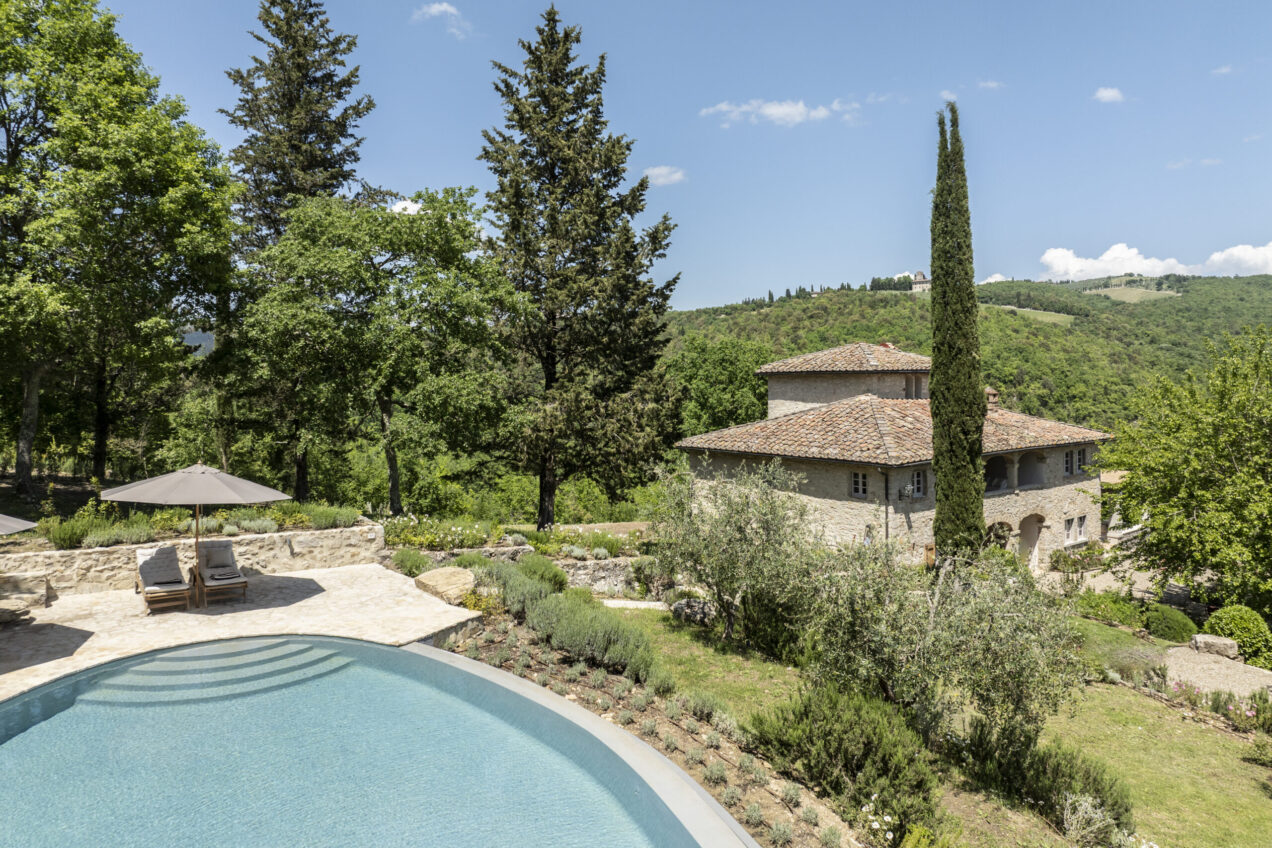
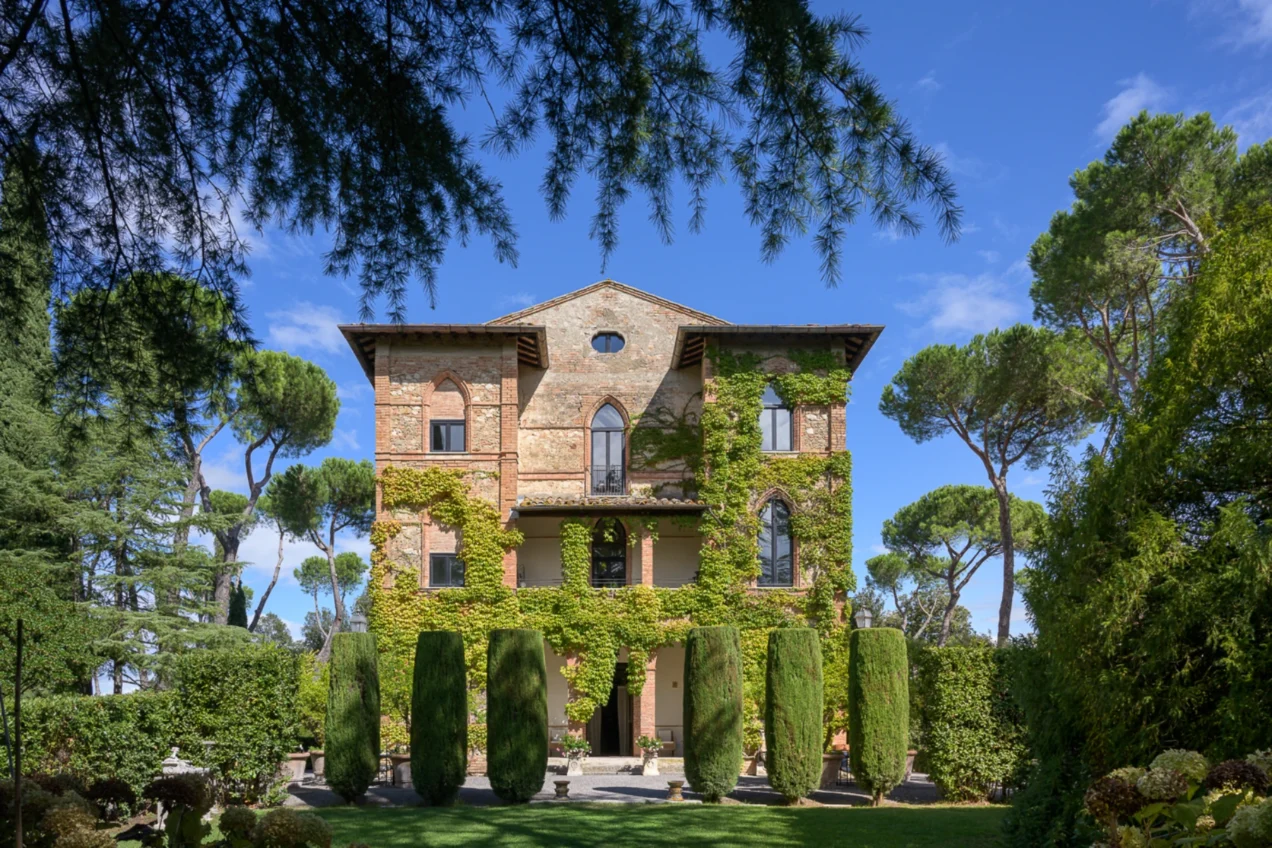
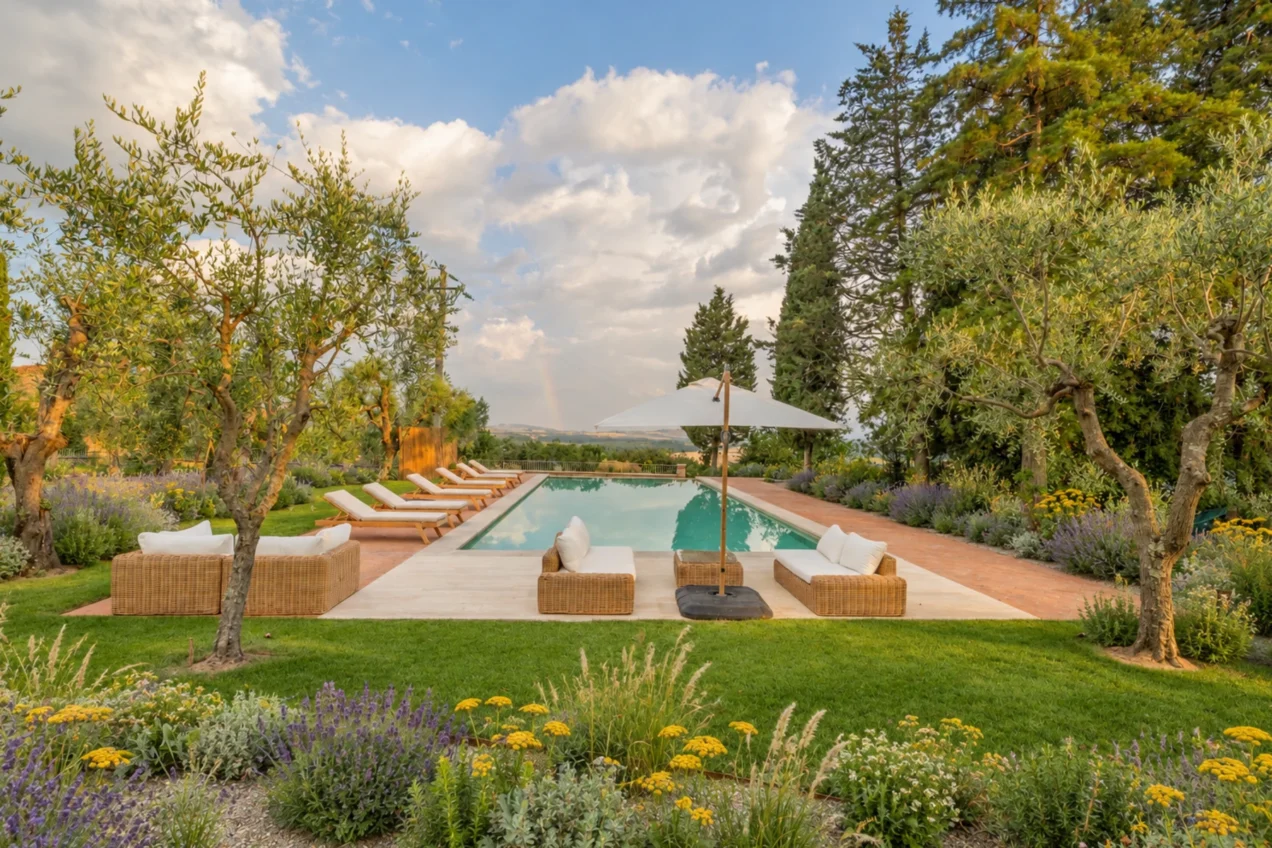
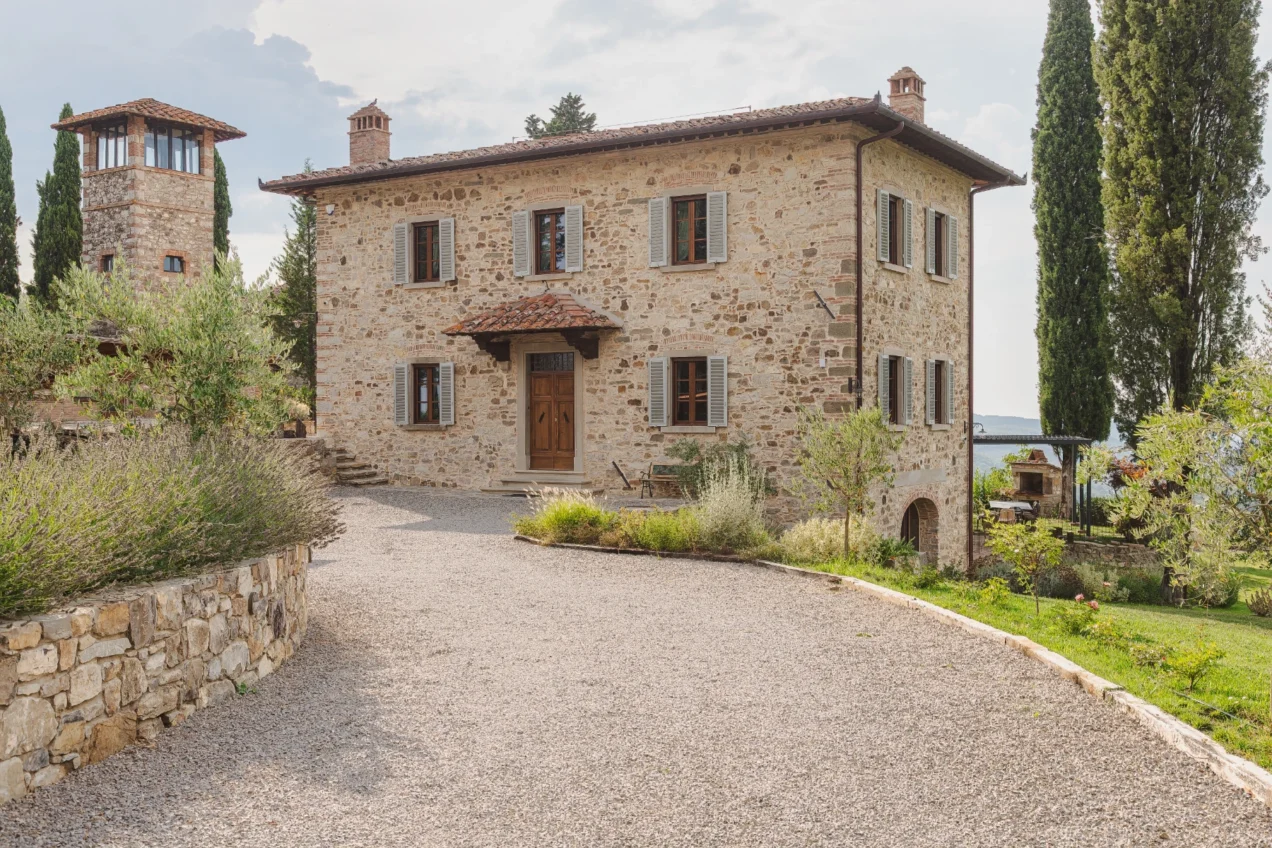
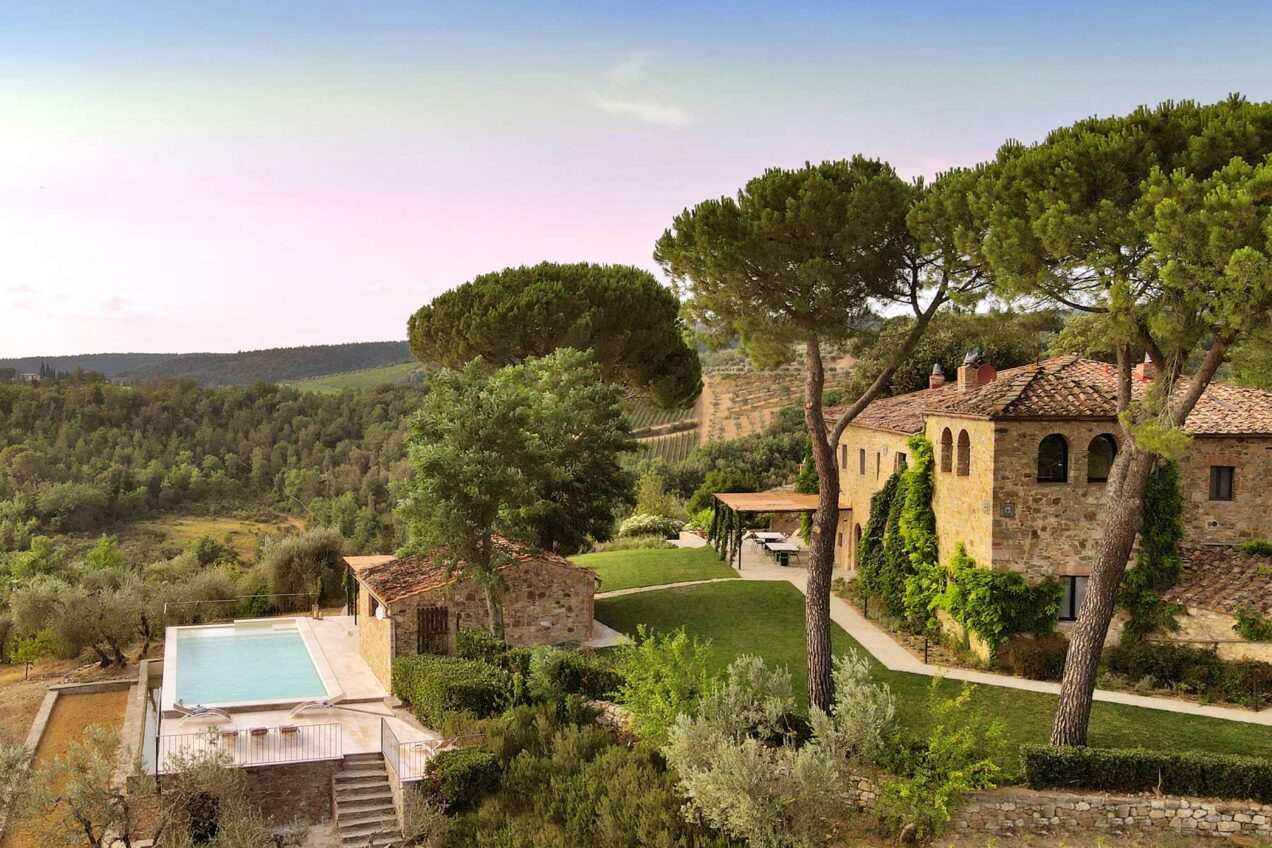
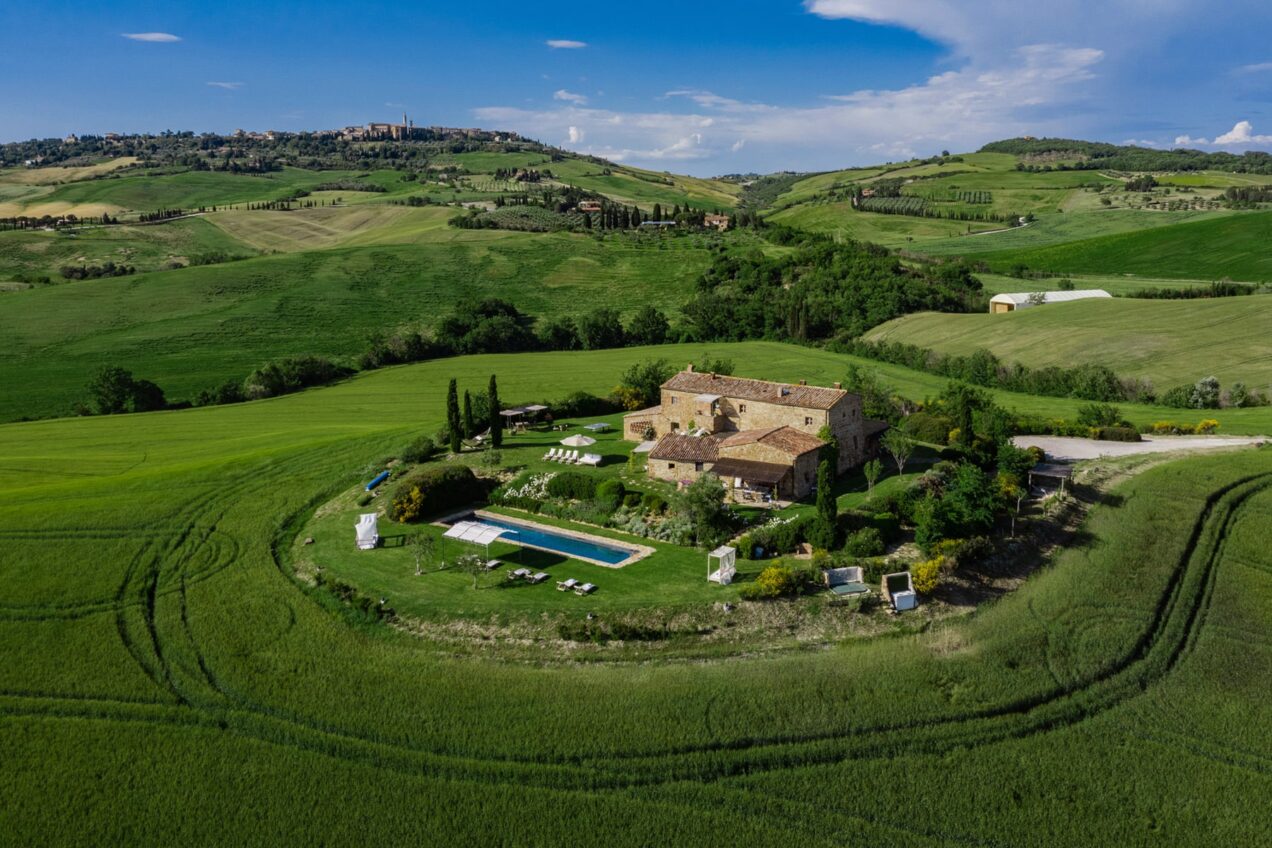
The villas in and around Siena are among the finest in the region — many set within the Chianti Classico wine country to the north, others on the cypress-lined ridges of the Crete Senesi to the south, others closer to the Val d’Orcia. All share the classic Tuscan landscape that makes this corner of Italy one of the most sought-after villa destinations in the world. Siena itself rewards a full day’s exploration; the surrounding countryside rewards a week.
Siena sits at 320 metres above sea level in the Tuscan hills — cooler than the Arno valley in summer, and with a more continental climate than the coast. The seasons here are genuinely distinct, and each has its own appeal.
April & May — Outstanding
The Tuscan countryside around Siena is at its most spectacular in spring: bright green wheat fields, wildflowers, poppies on the hillsides, the cypress avenues in full leaf. Temperatures are ideal (16–22°C / 61–72°F) and visitor numbers are below peak. The Crete Senesi landscape south of the city is particularly dramatic in the clear spring light. Highly recommended.
June & July — The Palio Season
Siena’s famous horse race, the Palio di Siena, is run twice in summer: 2 July and 16 August. If you are visiting during these dates, book accommodation many months in advance — demand is extraordinary. The Piazza del Campo fills with 40,000 people; the race itself lasts 90 seconds and is one of the most viscerally exciting events in Italy. Summer temperatures reach 28–32°C (82–90°F).
August — Palio and Peak Heat
The 16 August Palio is the more important of the two. August is hot (28–33°C), crowded around the city, and quiet in the countryside (many locals are at the coast). Villa stays with a pool work well — use the city in the morning, the pool in the afternoon.
September & October — Ideal
The grape harvest transforms the Chianti hills in September — it is a genuinely beautiful and purposeful time to visit. October brings the olive harvest and the new season’s olive oil. Crowds thin sharply after the first week of September. Temperatures are perfect (18–25°C). Arguably the finest month pair in the Sienese calendar.
November to March
Siena in winter is quiet but far from closed — it is a living city with 50,000 residents and a university. The truffle season peaks in November; the Chianti wine cellars welcome visitors. Villa rates are at their lowest. Cold (5–10°C) but rarely harsh.
| Month | Avg. Temp | Crowds | Highlights |
|---|---|---|---|
| April | 14°C / 57°F | Low–Medium | Spring countryside, quiet museums |
| May | 19°C / 66°F | Medium | Best landscape, ideal weather |
| June | 24°C / 75°F | High | Long evenings, Palio build-up |
| July | 28°C / 82°F | Very High | Palio 2 July |
| August | 28°C / 82°F | Very High | Palio 16 August |
| September | 22°C / 72°F | Medium | Grape harvest — outstanding |
| October | 16°C / 61°F | Low–Medium | Olive harvest, truffle markets |
| November | 10°C / 50°F | Low | Truffles, Chianti tastings |
Siena is extremely well-placed as a Tuscan base — roughly equidistant between Florence to the north and the Val d’Orcia to the south, with the Chianti wine country directly at its doorstep. A car is essential for the full experience.
Getting to Siena
Siena does not have its own airport. The closest options are: Florence Airport (Peretola, 75km — approximately 1 hour 15 minutes by car), Pisa International Airport (120km — 1 hour 30 minutes by car), and Rome Fiumicino (230km — 2 hours 30 minutes by car). There is no high-speed rail connection to Siena — the town sits off the main Tuscan rail lines. Trains from Florence to Siena take 1 hour 30 minutes and run regularly, but for villa guests with luggage, a private transfer or hired car is far more practical.
Car Hire — Essential
For any villa stay in the Siena area, a car is not optional. The great pleasures of this landscape — the wine estate back roads, the Crete Senesi, the Val d’Orcia, the hill towns of Montalcino and Pienza — require independent transport. Pick up your car at Florence or Pisa airport and drive directly to your villa. The roads in this part of Tuscany are well-maintained and lightly trafficked outside of high summer.
Within Siena City
Siena’s historic centre is completely pedestrianised and car-free. Driving to the city from your villa, you will park in one of the peripheral car parks (Parcheggio Il Campo or Stadio) and walk in — the walls are no more than 10 minutes’ walk from the main car parks. The city itself is compact: the Piazza del Campo, the Duomo and the Pinacoteca Nazionale are all within easy walking distance of each other.
Day Trips by Car from Siena
The villa’s position in the Sienese hills makes day trips straightforward: Florence (1 hour 15 minutes), San Gimignano (45 minutes), Montalcino (45 minutes), Pienza (50 minutes), Montepulciano (55 minutes), Volterra (1 hour), Orvieto (1 hour 15 minutes), and the Val d’Orcia (40–60 minutes). The Via Cassia (SS2) south through the Crete Senesi toward Montalcino is one of Tuscany’s great drives.
Siena is one of the few Italian cities where the sights are genuinely secondary to the experience of simply being there — walking the contrade, finding a table in a neighbourhood osteria, watching the evening passeggiata in the Campo. But the art and architecture are extraordinary.
In the City
Piazza del Campo
One of the great public spaces of medieval Europe — a gently sloping shell-shaped square ringed by medieval palazzi, with the 14th-century Palazzo Pubblico and its Torre del Mangia at the flat end. The Torre offers panoramic views over the city and the surrounding hills (worth the climb). The Campo is the social centre of Sienese life: sit at one of the outer café tables in the evening and watch the city move.
The Duomo di Siena
Siena’s cathedral is one of Italy’s greatest Gothic buildings — the black-and-white striped marble exterior concealing an extraordinary interior: Pisano’s carved marble pulpit, Pinturicchio’s Piccolomini Library (with its celebrated fresco cycle), Donatello’s bronze, and the remarkable inlaid marble floor (uncovered fully only between August and October). Allow at least 2 hours; the combined Opera ticket covers the adjacent museum, the baptistery and the unfinished Duomo Nuovo facade.
Pinacoteca Nazionale
The national gallery in the medieval Palazzo Buonsignori holds the finest collection of Sienese painting in existence — Duccio, Simone Martini, the Lorenzetti brothers, Sassetta. Less visited than the Florentine museums and all the better for it; you can stand in front of masterpieces without a queue.
The Palio di Siena
The horse race run in the Piazza del Campo on 2 July and 16 August is not a tourist event — it is a genuine expression of Sienese civic identity, with roots going back to the 13th century. Each of the 17 city districts (contrade) fields a horse and jockey; the rivalries between them are serious and centuries old. Standing in the centre of the Campo for the race is free but extremely crowded (arrive 3–4 hours early for a good position). Ticketed grandstand seats sell out years in advance. Our concierge can assist with access options.
Beyond the City
Chianti Classico Wine Country
The DOCG zone between Siena and Florence — the Classico heartland — is directly north of the city. Estates like Badia a Coltibuono, Castello di Brolio, Fontodi, and Montevertine offer cellar tours and tastings. The Chiantigiana road (SS222) through Greve, Panzano and Radda is one of Tuscany’s great drives.
The Crete Senesi and Val d’Orcia
South of Siena, the landscape changes dramatically — the green hills give way to the pale clay badlands of the Crete Senesi, dotted with isolated farmhouses and dramatic ravines. Further south, the Val d’Orcia is a UNESCO landscape of extraordinary beauty: the iconic cypress avenues, the hot springs at Bagno Vignoni, the hilltop towns of Montalcino, Pienza and Montepulciano. A full day’s drive from Siena that rewards every mile.
The food of the Sienese hills is Tuscan cooking at its most refined and least compromised — a cuisine of exceptional raw materials, long traditions and genuine local pride. The city has its own distinct culinary identity, separate from Florence, rooted in the medieval spice trade that once made Siena one of Europe’s wealthiest cities.
What to Eat in Siena
Pici cacio e pepe — Pici is the hand-rolled thick spaghetti of the Sienese hills — fatter than ordinary spaghetti, with a rough texture that holds sauce. Served simply with aged Pecorino and black pepper (cacio e pepe), or with a slow-cooked wild boar ragù (pici al ragù di cinghiale), it is the defining dish of the Sienese table. Every good trattoria in the province makes it fresh daily.
Bistecca di Chianina — The Chianina is the ancient white cattle breed of the Tuscan and Umbrian valleys; its beef is the raw material for the Fiorentina steak tradition but is eaten across the region. In Siena, look for the thick, bone-in T-bone at traditional bracieri (grill restaurants), served medium-rare.
Ribollita and Pappa al pomodoro — The two great bread-based soups of Tuscany, both at home in Sienese trattatorie: ribollita (bread, cavolo nero, cannellini beans, olive oil) and pappa al pomodoro (bread, ripe tomatoes, basil, olive oil). Deceptively simple; the quality depends entirely on the bread and the olive oil.
Panforte and Ricciarelli — Siena’s most famous exports. Panforte is a dense, spiced fruit-and-nut cake with medieval origins — the original Sienese spice traders’ product, still made to centuries-old recipes. Ricciarelli are soft almond biscuits dusted with icing sugar, protected by IGP status. Buy them from the old-established pasticcerie in the city centre, not from tourist shops.
The Wines of the Sienese Province
Chianti Classico DOCG — The Sangiovese heartland runs through the hills directly north of the city. Gran Selezione (the top tier, from single vineyards) from estates like Fontodi, Isole e Olena or Castello di Ama represents some of Italy’s finest red wine.
Brunello di Montalcino DOCG — Produced on the slopes of Monte Amiata, 45 minutes south of Siena. Italy’s most prestigious Sangiovese — aged a minimum of five years before release, capable of lasting decades. Producers to seek: Biondi-Santi (the originator), Cerbaiona, Poggio di Sotto, Salvioni.
Vino Nobile di Montepulciano DOCG — From the vineyards around Montepulciano, 55 minutes southeast. Elegant, structured Sangiovese (here called Prugnolo Gentile). Often underrated relative to Brunello; excellent value at producer prices.
Vernaccia di San Gimignano DOCG — Italy’s first DOC wine (designated 1966), from the medieval tower town 45 minutes northwest of Siena. Dry, mineral, slightly almond-tinged white — drink young and cold.
Markets and Villa Provisions
The Wednesday and Saturday morning market in Piazza La Lizza (outside the city walls) is Siena’s main general market — good for local produce, cheese and charcuterie. The Mercato Coperto in Via Pianigiani covers daily provisions. For Chianti wines and Pecorino, the small alimentari and enotece in the centro storico are well-stocked. Our concierge can arrange a curated weekly delivery of Sienese and Tuscan products to your villa.
Is Siena better than Florence as a Tuscan villa base?
For guests whose priority is the Tuscan countryside rather than the city, yes. Siena places you closer to the Chianti wine country, the Crete Senesi, Montalcino, the Val d’Orcia and the hill towns of the south. Florence is better for museum-focused visitors or those wanting the best restaurant and cultural scene. Many guests split their time between both — the cities are 75km apart and easily combined with a car.
Do I need a car?
Absolutely — there is no meaningful way to experience the Sienese countryside without one. Pick up your rental at Florence or Pisa airport and drive to the villa. Parking within Siena’s historic centre is not possible without a resident permit; use the peripheral car parks and walk in.
Can we attend the Palio?
Yes — the race is run on 2 July and 16 August in the Piazza del Campo. Standing in the centre of the Campo is free but you must arrive 3–4 hours early and be prepared for extreme heat and crowds. Grandstand seats are allocated years in advance through the contrade — but our concierge has contacts and can occasionally secure seats for guests; enquire at the time of booking.
What is the minimum stay at Siena-area villas?
Most properties require 7 nights in peak season (June–August). Shorter stays of 3–5 nights are typically available in May, September and October. Check individual property listings for current availability.
How far is the nearest town from a typical villa?
Most of our Siena-area villas are within 10–25 minutes of the nearest town with a supermarket and restaurants. Each property listing includes a location map and notes on nearby facilities. Our concierge can advise on the most suitable properties for your specific needs.
Can we visit wine estates directly from our villa?
This is one of the great pleasures of a Sienese villa stay. Most major Chianti Classico and Brunello estates offer tastings by appointment — easily arranged in advance. For guests who want a deeper experience, we can organise private cellar tours with winemakers, harvest participation in September and October, and private wine dinners at estates. Ask our concierge for options suited to your dates.

Get in touch with us. Tell us dates, guests, and style — we’ll help you find the most suitable villas for your trip to Siena.
Ask our concierge