


Attraction
Abbey of Sant’Antimo
A Romanesque abbey set among olive groves and vineyards in the Val d’Orcia.
Attraction
A Romanesque abbey set among olive groves and vineyards in the Val d’Orcia.
Attraction
A working Adriatic port city of hilltop monuments, Roman heritage and dramatic coastal viewpoints.
Attraction
A championship golf course set among wooded Umbrian hills beneath a medieval castle.
Attraction
A hilly coastal golf course overlooking the lagoon and landscapes of Monte Argentario.
Attraction
A fortified Maremma village near the coast and Niki de Saint Phalle’s Tarot Garden.
Attraction
A lakeside Lazio village set on a promontory above the clear waters of Lake Bolsena.
Attraction
A tiny Apennine village overlooking the broad plateaux famous for seasonal flowering.
Attraction
A medieval Tuscan hill town overlooking the celebrated landscapes of the Val d’Orcia.
Attraction
A privately managed medieval castle estate in the countryside east of Siena.
Attraction
A UNESCO-listed Etruscan necropolis of monumental tombs cut into the volcanic landscape.
Attraction
A compact Tuscan village beneath Monte Cetona, close to important prehistoric sites.
Attraction
A fragile medieval village perched on a tuff ridge above the Valle dei Calanchi.
Attraction
A Marche coastal city combining Roman remains, Renaissance monuments and an Adriatic seafront.
Attraction
An Umbrian city of medieval streets, civic museums and a central position in the Valle Umbra.
Attraction
A vast limestone cave system explored through guided underground routes in the Marche.
Attraction
A romantic garden where plants, waterways and medieval ruins form an exceptionally atmospheric landscape.
Attraction
A golf course set among the gentle Umbrian hills near Lake Trasimeno.
Attraction
A fortified medieval village dominated by a castle associated with history and Dantean legend.
Attraction
A monumental Umbrian hill town of medieval palaces, stone streets and enduring civic traditions.
Attraction
Emperor Hadrian’s vast Roman villa complex of palaces, gardens, baths and experimental architecture.
Attraction
A volcanic lake in northern Lazio ringed by historic towns, beaches and fertile countryside.
Attraction
A broad Umbrian lake surrounded by islands, historic towns and gentle countryside.
Attraction
A walled medieval town among olive groves and vineyards in the Tuscan Maremma.
Attraction
A medieval Maremma town overlooking the countryside between Saturnia and the Tuscan coast.
Attraction
A wooded Umbrian mountain landscape closely connected with Assisi and Franciscan history.
Attraction
A Renaissance hill town renowned for Vino Nobile and panoramic views across southern Tuscany.
Attraction
A small Sienese village enclosed by a complete medieval ring of walls and towers.
Attraction
An extinct volcanic mountain covered by beech and chestnut forests in southern Tuscany.
Attraction
A walled Umbrian hill town of stone streets, springs and wide Apennine views.
Attraction
A lagoon town linking the Tuscan mainland with Monte Argentario and its coastal nature reserves.
Attraction
Umbria’s regional capital, rich in Etruscan remains, medieval streets and important art collections.
Attraction
An Adriatic city where Rossini’s musical heritage meets museums, beaches and a walkable centre.
Attraction
A striking hill town built on volcanic tuff, with a historic Jewish quarter and nearby Vie Cave.
Attraction
A historic harbour beneath Spanish fortresses on the Monte Argentario peninsula.
Attraction
Monte Argentario’s principal port, shaped by fishing, ferries and a busy Mediterranean waterfront.
Attraction
A dramatic tuff-built town of fortifications, steep lanes and ancient rock-cut routes.
Attraction
A compact medieval village beside an important landscape of Etruscan tombs and rock-cut roads.
Attraction
An Umbrian hill city known for its cathedral, hilltop fortress and major performing-arts festival.
Attraction
A fortified harbour village overlooking the Maremma coast and the Gulf of Argentario.
Attraction
Niki de Saint Phalle’s monumental sculpture garden of mosaics, mirrors and vivid symbolic forms.
Attraction
A compact Umbrian hill town of medieval palaces, churches and expansive valley views.
Attraction
A Lazio hill town distinguished by Romanesque churches and a rich Etruscan heritage.
Attraction
The world’s smallest independent state, home to major religious monuments and art collections.
Attraction
A quiet mountain village surrounded by springs, woodland and the upper slopes of Monte Amiata.
Umbria’s Most Perfectly Preserved Hilltop Town – Piazza del Popolo, Etruscan Walls, and a Slow Life That the World’s Most Discerning Guests Have Quietly Discovered
Todi stands on its promontory above the Tiber Valley with the unhurried confidence of a place that has never needed to advertise itself. Enclosed within layers of Etruscan, Roman and medieval walls, its perfectly proportioned Piazza del Popolo – ranked among the finest medieval squares in Italy – opens to a panorama that takes in hill, vineyard, olive grove and the winding silver line of the Tiber below. Unlike its more visited Umbrian neighbours, Todi maintains a working-town character alongside its extraordinary architectural heritage: this is a place where the morning market actually feeds the town rather than existing for tourists, where the enoteca is the gathering point for the local wine producer as much as for the visiting connoisseur.
For guests staying in a luxury villa in the Todi area, this balance is the defining appeal. The countryside within a 20-km radius is among the most classically beautiful in Umbria: rolling clay hills planted with sunflower and grain, stone farmhouses converted to private estates, forests of oak and chestnut opening onto hidden valleys. The Orvieto wine road lies an hour to the south, the truffle markets of Norcia and Spoleto are within reach, and Rome is accessible in under two hours by road. Yet the gravitational pull of the local landscape – particularly the golden light of early morning or late afternoon across the Tiber Valley – is sufficient to anchor even the most itinerant guest for a week of deliberate stillness.
Todi’s Umbrian hilltop setting gives it a climate that differs subtly from the valley floors below: cooler in summer, occasionally misty in winter, and blessed with an extended spring and autumn that many visitors consider the finest time of year in central Italy. The agricultural calendar of the surrounding countryside – olive harvest, truffle season, wheat and sunflower planting – adds a productive rhythm to the landscape that is inseparable from the pleasure of being here.
From April through June, the Tiber Valley and surrounding hills are at their most visually generous: the wheat is green and then gold, wildflowers colonise the verges and field margins, and the temperatures are ideal for both outdoor dining and serious walking. The Fiera di Todi in early April is one of Umbria’s oldest agricultural fairs, drawing producers and buyers from across the region. Late May and June bring the summer antique market (Mercato dell’Antiquariato) and a succession of local festivals connected to the patron saint’s calendar. Villa gardens at this period are producing herbs, early vegetables and the first cherries; a private chef has exceptional local material to work with.
July and August bring Umbrian heat that is typically 3–4°C lower in Todi than in Rome or Florence, a consequence of the altitude and the valley air circulation. The Todi Festival – a week of theatre, dance and music in late July/early August that has been running since the 1980s – brings a concentrated cultural programme to the town’s historic spaces. The summer truffle (tartufo estivo or scorzone) season begins in late June and runs through August; it lacks the intensity of the winter black truffle but is the first fresh truffle of the year and earns a significant premium in the local market. Afternoons are best spent in the shade of the villa’s loggia or by the pool; mornings and evenings are for the town and the landscape.
September and October represent Todi at its most productive and arguably most beautiful. The September light over the Tiber Valley takes on the amber quality that Renaissance painters spent careers trying to capture. The October olive harvest begins across the hillside groves – the DOP Umbria extra-virgin olive oil produced in this zone is among the finest in Italy – and the first black truffles (tuber melanosporum) begin to emerge from the oak forests north toward Spoleto. Wine harvest across the Orvieto DOC zone to the south runs through September. The Todi Antiquariato fair in October fills the town with serious dealers and collectors. This is the season that most consistently converts first-time visitors into returning guests.
Winter Todi rewards guests who appreciate the authentic pace of Umbrian town life unmediated by visitor density. Christmas and Epiphany bring traditional market activity to the Piazza del Popolo; the truffle season peaks in January and February when the Norcia black truffle (available at the famous Norcia market, 80 km east) is at maximum potency and commands extraordinary prices. Some villa properties are not available in winter due to heating limitations; those that are open typically offer their most competitive rates of the year. The Tiber Valley fogs that fill the valley below the hilltop on November mornings, leaving Todi above a sea of cloud, are one of the genuinely spectacular natural events of the Umbrian calendar.
Summer temperatures average 28–32°C in the hottest weeks; the hilltop position ensures evenings are typically 6–8°C cooler than the valley floor. Swimming pools at villas are operational from May to October; outdoor dining is comfortable from April through October. Rainfall is concentrated in the shoulder months and winter; August is typically the driest month. The roads connecting Todi to the surrounding countryside are narrow and winding – allow extra time for any journey that involves reaching a property from the autostrada.
Todi occupies a hilltop position above the E45 superstrada in southern Umbria, approximately equidistant between Rome and Florence. Its relative detachment from the main rail lines is precisely what preserves its character; the journey from the nearest airports is calibrated to reward those who have committed to arriving rather than passing through.
Rome Fiumicino (FCO) is the primary international gateway, 150 km south, with a road transfer of approximately 2 hours via the A1 autostrada and E45. Rome Ciampino (CIA) handles budget and charter operations and is slightly closer for road access. Perugia Airport (PEG) – Sant’Egidio – is only 45 km north of Todi and offers seasonal scheduled connections to several European cities; it is the preferred option when flights align with travel dates. Florence Airport (FLR) provides the northern approach at approximately 2 hours 30 minutes by road. Private aviation clients typically use Perugia or, for larger aircraft, Rome Ciampino; villa management can coordinate private transfers meeting any of these options.
Todi has a train station (Todi FS) served by the FCU (Ferrovia Centrale Umbra) regional line connecting Perugia to Terni; trains are infrequent (roughly every 1–2 hours) and the station is 4 km below the hilltop town, requiring a taxi or pre-arranged transfer to complete the journey. For guests travelling from Rome or Florence, it is generally more practical to arrive at Orte (on the main Rome–Florence line) and take a taxi or arranged transfer to Todi (approximately 40 km). Direct train to Perugia followed by a taxi or hired car is the most flexible option for guests without private vehicles.
A private vehicle is the most natural way to experience the Todi countryside. From Rome: A1 Autostrada north to Orte, then E45 north to Todi exit – approximately 1 hour 45 minutes in normal traffic. From Florence: A1 south to Valdichiana, then superstrada west toward Perugia and south to Todi – approximately 2 hours 15 minutes. From Perugia: 45 minutes south on the E45. GPS navigation works reliably in this area; note that the final approach to many rural villa properties involves unpaved white roads (strade bianche) of varying quality – enquire with villa management about accessibility for low-clearance vehicles.
For guests preferring not to drive, a network of Umbrian private transfer operators serves the Todi area from Rome Fiumicino, Perugia, Florence and Orte train station. Villa management will arrange these transfers as part of arrival coordination. Round-trip transfers for day excursions to Orvieto, Spoleto, Norcia truffle markets or Assisi are most comfortably handled with a dedicated driver rather than a rental car, particularly for guests who intend to visit multiple producers and wineries in a single day.
Within the town, Todi is easily walkable: the principal monuments – Piazza del Popolo, the Duomo, San Fortunato, the Nicchioni romani – are all within 10 minutes’ walk of each other. Parking is available in the lower town car parks with escalator connections to the historic centre; parking within the ZTL (restricted traffic zone) of the upper town is limited to residents. For villa guests staying in the surrounding countryside, a car is essential for access to the town and for exploring the broader area. The E45 superstrada provides rapid north-south movement through the valley; lateral exploration of the hill towns (Massa Martana, Montecastello di Vibio, Collazzone) requires the smaller provincial roads that trace the ridge lines.
Todi’s pleasures are calibrated to the contemplative visitor. This is not a destination for checklist tourism – the monuments are genuinely excellent but could be absorbed in a focused morning. What sustains a week’s stay is the quality of the landscape, the density of artisan producers and excellent tables in a 30-km radius, and the particular satisfaction of existing in a fully functioning medieval Italian town that happens to be beautiful in every direction.
The Piazza del Popolo is the centrepiece: a trapezoid of civic palaces – Palazzo dei Priori, Palazzo del Popolo, Palazzo del Capitano – arranged around a Roman cistern beneath the pavement, with the Duomo (Cathedral of Santa Maria Annunziata) closing the upper end. The Duomo’s façade rose window and the carved portal are among the finest Romanesque-Gothic work in Umbria; the interior contains a notable Last Judgement fresco and carved choir stalls. The church of San Fortunato, set on a hillside terrace above the piazza, houses the tomb of the 13th-century Franciscan poet Jacopone da Todi – one of the founders of the Italian vernacular literary tradition – and offers from its terrace the single most panoramic view over the Tiber Valley below the town. The Nicchioni romani – four massive Roman arched niches embedded in the lower town walls – represent a survival from the Roman municipium that occupied this site before the medieval town was constructed above it.
The Museo della Città di Todi, housed in the Palazzo del Capitano, covers the archaeological history of the site from Etruscan through Roman periods with a collection of Etruscan funerary urns, bronzes and Roman mosaics that warrants more attention than most visitors give it. The Torre del Palazzo dei Priori can be climbed for the 360-degree view over the town roofscape and surrounding hills.
The forests around Todi – particularly north toward Massa Martana and east toward the Monti Martani – support both summer and winter truffle production. Organised truffle hunts with a local tartufaio and his dogs can be arranged through villa management; the morning’s haul goes directly to the villa kitchen for a truffle-centred lunch. The norcineria (cured meat and truffle shop) culture of this part of Umbria is inseparable from daily life: a visit to a local norcino who prepares salsicce, capocollo and lonza according to recipes unchanged for generations is an insight into Umbrian food culture that no restaurant menu can substitute. For the serious truffle enthusiast, the Norcia black truffle market (late autumn) and the Spoleto truffle event are both within 80–90 km.
The Orvieto DOC wine zone begins approximately 40 km south of Todi; the Grechetto grape – used for the local white wines and as a component of Orvieto Classico – is also produced in some quantity in the Todi hills. Torgiano, 30 km north, is the home of the Lungarotti estate, one of Umbria’s most significant wine producers, with an extraordinary wine museum (Museo del Vino) that merits a dedicated half-day. Montefalco, 40 km east, is the home of Sagrantino di Montefalco DOCG – one of Italy’s most tannic and age-worthy red wines – and the Arnaldo Caprai winery, which essentially revived the variety in the modern era. Olive oil of DOP Umbria designation is produced by numerous small-scale growers in the Todi hills; visiting an oleificio during the October–November pressing season and tasting oil from the centrifuge is one of the great food experiences of the Italian calendar.
The Tiber Valley Cycling Route (Ciclovia del Tevere) passes below Todi and offers a largely traffic-free path through agricultural landscape connecting riverside settlements. Road cycling through the hills around Todi is exceptional: the climbs to the hilltop towns involve modest gradients by Tuscan standards, and the views from the ridge roads reward the effort proportionally. Walking routes on the Monte Martano ridge (north of Todi) reach forests and isolated farmsteads entirely unvisited by tourists; villa management can supply 1:25,000 maps and route suggestions calibrated to the group’s pace. For guests with equestrian interest, riding stables operating in the Todi area offer guided trail rides through the valley and hill terrain.
The Umbrian kitchen is the least compromised of all the central Italian regional cuisines: no coast to distract it, no proximity to the metropolitan trend cycle, and an agricultural heritage of extraordinary depth producing the raw materials – truffles, saffron, lentils from Castelluccio, Chianina and Cinta Senese pork, DOP olive oil – that would make any cuisine honest. In Todi and its surrounding villages, this translates to a dining experience that consistently overperforms its own modesty of presentation.
Ristorante Umbria, on Via San Bonaventura with its terrace overlooking the valley, is the historic reference point for Umbrian cooking in the town: umbrichelli (thick hand-rolled pasta) with truffle, piccione (wood pigeon) prepared in multiple ways, and a cellar focused on Umbrian and central Italian producers. Pane e Vino, below the Piazza del Popolo, operates with a more contemporary sensibility while maintaining the regional ingredient vocabulary. For lunch, the Caffè Cultura on the piazza itself is the local gathering point; the day’s pasta specials follow seasonal availability rather than a fixed menu. Advance booking for dinner at the better tables is advisable in high season; Villa management can assist with reservations and with private room bookings for groups.
Umbrichelli al tartufo is the dish that defines this kitchen for visiting gourmets: the local pasta – essentially a thick, flour-and-water spaghetti without egg – serves as an ideal vehicle for black truffle (November–March) or summer truffle (June–August). Strangozzi (a similar pasta format) with the same treatment appears at many tables. Piccione alla ghiotta (wood pigeon braised with liver, capers and local white wine) is a preparation that separates Umbrian cooking from its Tuscan neighbour and aligns it with the more robust game traditions of Le Marche. Porchetta – roast pork seasoned with wild fennel and black pepper – arrives from the local norcineria as the default street and market food; in the hands of a serious producer it is genuinely extraordinary. The local Canaiolo and Sangiovese-based red wines provide the structure for these preparations.
Todi’s supplier ecosystem fully supports a serious private chef programme. The weekly market on the Piazza del Popolo supplies vegetables, seasonal fruit, local cheese and charcuterie; direct relationships with truffle dealers, olive oil producers and small-scale wine estates are typically available through villa management networks. A private chef working this area will typically design menus around what is at peak quality rather than a fixed recipe list: in September that means fresh porcini, late-season tomatoes and the first pressed olive oil; in January it means nero di Norcia truffles shaved over hand-made pasta and braised Chianina beef with Sagrantino. The pantry approach – building a villa larder of artisan regional products over the first two days of a stay – is the most rewarding framework for extended villa cooking in this part of Umbria.
The Colli Martani DOC covers the vineyards immediately surrounding Todi, producing Grechetto, Sangiovese and Merlot under modest output conditions. The Todi sub-zone within Colli Martani is eligible for a distinct designation; the best local producers – including Cantina Tudernum (the local cooperative, producing reliably at competitive prices) and several smaller estate bottlings – are available directly. For more ambitious wine programming, the Montefalco Sagrantino DOCG zone (Arnaldo Caprai, Paolo Bea, Scacciadiavoli) is 40 km east; the Orvieto Classico zone (Barberani, Palazzone, La Carraia) is 40 km south. Both repay a dedicated visit for tasting and direct purchase; villa management can arrange introductions to winery staff.
Todi is significantly less visited than either Assisi or Orvieto, which gives it a different quality of experience: fewer coaches, a more intact daily commercial and civic life, and the sense that the piazza and the churches belong primarily to the people who live there. Assisi carries the weight of Franciscan pilgrimage tourism; Orvieto has its cathedral and the main Florence-Rome motorway practically adjacent. Todi is reached only by those who intended to reach it, which self-selects a different visitor profile. Architecturally, the Piazza del Popolo is a match for any comparable space in central Italy; the surrounding landscape – the Tiber Valley panorama visible from the church of San Fortunato – is exceptional. For guests seeking genuine Umbrian character without the coach-tour infrastructure, Todi is consistently the preferred recommendation.
Yes, for most guests. The villa properties around Todi are spread across the surrounding countryside – a 10–25 km radius – and public transport connectivity between the villas, the town and the wider region is insufficient for comfortable independent movement. A car enables access to the town for morning coffee and evening dinner, to the weekly market, to surrounding producer visits and excursions to Orvieto, Spoleto, Perugia and Assisi. Villa management will confirm the road surface quality and access requirements for specific properties; some properties on elevated hillside sites require a vehicle with reasonable ground clearance. Hiring a car at Rome Fiumicino or Perugia airport before arriving is the standard approach.
Rome (Fiumicino) is approximately 150 km south, a 1 hour 45 minute drive via the A1 and E45. Florence is approximately 200 km north, a 2 hour 15 minute drive. Perugia is 45 km north, a 45-minute drive. Assisi is 55 km northeast (1 hour). Orvieto is 40 km south (45 minutes). Spoleto is 60 km east (1 hour 15 minutes, including the crossing of the Monti Martani). These distances make Todi an excellent base for day excursions that range across southern Umbria and northern Lazio without requiring a change of accommodation base.
The black summer truffle (Tuber aestivum/scorzone) season runs from late June through August in the forests around Todi. The more prized white truffle (Tuber magnatum) season runs from October through December, with peak quality typically in November; the nearest white truffle market of significance is in the Gubbio and Città di Castello area, 60–80 km north. The black truffle (Tuber melanosporum – Norcia black) season runs from December through March; the Norcia market (85 km east) is the definitive source for this variety. Villa management can arrange truffle hunts in the local area and connect guests with trusted dealers for direct purchase; for visits to the Norcia market, a day trip in November–January is the recommended format.
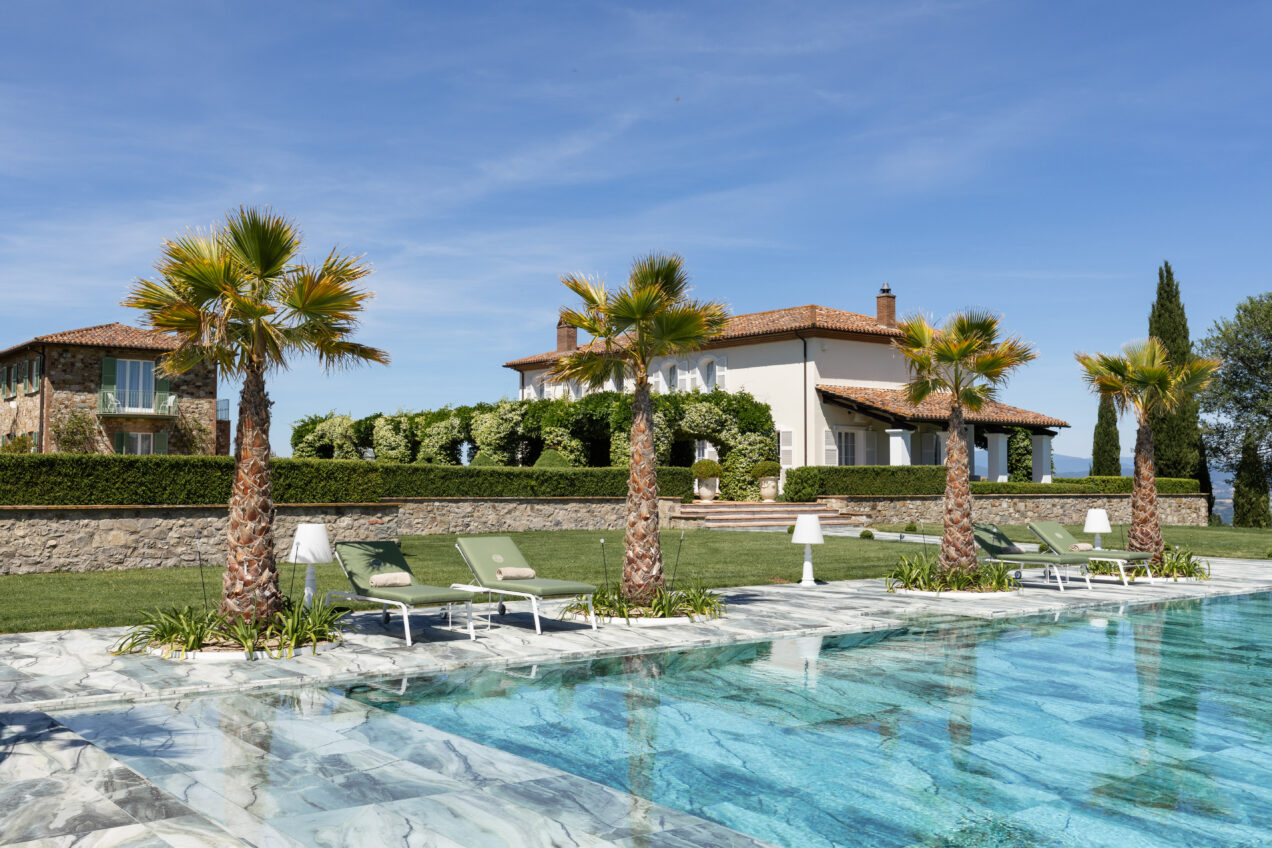
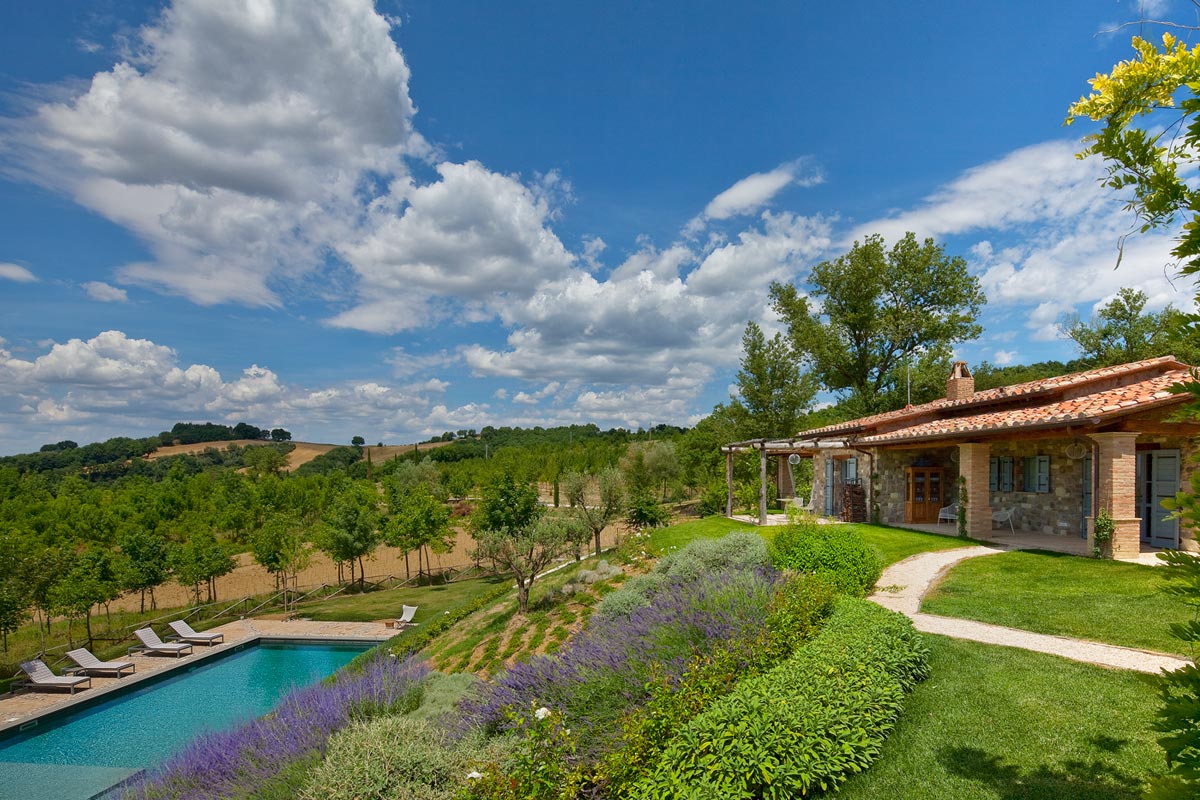
SopranoVillas’ Todi area properties are selected for authentic character – stone farmhouses, converted monasteries and manor houses that reflect the agricultural and ecclesiastical heritage of the Umbrian countryside – combined with the contemporary amenities that make a long stay genuinely comfortable: private pools, well-equipped kitchens, outdoor dining terraces with valley views, and reliable broadband connectivity for guests working remotely. Most properties are on hillside sites with the Tiber Valley panorama as their primary visual asset. We advise booking at least 3–4 months in advance for peak summer and autumn harvest periods; October in particular fills quickly among guests who specifically seek the truffle and olive oil experience. Our team can advise on which properties are best positioned for specific activities – truffle country access, cycling routes, direct villa kitchen provisioning from local producers – and can coordinate arrival transfers, private chef placement and any pre-arrival provisioning requirements.
Get in touch with us. Tell us dates, guests, and style — we’ll help you find and the most suitable villas for your trip to Todi.
Ask our concierge