Chianti Wine Country Luxury Villas




Chianti
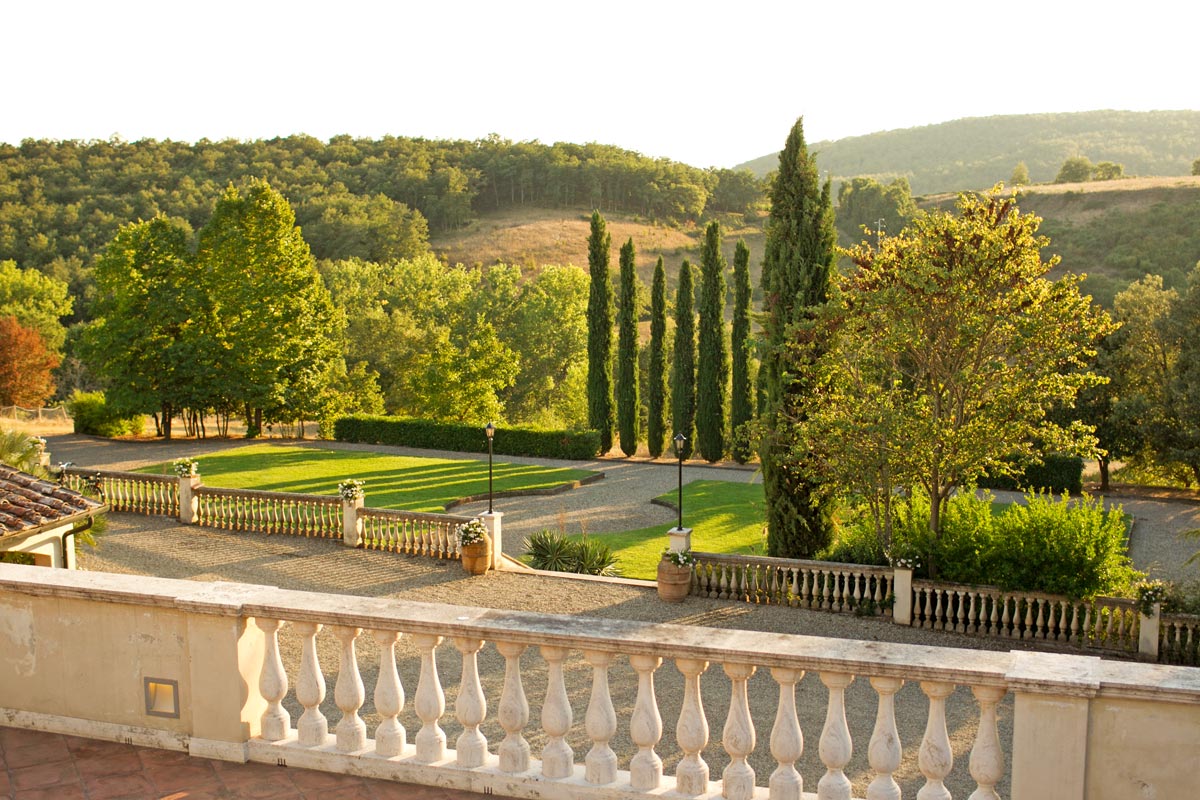
The wine-covered hills between Florence and Siena — home to Chianti Classico, centuries-old estates and some of Tuscany’s most sought-after private villas.
The Chianti zone occupies the soft, vine-terraced hills running south from the outskirts of Florence to the gates of Siena — a territory of extraordinary cultural and gastronomic density compressed into a remarkably compact area. Castello in Villa, Panzano, Greve in Chianti, Radda, Gaiole: each village marks a different facet of a landscape shaped by centuries of wine production, olive oil pressing and the aristocratic agricultural tradition of the mezzadria. Chianti Classico DOCG — the wine produced within this specific territory from Sangiovese — is one of Italy’s most complex and debated appellations, capable of producing wines of extraordinary finesse and longevity in the right hands and the right vintage.
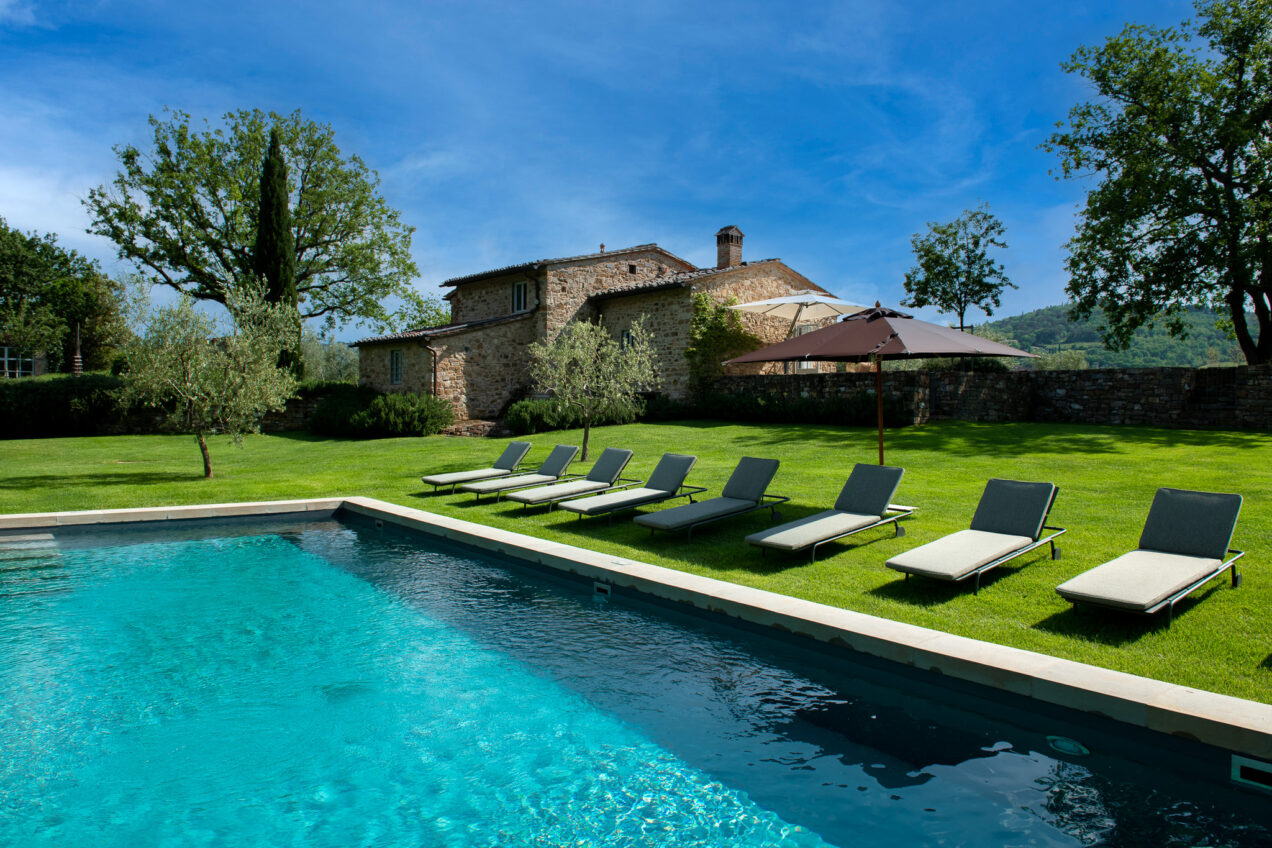
For villa guests, Chianti offers a uniquely refined version of the Tuscan experience: within 30 minutes of Florence or Siena (and thus without sacrificing city access), surrounded by the most famous wine landscape in Italy, and in a territory dense with Romanesque churches, medieval towers and Renaissance country houses. Properties here range from stone-built farmhouses with vines to grand estates where guests have private access to the cellar and can participate in the harvest. The road south from Florence on the Chiantigiana (SS222) is one of the most pleasurable driving routes in Central Italy.
Chianti rewards visitors in every season but reaches its peak twice a year. Late May through June is perhaps the finest time: the vines are in fresh leaf, the roses planted at row-ends to monitor mildew are in bloom, temperatures are warm but not yet oppressive (20–26 °C) and the landscape has the lush green quality that photographs cannot quite capture. The tourist pressure is building but has not yet reached August intensity.
September and October are the seasons of the vendemmia — the grape harvest that has defined this territory for 700 years. From mid-September, tractors move along the vine rows, estates open their doors to pre-arranged private visits, and the smell of fermenting Sangiovese drifts across the valley roads. The light in October Chianti is extraordinary: golden, low and long, turning the rows of orange and red vine leaves against the grey-green olive trees into a composition of perfect autumn colour. Temperatures drop pleasantly (16–22 °C) and the restaurants are at their most focused. July and August are hot and busy but the pool-centred rhythm of villa life is well-suited to the season. Winter (November–February) brings silence, mist in the valleys, wild boar hunting and the olive harvest — a serious pleasure for those who seek the real Tuscany without the summer crowds.
Chianti’s great practical advantage is its position between Florence and Siena — two of Italy’s finest cities, both within easy reach. Florence Peretola (FLR) is the most convenient gateway, about 20–40 km from the northern Chianti zone depending on your specific villa location; the drive south on the Via Chiantigiana (SS222) is itself one of the finest scenic routes in Tuscany, lined with cypress alleys, vine terraces and estate gates. Pisa International (PSA) offers an alternative with more international connections and is approximately 90 minutes away. Rome Fiumicino (FCO) is viable for the southern Chianti and Val di Pesa zones — about 2.5 hours.
A private car is the ideal way to explore Chianti — the white roads (strade bianche) between estates, the hairpin lanes to hilltop villages and the unmarked tracks to the best viewpoints are all inaccessible by public transport. The SS222 Chiantigiana runs the length of the zone north to south and is the main artery; from it, dozens of side roads lead to the great estates. For guests who want to taste across multiple producers in a day, hiring a driver is practical and allows serious wine engagement without restriction. Florence and Siena are each reachable in 30–50 minutes from most Chianti villa locations.
Greve in Chianti is the commercial and social heart of the zone — its triangular piazza ringed by arcaded buildings houses the excellent Enoteca del Chianti Classico and several fine butchers and food shops. The Saturday morning market is one of the best in the area. Panzano in Chianti, a few kilometres south, is home to Dario Cecchini — Italy’s most celebrated butcher, whose shop and restaurants (Solociccia, Officina della Bistecca) have become a pilgrimage destination for serious food lovers worldwide.
The Chianti Classico Gran Selezione estates are the primary draw for wine-focused guests. Fontodi at Panzano, Castello di Ama near Gaiole (which combines exceptional Chianti with a contemporary art collection displayed throughout the estate), Montevertine (producer of the legendary Le Pergole Torte), Badia a Coltibuono and Castello di Brolio (the historic Ricasoli estate, effectively the birthplace of modern Chianti) all offer private visits and tastings by appointment. The Romanesque Pieve di San Leolino near Panzano and the fortified village of Monteriggioni on the western edge of the zone are architectural highlights that reward the detour.
Chianti Classico DOCG — produced from Sangiovese (minimum 80%) within the historic zone between Florence and Siena — is one of Italy’s most complex appellations. The Annata is the entry level; the Riserva (aged minimum 24 months) and the Gran Selezione (single-vineyard, aged minimum 30 months) represent the zone’s highest ambitions. The best producers — Fontodi, Castello di Ama, Montevertine, Isole e Olena, Querciabella, San Giusto a Rentennano — make wines that age for 15–25 years and compete with the finest Tuscan reds. The Gallo Nero (Black Rooster) on the neck label is the mark of the Chianti Classico Consorzio.
The food of Chianti is robustly Tuscan with a Florentine inflection: bistecca alla Fiorentina (Chianina T-bone, minimum 4 cm thick, served blue or rare over oak charcoal) is the defining dish, best encountered at Dario Cecchini’s Officina in Panzano or at any of the estate agriturismos. Pappardelle al cinghiale (wild boar ragù), ribollita, panzanella in summer and fagioli all’uccelletto in autumn are the seasonal staples. The local extra virgin olive oil — pressed from Frantoio, Moraiolo and Leccino olives in November — is among the finest in Tuscany; visiting a frantoio during pressing is a memorable and practical experience that results in the best possible oil to take home.
What is the difference between Chianti and Chianti Classico?
Chianti is a large DOC zone covering much of Tuscany; Chianti Classico DOCG is the original, historic zone between Florence and Siena with stricter production rules and generally higher quality. The Black Rooster on the label indicates Chianti Classico. Our villa properties in this region are all within the Classico zone.
Can we visit wine estates directly from our villa?
Yes — most Chianti Classico producers accept private visits by appointment, and many offer experiences beyond a simple tasting: barrel room access, vertical tastings spanning multiple vintages, harvest participation in September–October, and private lunches in the estate villa or cellar. Lead time of 1–2 weeks is advisable for the best estates. Our concierge team can facilitate introductions and itinerary planning.
How far is Chianti from Florence and Siena?
The northern Chianti zone (Greve, Panzano) is 25–30 km from central Florence (30–40 minutes). Siena is approximately 20–30 km from the southern Chianti zone (Gaiole, Castelnuovo Berardenga) — about 25–35 minutes by car. Most villa locations in Chianti allow a morning in Florence and an afternoon in Siena on the same day, which is one of the great logistical advantages of basing yourself in the hills between the two cities.
Is Chianti suitable for cycling holidays?
Very much so. The Eroica gravel cycling event, held each October on the historic white roads of Chianti, has made this one of the most celebrated cycling destinations in Italy. The strade bianche through the vine and olive landscape are ideal for gravel bikes; road cyclists will find the SS222 and the estate lanes equally rewarding. Bike hire and guided cycling tours can be arranged through our concierge team.

Need help choosing?
Get in touch with us. Tell us dates, guests, and style — we’ll help you find and the most suitable villas for your trip to Chianti.
Ask our concierge