



Attraction
Capo Graziano Archaeological Site
A Bronze Age settlement on Filicudi that reveals the island’s earliest organised communities.
Attraction
A Bronze Age settlement on Filicudi that reveals the island’s earliest organised communities.
Attraction
A vibrant Sicilian city of lava-stone Baroque architecture, markets and views towards Mount Etna.
Attraction
A high inland Sicilian city crowned by a castle and overlooking the centre of the island.
Attraction
A Sicilian golf course in the countryside between the Madonie mountains and Cefalù.
Attraction
Europe’s most active volcano, offering lava landscapes, high-altitude routes and constantly changing conditions.
Attraction
The principal arrival point for Panarea, linking boats with the island’s main settlement.
Attraction
A small pebble beach and harbour in the village of Pecorini a Mare on Filicudi.
Attraction
A Sicilian hill town closely associated with the mosaics of the nearby Villa Romana del Casale.
Attraction
Italy’s south-eastern coastal tip, marked by islands, fishing traditions and open-sea landscapes.
Attraction
A Baroque Sicilian city divided between the hilltop upper town and atmospheric Ragusa Ibla.
Attraction
A protected stretch of southern Sicilian coast with dunes, cliffs and an undeveloped beach.
Attraction
A monumental archaeological landscape preserving the temples of ancient Akragas.
Attraction
A protected coastal wetland where salt pans, beaches and migratory bird habitats meet.
Attraction
An abandoned historic settlement on Filicudi, reached through steep and isolated island terrain.
Sicily’s Ancient Capital – Greek Temples, Baroque Piazzas and the Sea of Ortigia
Siracusa is one of the great cities of the ancient Mediterranean — founded by Greek colonists in 734 BC, it was for two centuries the most powerful city in the western world, rivalling Athens itself. The extraordinary archaeological legacy of that era survives in one of Italy’s most impressive Greek theatre complexes, a vast necropolis, and the limestone quarries where 7,000 Athenian prisoners were worked to death after the legendary defeat of 413 BC. But Siracusa is not only ancient history: the island of Ortigia, the city’s historic centre, is a baroque labyrinth of golden stone palazzi, Norman churches and fish markets that unfolds over a series of piazzas directly above the sea.
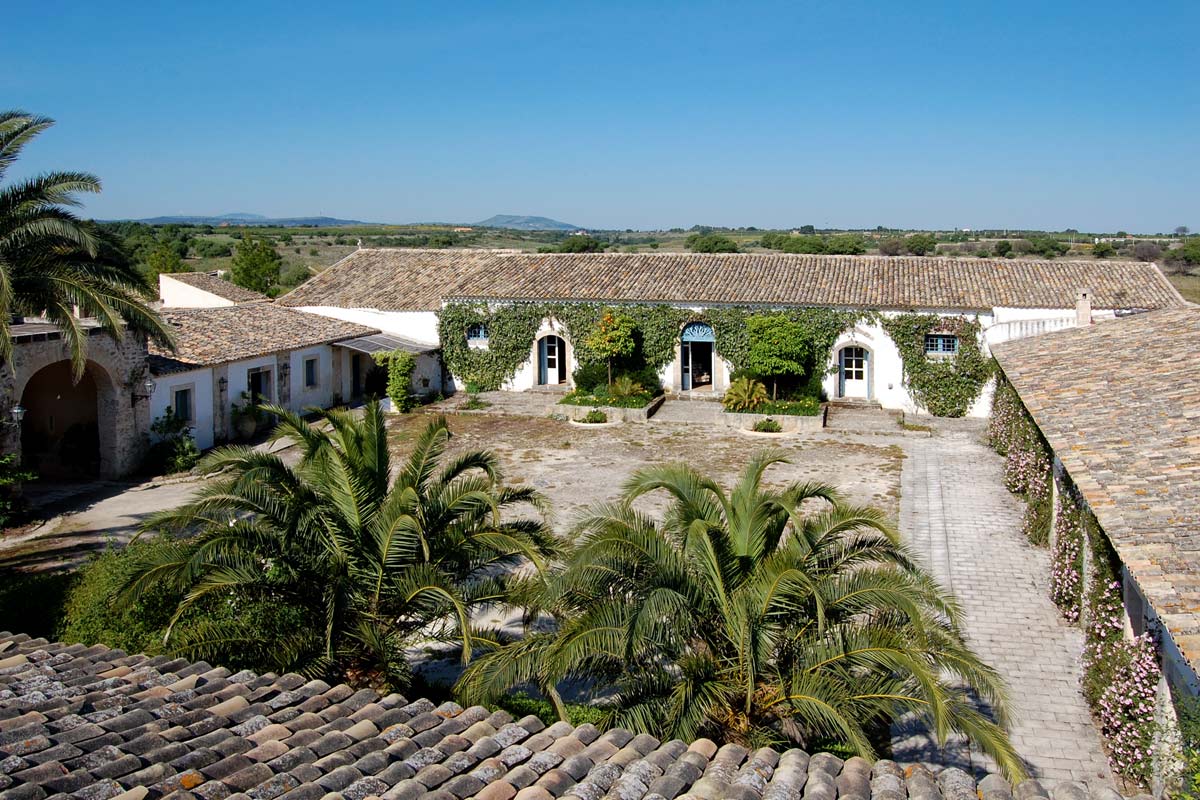
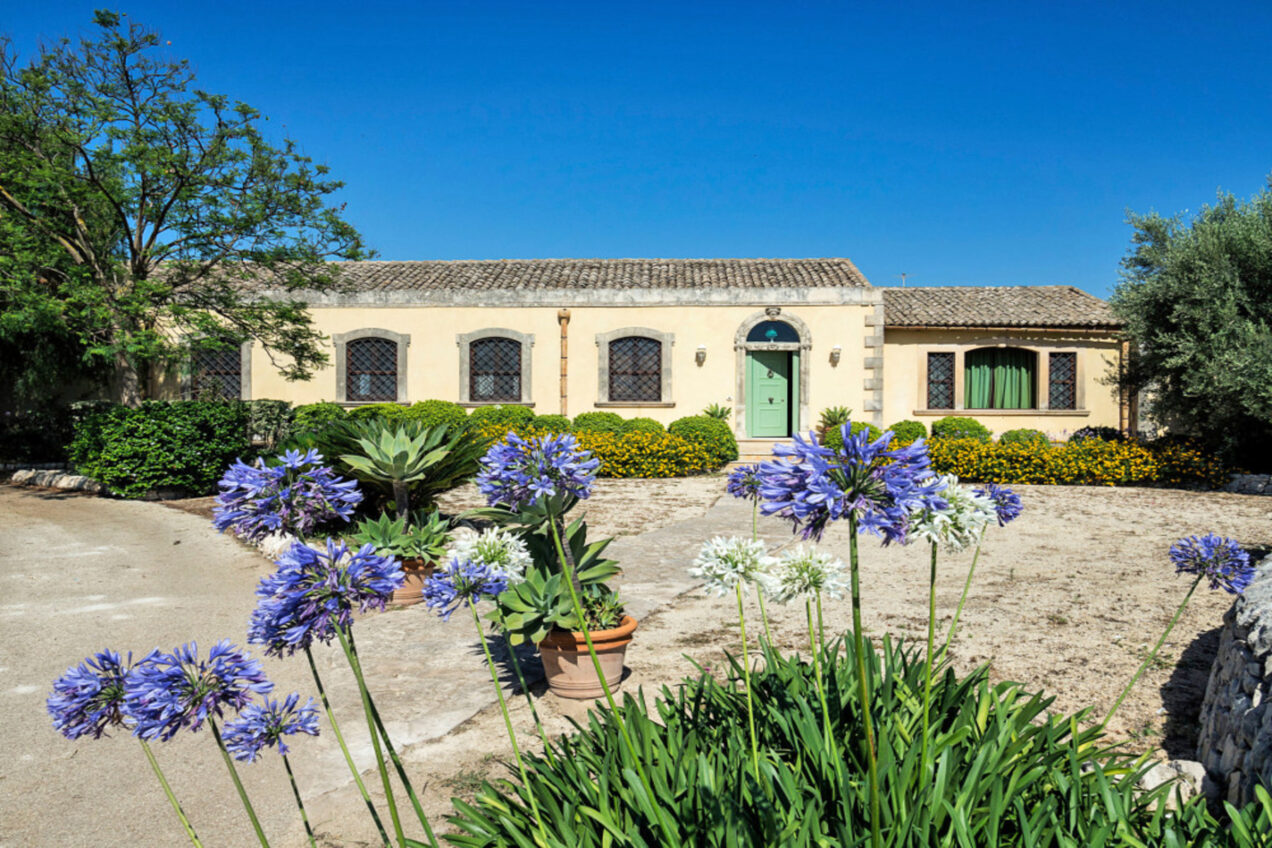
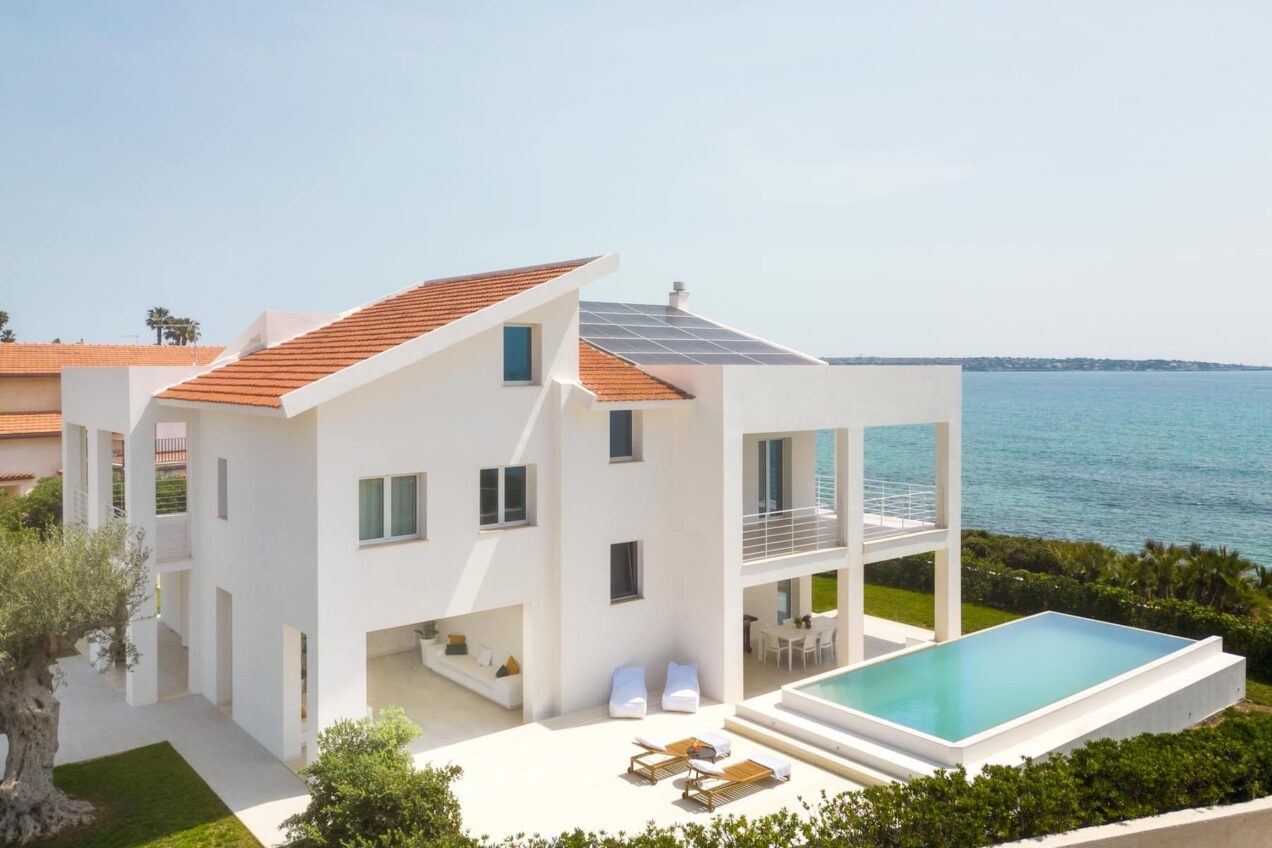
The villas and estates in and around Siracusa stretch across the southeastern corner of Sicily — from the rocky coastline of the Madonie foothills to the Val di Noto baroque towns of Noto, Ragusa and Modica, all within an hour’s drive. This is one of the most culturally and gastronomically rich corners of Italy, and one of the least touched by mass tourism outside the summer peak. The sea is warm from June to October; the archaeological sites are open year-round.
Siracusa’s position in the far southeast of Sicily gives it one of the warmest and driest climates in Italy — temperatures in July and August regularly exceed 35°C (95°F), while winters are mild enough for comfortable sightseeing. The season is exceptionally long by Italian standards.
April & May — Excellent
Spring is arguably the finest time to visit. Temperatures are warm but manageable (18–24°C / 64–75°F), the archaeological sites are a pleasure rather than an ordeal, the almond and citrus blossom has given way to spring wildflowers, and the sea is warming. The Greek theatre at Neapolis hosts its biennial classical drama festival in May and June — a genuinely extraordinary experience. Crowds are minimal. Strongly recommended.
June — Outstanding
Early summer brings warm weather (24–28°C), a sea temperature rising toward 22°C, and the full rhythm of Sicilian summer life without the peak-August intensity. The classical drama festival runs through much of June in even-numbered years. One of the best months to visit.
July & August — Peak Heat and Peak Season
Very hot (32–37°C / 90–99°F) and busy, particularly Ortigia’s streets and the main beaches. The sea is at its warmest (26–27°C) and the villa pool is essential. Late afternoon sea breezes offer some relief. Book all accommodation well in advance; the best villas fill from January onwards for high summer.
September & October — Outstanding
September is the local favourite: the heat has dropped to 26–28°C, the sea remains warm (24–25°C), the tourist numbers thin sharply after the first week, and the food — particularly the tuna, swordfish and the autumn vegetables — is at its finest. October is cooler (20–24°C) and often perfectly clear. Highly recommended for couples and food-focused travellers.
November to March — Off Season
Siracusa in winter is mild (12–16°C) and quiet. The archaeological sites are at their most atmospheric without crowds; Ortigia’s baroque streets and fish market feel genuinely local. Some beach-facing properties close, but the city’s year-round life continues uninterrupted. An excellent choice for short cultural breaks.
| Month | Avg. Temp | Sea Temp | Crowds |
|---|---|---|---|
| April | 18°C / 64°F | 16°C | Low |
| May | 22°C / 72°F | 18°C | Low–Medium |
| June | 27°C / 81°F | 22°C | Medium |
| July | 32°C / 90°F | 25°C | High |
| August | 33°C / 91°F | 27°C | Very High |
| September | 28°C / 82°F | 25°C | Medium |
| October | 23°C / 73°F | 22°C | Low–Medium |
| November | 17°C / 63°F | 19°C | Low |
Siracusa is well connected for a Sicilian city, but a car is essential for anyone wanting to explore the extraordinary countryside and baroque towns of the surrounding province. The city itself is walkable; the Val di Noto requires independent transport.
Getting to Siracusa
Catania Fontanarossa Airport (CTA) is the primary gateway — 60km northwest of Siracusa, approximately 1 hour by car or private transfer. It handles direct flights from London (Heathrow, Gatwick, Stansted, Bristol), Paris, Amsterdam, Brussels, Frankfurt and numerous other European cities, with particularly strong connections in summer. Palermo Airport (PMO) is a further option for travellers from some routes, though it is 260km from Siracusa (2 hours 30 minutes). A private transfer from Catania Airport directly to your villa is the recommended arrival option.
Car Hire — Essential for Villa Guests
A hire car is indispensable for any villa stay in the Siracusa area. The Val di Noto baroque towns (Noto, Ragusa, Modica, Scicli), the beaches of the Vendicari nature reserve, the Greek ruins of Akrai and Megara Hyblaea, and the sulphur spring beaches of the Madonie coast are all only accessible by car. Pick up at Catania Airport on arrival. Roads in this part of Sicily are generally well-maintained, though some minor roads to rural properties are unpaved.
Within Siracusa and Ortigia
Ortigia — the historic island centre — is best explored on foot; most of it is pedestrianised. From the mainland archaeological zone (Neapolis), Ortigia is 2km by car or a 25-minute walk. Taxis and a local bus service connect the two. Parking on Ortigia is limited; guests visiting for the day from a rural villa should use the car parks on the bridge approach and walk onto the island.
Day Trips by Car
From a Siracusa villa, everything in the Val di Noto is accessible: Noto (30 minutes), Ragusa (1 hour), Modica (55 minutes), Scicli (1 hour 10 minutes), Palazzolo Acreide (40 minutes), and the beaches of Vendicari (45 minutes). Catania and Mount Etna are 1 hour north. Agrigento and the Valley of the Temples — arguably Sicily’s greatest archaeological site — is 2 hours 15 minutes west along the SS115.
Ferries to Malta
Virtu Ferries operates a high-speed catamaran service between Pozzallo (70km from Siracusa) and Valletta, Malta — approximately 1 hour 45 minutes. A viable day trip or overnight option for guests interested in combining Sicily with Malta.
Siracusa offers one of the highest concentrations of historically significant sites per square kilometre in the Mediterranean world. From Greek antiquity through Roman occupation, Byzantine rule, Arab Siracusa, Norman Siracusa and the extraordinary Baroque rebuilding after the 1693 earthquake — the layers of history here are dense and endlessly rewarding.
In Siracusa
The Parco Archeologico della Neapolis
The archaeological park on the mainland holds: the Greek Theatre (5th century BC, one of the largest and best-preserved in the ancient world, still used for performances), the Roman Amphitheatre (2nd century AD), the Latomia del Paradiso quarry where the Athenian prisoners were held, and the extraordinary “Ear of Dionysius” — a man-made limestone cave with remarkable acoustic properties. Allow 2–3 hours; go in the morning before the heat builds.
Ortigia — The Historic Island
The original city, on a small island connected to the mainland by two bridges, is a UNESCO World Heritage site. The Duomo di Siracusa — built around the columns of a 5th-century BC Greek temple to Athena, still visible from inside — is one of the most remarkable buildings in Sicily. The Piazza del Duomo itself is considered one of Italy’s finest baroque squares. The Fonte Aretusa (a freshwater spring on the sea shore, mentioned by Pindar and Virgil) and the daily fish market at the Ortigia quay complete the essential itinerary.
Museo Archeologico Regionale Paolo Orsi
One of the finest archaeological museums in Europe — an enormous collection covering the prehistory and Greek and Roman periods of eastern Sicily. The Greek and Sicilian-Greek ceramic, sculpture and coin collections are outstanding. Often crowd-free even in high season.
Beyond Siracusa
Noto (30 minutes)
The finest baroque town in Sicily and one of the most beautiful streets in Italy: the Corso Vittorio Emanuele, lined with golden limestone palazzi and churches rebuilt entirely after the 1693 earthquake. Visit in the evening when the stone glows amber in the low light. The almond festival in February and the Infiorata flower festival in May are both spectacular.
Ragusa and Ibla (1 hour)
Two cities in one — the 18th-century upper town and the medieval lower town of Ibla, descended by a dramatic stairway. Ragusa Ibla’s cathedral, its gardens, and its concentration of excellent restaurants (it has long been one of Sicily’s finest dining destinations) make it worth a full day.
Vendicari Nature Reserve (45 minutes)
A coastal nature reserve of exceptional beauty — salt lagoons, wild dunes, abandoned tuna processing facilities (tonnare), and some of the finest and least-visited beaches in Sicily. The Calamosche beach inside the reserve is consistently rated one of Italy’s best. Access on foot from the car park; no vehicles inside.
The cooking of southeastern Sicily — the area around Siracusa, Ragusa and Noto — is one of Italy’s most distinctive and complex regional cuisines. It draws on three thousand years of layered cultural influence: Greek, Arab, Norman, Spanish. The results are food unlike anything found elsewhere in Italy, and the quality of the raw materials — fish from the Ionian and Mediterranean seas, Pachino tomatoes, Bronte pistachios, Modica chocolate, Ragusano cheese — is extraordinary.
What to Eat Around Siracusa
Pasta alla Norma — The definitive Sicilian pasta dish: spaghetti or rigatoni with fried aubergine, fresh tomato sauce, ricotta salata and basil. Named, allegedly, in honour of Bellini’s opera. Every trattatoria in the province serves it; the best versions use aubergine fried in good local olive oil and properly aged ricotta salata. Simple, almost nothing else.
Pesce spada alla ghiotta — Swordfish braised with tomatoes, capers, olives, celery and pine nuts in the sweet-and-sour (agrodolce) style that reveals the Arab influence on Sicilian cooking. The swordfish of the Strait of Messina has been fished here since antiquity; in June and July it is at its finest.
Arancini di riso — Sicilian fried rice balls, stuffed with meat ragù and peas (classic) or with mozzarella and prosciutto (al burro). Street food and café counter staple — substantial, deeply satisfying, eaten standing at a bar in the morning. The Ortigia market produces some of the finest in Sicily.
Granita siciliana — The Sicilian granita bears no relationship to the tourist version. Made fresh every morning from almonds, coffee, fresh fruit or mulberry (gelsi), eaten with a brioche for breakfast — one of the great culinary experiences of the Italian south. The granita al caffè con panna at the bars around Ortigia’s market is exceptional.
Cioccolato di Modica — The cold-processed chocolate of Modica, made without added cocoa butter and with raw cane sugar that crystallises in the bar — a production method of Arabic origin, unchanged since the 16th century. The result is grainy, intensely flavoured, and unlike any other chocolate in the world. Available from the chocolate shops of Modica and in good food shops throughout the province.
Wine: The Wines of the Syracuse Province
Nero d’Avola — Sicily’s great indigenous red grape, producing wines of considerable depth and structure from the volcanic soils of the southeast. At its best — from producers like Gulfi, Valle dell’Acate, Cos or Occhipinti — it rivals the best southern Italian reds. Look for single-vineyard expressions from the Pachino DOC zone, the traditional heartland.
Cerasuolo di Vittoria DOCG — Sicily’s only DOCG, from the Ragusa province: a blend of Nero d’Avola and Frappato, producing a medium-bodied, fresh, cherry-fruited red. The Frappato makes it lighter than a pure Nero d’Avola; drink it slightly cool with fish dishes. COS and Occhipinti are the benchmark producers.
The Ortigia Fish Market
The daily morning fish market on the Ortigia quay is one of Italy’s finest — swordfish, tuna, dentex, sea bream, red mullet, octopus, sea urchins. Arrive before 9am for the best selection. Villa guests can shop here and cook at the villa; our concierge can also arrange a local cook to prepare a market-to-table meal in your villa kitchen on request.
Is Siracusa worth visiting beyond the archaeological sites?
Absolutely. The baroque island of Ortigia, the Val di Noto towns, the Vendicari beaches, and the gastronomic culture of southeastern Sicily make Siracusa one of the richest destinations in Italy for anyone with wide cultural interests. The archaeological sites are extraordinary but they are only part of a much larger and rewarding picture.
Do I need a car?
Yes — for anything beyond Siracusa city itself. The Val di Noto towns, the Vendicari beaches, the rural estates and the Etna wine country all require a hire car. Pick up at Catania Airport on arrival. Within Ortigia and the city’s archaeological zone, a car is not necessary — the two are connected by bus and taxi.
How far is Catania Airport from Siracusa?
Approximately 60km — around 55 minutes to 1 hour 15 minutes by car depending on traffic. Catania handles direct flights from London, Paris, Amsterdam, Brussels, Frankfurt and many other European cities, particularly in summer. A private transfer from the airport to your villa is the most comfortable arrival option and can be arranged through our concierge.
When is the Greek theatre open for performances?
The Instituto Nazionale del Dramma Antico (INDA) runs a classical drama season at the Siracusa Greek Theatre in May and June, in even-numbered years. Performances are in Italian, often with internationally renowned directors and cast; tickets sell quickly. If your visit coincides with the festival season, this is a genuinely extraordinary experience — Greek tragedy performed in a 5th-century BC theatre above the sea. Check the INDA website for the current season programme.
What are the best beaches near Siracusa?
The Vendicari Nature Reserve (45 minutes south) contains Calamosche beach — regularly cited among Italy’s finest, with clear shallow water and sand dunes. Fontane Bianche (15 minutes south of Siracusa) is the closest sandy beach to the city. Marzamemi, a former tuna-fishing village 50 minutes south, has a small beach and some of the best seafood restaurants in the province. All are accessible by car.
Is Siracusa suitable for families?
Yes — the combination of warm sea, open archaeological sites (children tend to find Greek theatres and quarries genuinely exciting), the Ortigia market atmosphere, and the space of a rural villa makes Siracusa an excellent family destination. The Vendicari beaches are calm and shallow, ideal for young children. The main consideration is the heat in July and August — a villa with a pool is essential in peak summer.
Can we visit Mount Etna from Siracusa?
Yes — Etna is approximately 1 hour north of Siracusa via Catania. A half-day or full-day excursion to the crater area (by cable car and jeep or on foot with a guide) is easily arranged and is one of the most dramatic experiences in Sicily. Etna wine country — particularly the Etna Rosso DOC zone on the volcano’s north slope — is equally worth a dedicated visit for wine lovers. Our concierge can arrange guided Etna tours from your villa.
Get in touch with us. Tell us dates, guests, and style — we’ll help you find the most suitable villas for your trip to Siracusa.
Ask our concierge