



Attraction
Abbey of Sant’Antimo
A Romanesque abbey set among olive groves and vineyards in the Val d’Orcia.
Attraction
A Romanesque abbey set among olive groves and vineyards in the Val d’Orcia.
Attraction
A historic Apennine mountain resort with seasonal skiing, forests and highland villages.
Attraction
A historic spa town spread along the Lima valley in the hills north of Lucca.
Attraction
A medieval Tuscan hill town overlooking the celebrated landscapes of the Val d’Orcia.
Attraction
A privately managed medieval castle estate in the countryside east of Siena.
Attraction
A compact Tuscan village beneath Monte Cetona, close to important prehistoric sites.
Attraction
A broad Umbrian lake surrounded by islands, historic towns and gentle countryside.
Attraction
A walled medieval town among olive groves and vineyards in the Tuscan Maremma.
Attraction
A Renaissance hill town renowned for Vino Nobile and panoramic views across southern Tuscany.
Attraction
A small Sienese village enclosed by a complete medieval ring of walls and towers.
Attraction
An extinct volcanic mountain covered by beech and chestnut forests in southern Tuscany.
Attraction
Tuscany’s busiest airport, connected directly with Pisa Centrale by the PisaMover.
Attraction
A fortified harbour village overlooking the Maremma coast and the Gulf of Argentario.
Attraction
A quiet mountain village surrounded by springs, woodland and the upper slopes of Monte Amiata.
Tuscany’s Walled City – Renaissance Ramparts, Puccini and the Garfagnana Hills
Lucca is one of northern Tuscany’s most immediately likeable cities — smaller and quieter than Florence or Siena, with an intact Renaissance ring of walls wide enough to walk and cycle along the top, a compact medieval centre of churches and piazzas, and a relaxed, prosperous atmosphere entirely its own. It was the birthplace of Giacomo Puccini; the opera tradition he embodied is still very much alive in the city’s summer festival calendar.
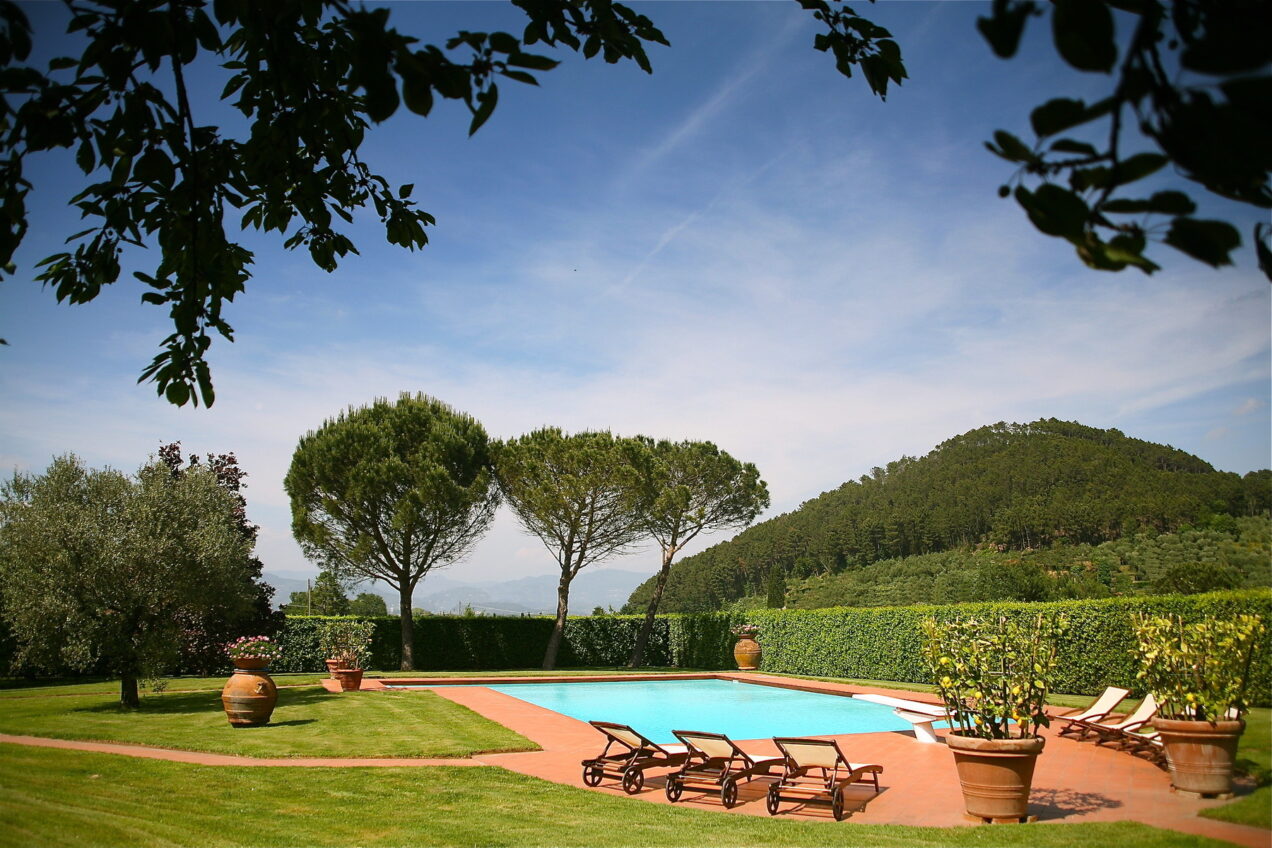
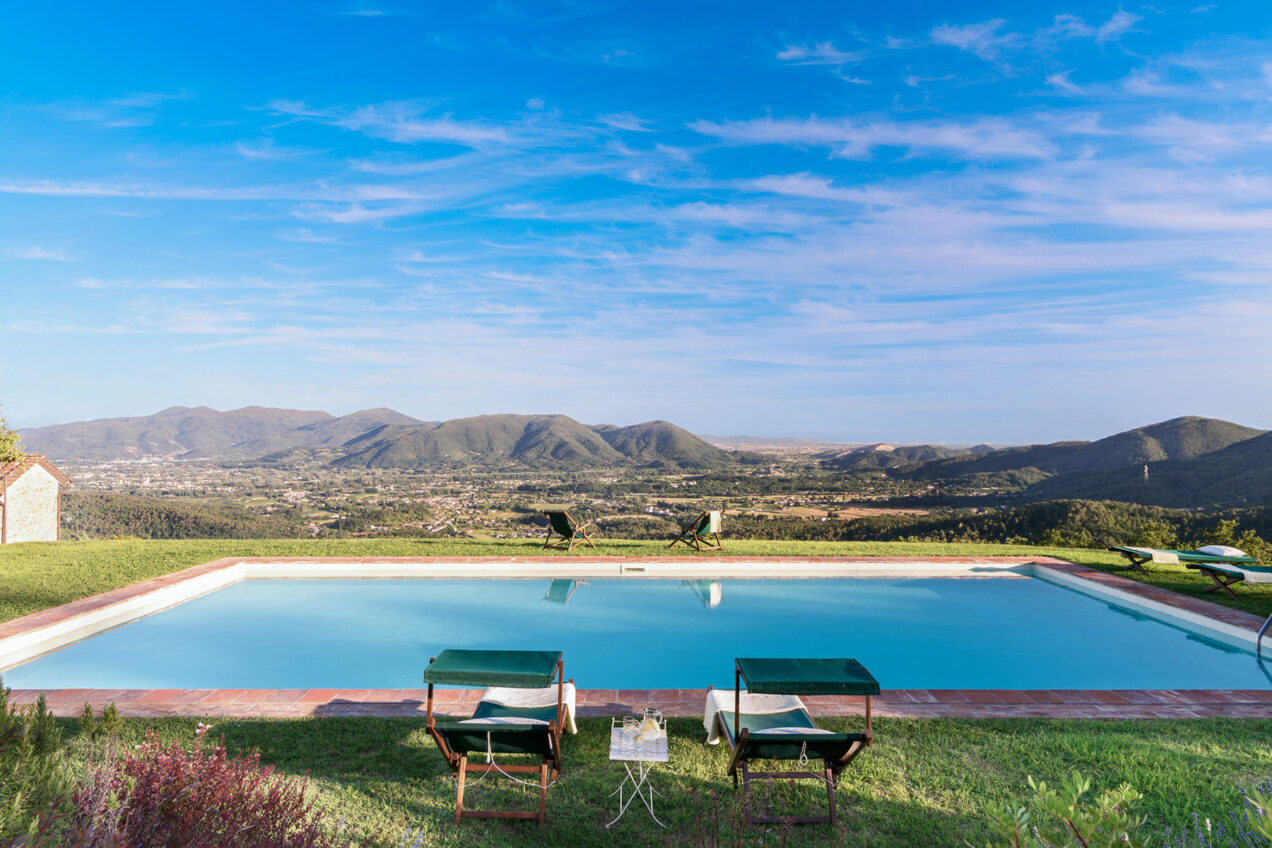
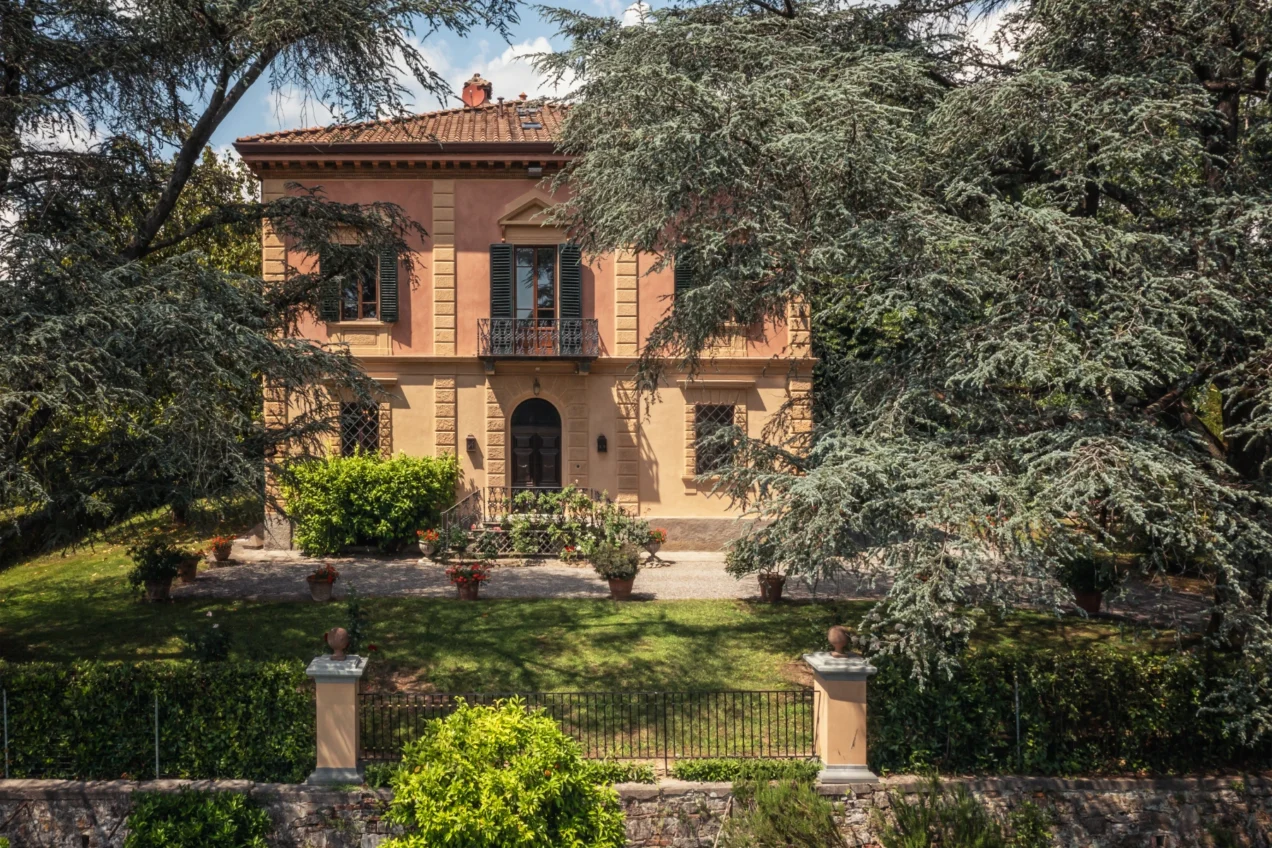
The villas in and around Lucca spread across some of the finest landscapes in Tuscany — the rolling hills of the Lucchesia immediately east, the Versilia coast to the west, and the dramatic Garfagnana mountain valley to the north. Many of the great Lucchese noble families built their country residences in the hills surrounding the city during the 16th and 17th centuries; a number of these historic villas are now available for private rental. For guests who want a Tuscan villa holiday combining city culture, excellent food and wine, and easy access to the Ligurian coast, Lucca is one of the most strategically well-placed bases in the region.
Lucca enjoys a classic northern Tuscan climate — warmer and drier than Florence due to its position in a sheltered plain surrounded by hills, with a well-defined season that runs from spring through autumn. Unlike the coastal resorts, the city has genuine year-round life and rewards a visit in any month.
April & May — Excellent
Spring brings the Lucchesia hills to vivid life — the olive groves, the chestnut woods and the Garfagnana valley are at their most intensely green. Temperatures are ideal (16–22°C / 61–72°F), the city is unhurried, and the Villa Reale gardens at Marlia are in full spring flower. The Lucca Classica music festival runs in May. Highly recommended for first-time visitors and for anyone interested in the villa gardens of the Lucchesia hills.
June to August — Summer
Warm to hot (25–33°C / 77–91°F), with long evenings and the full Tuscan summer calendar. The Lucca Summer Festival — one of Italy’s most respected outdoor music festivals, held within the city walls in July — draws major international artists. The walls and the city centre provide shade; the villas in the surrounding hills are cooler than the plain. A pool is advisable in July and August.
September & October — Outstanding
September is arguably the finest month: perfect temperatures (22–26°C), the grape harvest across the Lucchesia hills, the chestnut season opening in the Garfagnana, and dramatically fewer visitors than the summer peak. October brings the new olive oil season — the pressing of the Lucchese Frantoio olive is one of the autumn’s great rituals. The Lucca Comics and Games festival (late October/early November) brings a very different crowd and fills the city entirely — book well ahead if visiting during this period.
November to March — Off Season
Cool (7–12°C) and atmospheric. The truffle markets, the new wine, the olive oil, the winter menus in the city’s trattatorie. Villa rates at their lowest. Worth considering for short off-season breaks.
| Month | Avg. Temp | Crowds | Highlights |
|---|---|---|---|
| April | 16°C / 61°F | Low | Spring gardens, quiet city |
| May | 20°C / 68°F | Medium | Lucca Classica festival |
| June | 24°C / 75°F | Medium–High | Long evenings, summer festival build-up |
| July | 27°C / 81°F | High | Lucca Summer Festival |
| August | 28°C / 82°F | High | Peak season, pool essential |
| September | 24°C / 75°F | Medium | Harvest season — outstanding |
| October | 18°C / 64°F | Low–Very High* | New olive oil; *Comics festival fills city |
| November | 12°C / 54°F | Low | Truffles, quiet museums |
Lucca is one of Tuscany’s most accessible cities and an excellent strategic base — within 30 minutes of Pisa Airport, 1 hour 10 minutes of Florence, and with the Ligurian coast and Cinque Terre accessible as day trips. A car is essential for the villas and the countryside; the city itself is best explored on foot or by bicycle.
Getting to Lucca
Pisa International Airport (PSA) is the closest gateway — 20km from Lucca, approximately 25–30 minutes by car or private transfer. Pisa handles a wide range of European routes year-round, including direct flights from London (multiple airports), Paris, Amsterdam, Brussels, Frankfurt, Madrid and many other cities. Florence Airport (Peretola, FLR) is 75km east (1 hour by car) and handles additional routes. A private transfer from Pisa Airport directly to your villa is the most convenient arrival option; our concierge arranges this for all bookings.
Train Connections
Lucca is unusually well-served by rail for a Tuscan city — direct trains connect to Pisa (30 minutes), Florence (1 hour 30 minutes) and Viareggio on the coast (20 minutes). This makes Lucca workable without a car for city-focused visits, though the villas in the surrounding hills require independent transport.
Car Hire — Recommended for Villa Guests
Pick up at Pisa Airport. The Lucchesia hills east of the city, the Garfagnana valley north, and the Versilia coast west all require a car. Within the city itself, driving is heavily restricted (ZTL zone in the historic centre) — park at the walls and walk or cycle in.
Cycling on the Walls
Lucca’s 4km Renaissance ring of walls — wide enough for two cars to pass on top — is the city’s most distinctive feature and its finest amenity. Hire a bicycle from one of the shops near Piazzale Verdi and cycle the full circuit: 30 minutes, with views over the city and the surrounding plain. Entirely flat, entirely traffic-free. One of the great urban cycling experiences in Italy.
Day Trips by Car
From Lucca: Florence (1 hour 10 minutes), Pisa (30 minutes), Cinque Terre via La Spezia (1 hour 15 minutes), Portofino (1 hour 30 minutes), the Garfagnana valley (30–45 minutes), Bagni di Lucca spa town (35 minutes), Viareggio beach (25 minutes), and San Gimignano (1 hour 15 minutes).
Lucca rewards slow exploration — it is a city for wandering rather than ticking off a checklist, for finding the best coffee, cycling the walls, and discovering the Romanesque churches that seem to appear around every corner. The surrounding hills and valleys add considerably to the picture.
In Lucca
The Walls (Le Mura)
The 4km Renaissance ring of walls built between 1504 and 1645 is Lucca’s defining feature — 12 metres high, with 11 bastions, wide enough on top to accommodate a tree-lined promenade. It has never been breached in battle and is extraordinarily well-preserved. Walk or cycle the full circuit (30 minutes by bike); the views over the city and the Lucchesia plain are excellent. The wall path is free, flat and car-free.
Piazza dell’Anfiteatro
The city’s most extraordinary urban space — an oval piazza that exactly follows the outline of the Roman amphitheatre (2nd century AD) that once stood here. The medieval buildings were built on and incorporating the amphitheatre’s outer walls; the result is a perfectly preserved oval of houses, now lined with restaurants and cafes at ground level. One of Italy’s most remarkable examples of continuous urban occupation from antiquity to the present.
The Romanesque Churches
Lucca has an exceptional concentration of Romanesque churches — San Michele in Foro (with its extraordinary tiered facade), San Frediano (with a remarkable 13th-century mosaic), and the Cathedral of San Martino (containing the Volto Santo, a celebrated Byzantine crucifix, and a luminous marble tomb by Jacopo della Quercia). None is as famous as their Florentine counterparts; all are less crowded and equally rewarding.
Casa Natale di Puccini
The birthplace of Giacomo Puccini — composer of La Bohème, Tosca and Madama Butterfly — is now a museum on Via di Poggio in the historic centre, containing personal memorabilia, manuscripts and the piano on which he composed some of his greatest works. A genuine and touching small museum for anyone with an interest in opera.
Beyond Lucca
The Villa Gardens of the Lucchesia
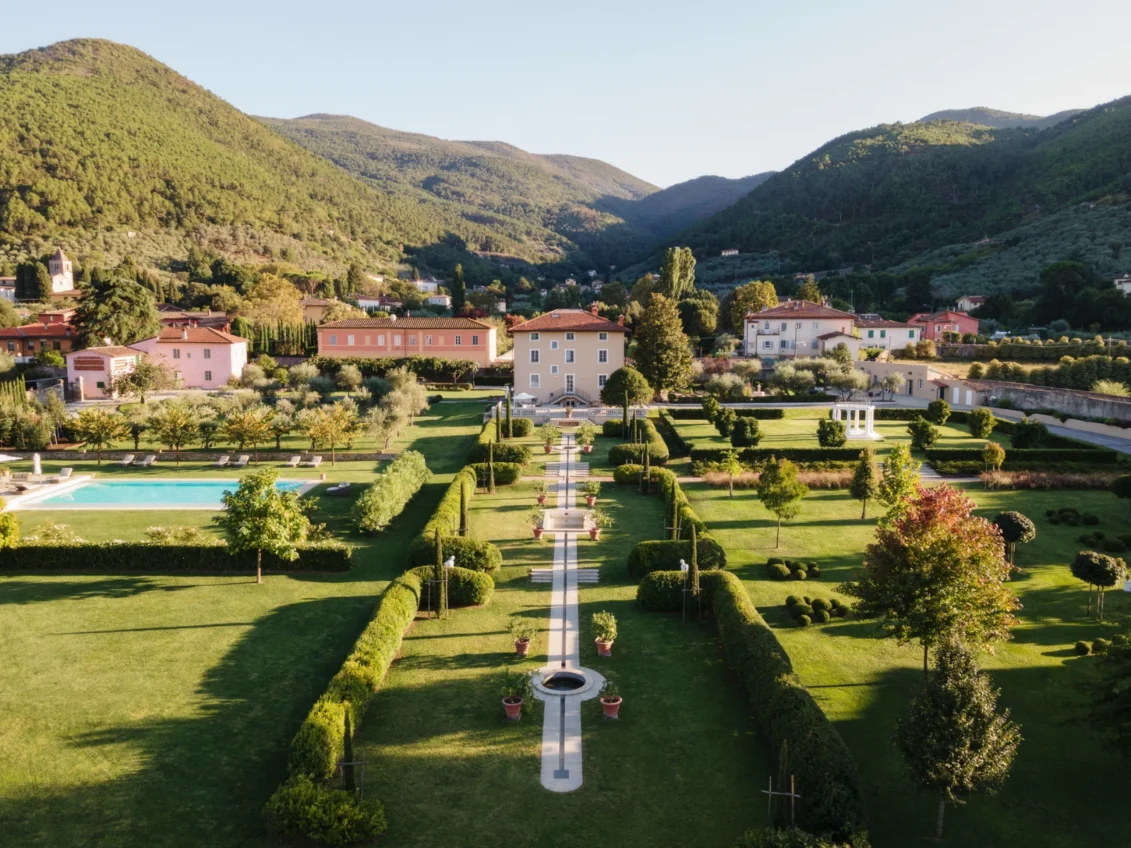
The hills east of Lucca are scattered with historic Lucchese noble villas and their Renaissance and baroque gardens — Villa Reale at Marlia, Villa Mansi, Villa Torrigiani. Several are open to visitors by appointment; the gardens are at their finest in April, May and September. A half-day excursion from any Lucca villa.
The Garfagnana Valley
North of Lucca, the valley of the Serchio river narrows into the dramatic Garfagnana — a mountain landscape of chestnut forests, medieval villages, the marble quarries of the Apuan Alps and the Grotta del Vento cave system. Completely unknown to most foreign visitors; extraordinarily beautiful. The Garfagnana farro (spelt) and chestnut flour are serious local products. 30–45 minutes from Lucca by car.
Pisa (30 minutes)
Beyond the Campo dei Miracoli (Leaning Tower, Cathedral, Baptistery and Camposanto — genuinely extraordinary despite the crowds), Pisa has a serious and underappreciated historic centre with good museums, the Arno promenade and a lively student atmosphere. Worth more than a day-trip tower visit.
The food of Lucca and its surrounding hills is classic northern Tuscan cooking at its most confident — the same foundations of bread, olive oil, beans and seasonal produce that underpin all Tuscan cuisine, but with local distinctions that reflect the Lucchesia’s position between the mountains and the sea. The olive oil here is particularly celebrated.
What to Eat in Lucca
Zuppa di farro — Farro (spelt) grown in the Garfagnana valley north of Lucca has DOP status and is one of the finest grains in Italy — nutty, earthy, with a bite that no modern wheat can replicate. Cooked as a thick soup with cannellini beans, cavolo nero and good olive oil, it is one of the most deeply satisfying winter dishes in Italian cooking. Found throughout the Lucca province in autumn and winter.
Tordelli lucchesi — Lucca’s signature pasta: large half-moon ravioli filled with a rich mixture of meat, greens, eggs and cheese, served with a slow-cooked meat ragù. More substantial than most filled pastas; the filling is distinctly Lucchese in character. Found in every good trattoria in the city and the hills.
Torta di erbi — A savoury tart filled with Swiss chard or wild greens, ricotta and pine nuts — the traditional Lucchese street food, eaten warm at any time of day. Simple, seasonal, quietly excellent.
Buccellato — The traditional sweet bread of Lucca: an anise and raisin ring, baked in the city’s ovens and available from pasticcerie throughout the historic centre. The traditional saying is that you are not a true Lucchese unless you have eaten buccellato from Taddeucci (the city’s oldest pasticceria, in business since 1881) on Piazza San Michele.
The Olive Oil of the Lucchesia
The Lucchesia DOP olive oil — produced from the Frantoio, Leccino and Moraiolo varieties on the hills around the city — is one of Tuscany’s finest and most celebrated. Pressed fresh from November, it is intensely fruity with a clean peppery finish. Several of the historic villas in the hills around Lucca maintain working olive groves; if visiting in October or November, ask your villa host about the pressing. Buying fresh olio nuovo directly from a local frantoio is one of the great culinary experiences of the season.
Wine: Colline Lucchesi and Beyond
Colline Lucchesi DOC — The local wine appellation covering the hills around Lucca produces both red (Sangiovese-based) and white (Trebbiano and Vermentino) wines. Quality is variable; the best producers — Fattoria Maionchi, Tenuta Lenzini — produce wines of genuine interest, particularly the Sangiovese reds. Better value than the better-known Chianti Classico to the southeast.
Montecarlo DOC — A small appellation 15km east of Lucca producing some of Tuscany’s most interesting white wines — a blend of Trebbiano with Roussanne, Pinot Grigio, Semillon and other varieties that gives a complexity unusual in Tuscan whites. Fattoria del Buonamico is the benchmark producer.
Restaurants in Lucca
Lucca has a well-developed restaurant culture for a city of its size — the combination of a prosperous local population, a food-conscious tradition and a steady supply of discerning visitors keeps the quality high. The best eating is in the trattatorie in the streets behind Piazza Anfiteatro and in the surrounding hills. Our villa guests receive a curated restaurant guide with every booking.
Is Lucca better as a day trip from Florence or as a villa base in its own right?
Most visitors from Florence treat Lucca as a day trip — and many are surprised enough by what they find to wish they had stayed longer. As a villa base, Lucca offers a genuinely different experience from Florence: quieter, more intimate, with easy access to the Garfagnana, the Versilia coast and the Cinque Terre that Florence does not have. For guests who want northern Tuscany rather than specifically Florence, Lucca is often the better base.
Do I need a car?
For any villa stay in the hills around Lucca, yes. The city itself is accessible by train from Pisa and Florence, but the Lucchesia villas, the Garfagnana valley and the coastal excursions all require independent transport. The city centre is best explored on foot or by hired bicycle — driving into the ZTL zone incurs automatic fines. Park at the walls and walk or cycle in.
How far is the Lucca Summer Festival and when does it happen?
The Lucca Summer Festival takes place within the city walls (Piazza Napoleone) every July, typically running from late June through mid-July. Past headliners have included Bob Dylan, Neil Young, The Rolling Stones, Elton John and many others. Tickets sell out quickly; book as far in advance as possible if your visit coincides with the festival dates. Check the official festival website for the current year’s programme and dates.
Can we visit the Cinque Terre from a Lucca villa?
Yes — the Cinque Terre is approximately 1 hour 15 minutes from Lucca via La Spezia. The five villages (Monterosso, Vernazza, Corniglia, Manarola, Riomaggiore) are accessible by train from La Spezia within the national park. Allow a full day; go on a weekday and arrive early to avoid the summer crowds. The walking trail between the villages (partially closed for restoration in recent years — check current status) is spectacular when open.
What is the Lucca Comics and Games festival?
One of the world’s largest comics, gaming and pop culture festivals, held annually in Lucca over four days in late October and early November. It draws around 300,000 visitors to a city of 90,000 — the historic centre is completely transformed and accommodation fills months in advance. If you are visiting in this period for the festival, plan well ahead; if you are visiting for the villa and countryside experience, consider avoiding these specific dates.
What is the minimum stay at Lucca-area villas?
Most properties require 7 nights in peak season (June–August), with shorter stays of 3–5 nights available in spring and autumn. The historic noble villas of the Lucchesia hills typically have longer minimum stays and more detailed rental conditions; check individual listings for current requirements.
Get in touch with us. Tell us dates, guests, and style — we’ll help you find the most suitable villas for your trip to Lucca.
Ask our concierge