


Attraction
Asinara National Park
A protected Sardinian island combining wildlife, former institutions and a rugged coastline.
Attraction
A protected Sardinian island combining wildlife, former institutions and a rugged coastline.
Attraction
Sardinia’s highest mountain massif, shaped by forests, plateaux and remote hiking terrain.
Attraction
Monumental collective burial structures created by Sardinia’s Nuragic communities.
Attraction
A renowned Costa Smeralda harbour developed around marinas, architecture and seasonal social life.
Attraction
Sardinia’s UNESCO-listed Nuragic complex of Bronze Age towers, walls and village remains.
Sardinia’s Costa Smeralda – Private Harbours, Granite Coves and the Archipelago della Maddalena
Porto Rotondo sits on the northeastern coast of Sardinia, a few kilometres south of the more famous Porto Cervo on the Costa Smeralda. Where Porto Cervo is the flagship of the Aga Khan’s original Consortium development — international, glossy, conspicuous — Porto Rotondo has always had a quieter and more genuinely Italian character. Founded in the late 1960s by two Venetian brothers, the town was designed as a Mediterranean village around a small piazza and a natural harbour, with architecture by some of Italy’s finest designers of the period. The result is one of the most elegant small resort towns on the Sardinian coast.
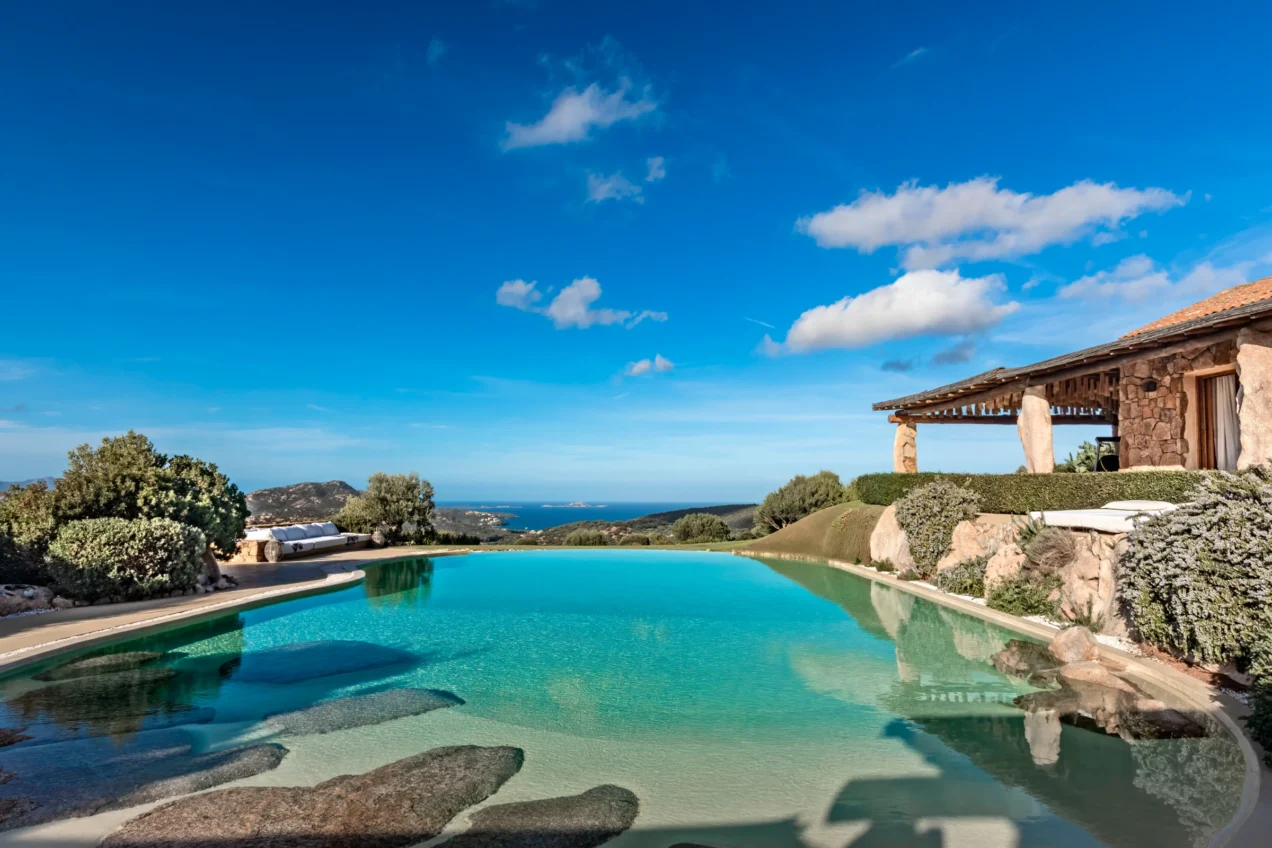
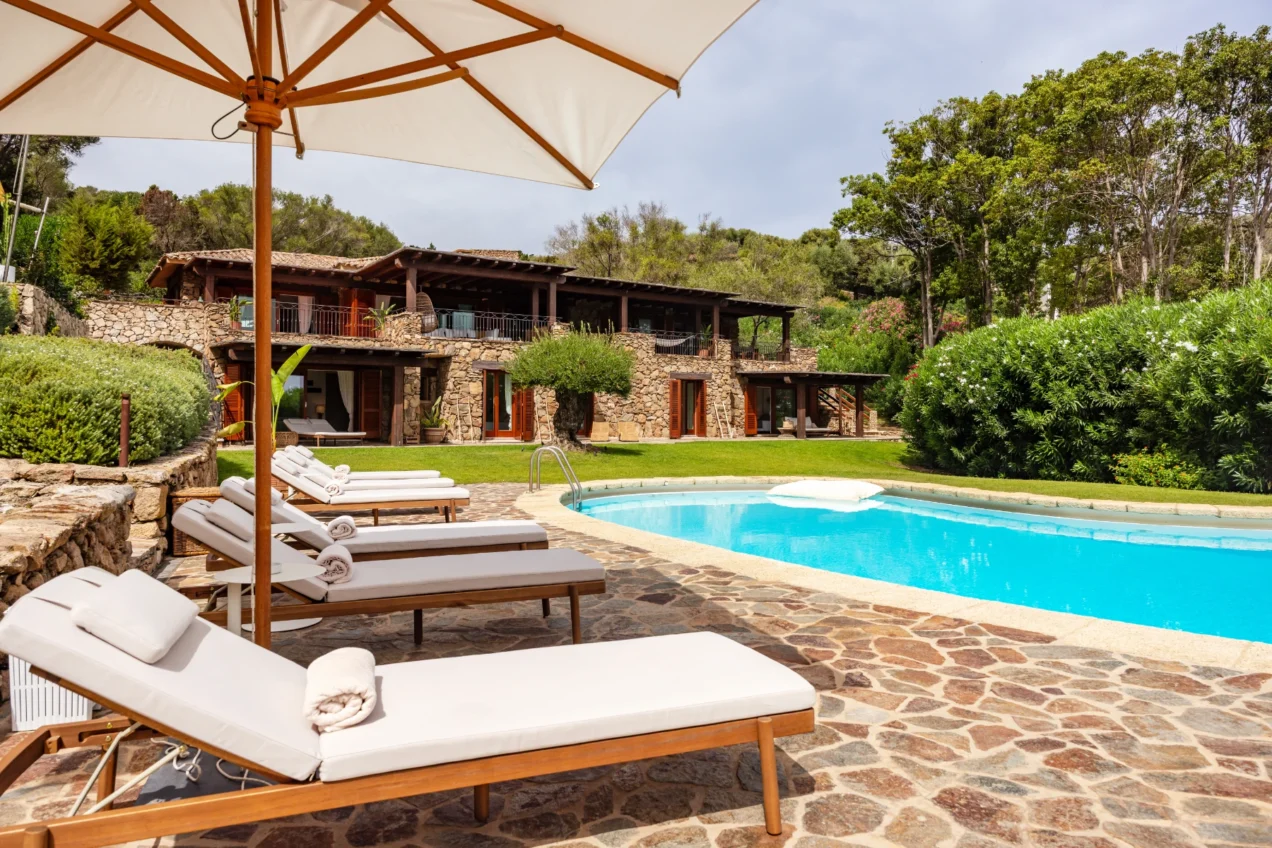
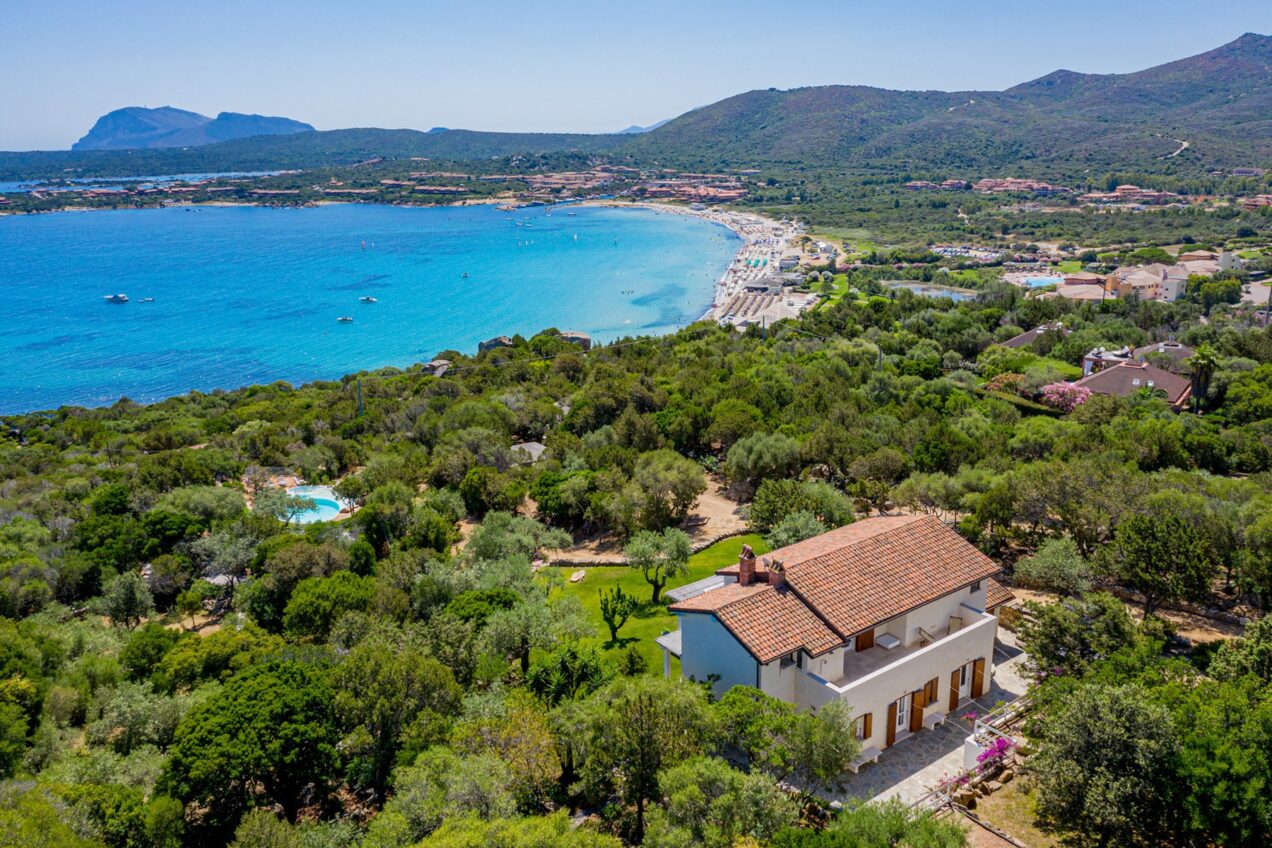
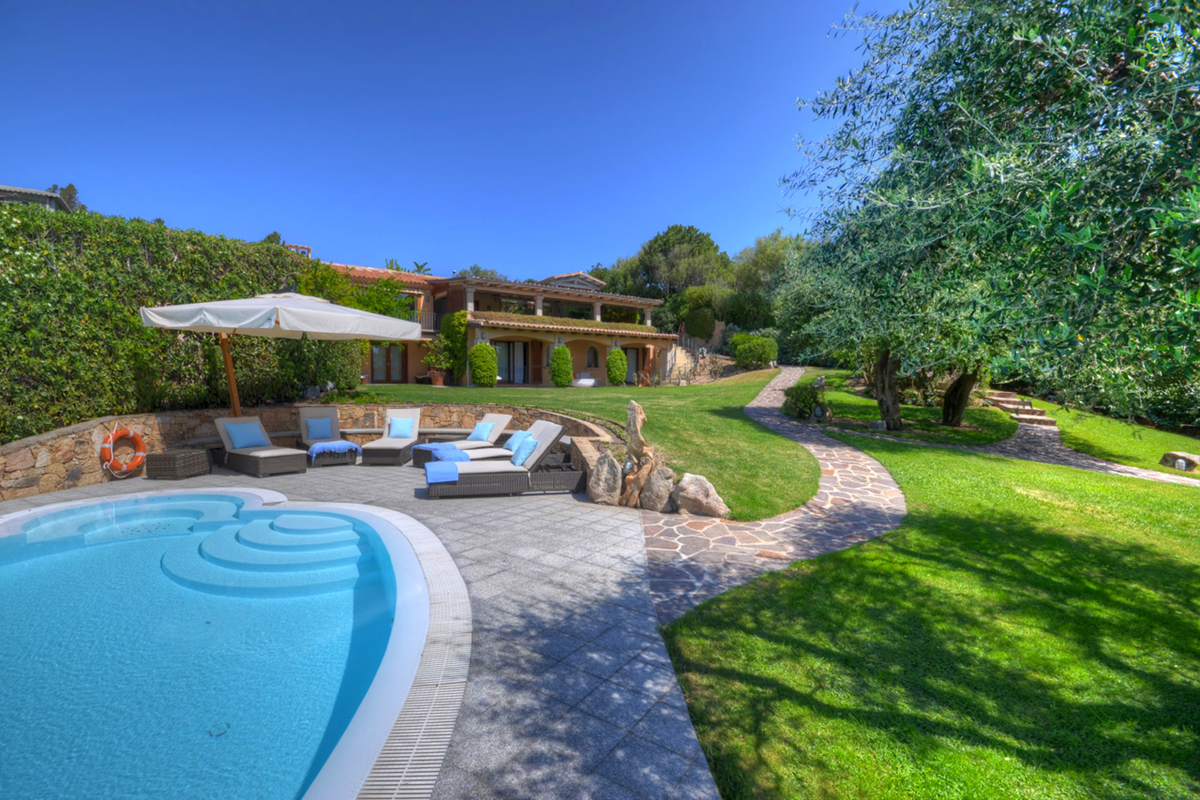
The villas around Porto Rotondo are set among the granite boulders and macchia-covered hills of the Gallura region, with views over the archipelago and private access to coves of extraordinary clarity. The sea here — the Tyrrhenian, sheltered by the islands of the Maddalena Archipelago to the north — is among the clearest and most intensely coloured in the Mediterranean. Provisioning, restaurants and marina facilities are all within a short drive; the wilderness of Sardinia’s interior is equally accessible.
The Costa Smeralda and Porto Rotondo area has a classic Mediterranean climate — hot, dry summers and mild winters, with the sea season concentrated between June and October. The region is emphatically seasonal: most restaurants, shops and services operate only from May to October, and the off-season is genuinely quiet.
June — Outstanding
Early summer is arguably the finest time on the Costa Smeralda. The sea is warming (20–22°C), temperatures are warm but not yet at peak (24–27°C / 75–81°F), the Sardinian macchia is in full aromatic bloom, and the coast has not yet reached its July intensity. The villas and beaches are busy but not overcrowded. Long, luminous evenings. Strongly recommended for couples and first-time visitors.
July & August — Peak Season
The Costa Smeralda is at its most glamorous and most crowded in July and particularly August — the Italian and international elite descend on Porto Cervo and Porto Rotondo, the marina fills with superyachts, and every restaurant and beach club operates at full capacity. The sea is at its warmest (26–27°C) and most intensely coloured. Accommodation sells out months in advance; book the best villas by January. Heat peaks at 30–33°C / 86–91°F — a villa pool is essential.
September — Excellent
September is the best-kept secret of the Costa Smeralda: the summer crowds thin dramatically after the first week, the sea remains warm (24–25°C), the weather is reliably sunny (25–28°C / 77–82°F), and the prices drop. The restaurants are still open, the water sports facilities are running, and the coves are far more accessible than in August. Highly recommended.
May & October — Shoulder Season
May and October offer mild weather (18–23°C), lower prices and minimal crowds. Some beach clubs and restaurants have not yet opened in May or have closed in October, but the essential infrastructure is in place. Ideal for guests who prioritise the landscape and the sea over the social scene.
| Month | Avg. Temp | Sea Temp | Crowds |
|---|---|---|---|
| May | 20°C / 68°F | 18°C | Low |
| June | 25°C / 77°F | 21°C | Medium |
| July | 29°C / 84°F | 25°C | Very High |
| August | 30°C / 86°F | 27°C | Extremely High |
| September | 26°C / 79°F | 25°C | Medium |
| October | 21°C / 70°F | 22°C | Low |
The Costa Smeralda is a car-dependent coast with no meaningful public transport — a hire car is essential for any villa stay. The positive side is that the roads are quiet outside of August, the distances are short, and Sardinia’s interior is easily accessible for day trips.
Getting to Porto Rotondo
Olbia Costa Smeralda Airport (OLB) is the primary gateway — 15km from Porto Rotondo, approximately 20–25 minutes by car. It handles direct flights from London Heathrow, London Gatwick, London Stansted, Bristol, Edinburgh, Manchester, Paris CDG, Amsterdam, Frankfurt, Zürich and numerous other European cities, with very strong summer connections (May–October). Outside the summer season, connections reduce significantly — Cagliari Airport (CAG, 250km south) handles more year-round routes. A private transfer from Olbia Airport directly to your villa is the recommended arrival option; our concierge arranges this for every booking.
Car Hire — Essential
Pick up at Olbia Airport on arrival. A medium-size car is adequate for the Costa Smeralda area; the roads are well-maintained and the distances short. Parking at Porto Rotondo’s piazza and marina is straightforward outside of August, when it can fill in the evenings. Some villa properties have private parking for two or three cars.
Boat — The Finest Way to Experience the Coast
The Costa Smeralda and the Maddalena Archipelago are best experienced from the water. Day boat hire (motorboat, with or without a skipper) from Porto Rotondo or Porto Cervo marinas opens up the granite coves and islands of the archipelago that are inaccessible by road. This is consistently the highlight of a Porto Rotondo villa stay. Our concierge can arrange daily or weekly boat hire, with or without crew.
Day Trips by Car
From Porto Rotondo: Porto Cervo and the Costa Smeralda resort strip (15 minutes), Santa Teresa Gallura and the Strait of Bonifacio with views to Corsica (45 minutes), the Maddalena Archipelago ferry from Palau (30 minutes), Olbia city (25 minutes), the nuraghi (Sardinian Bronze Age stone towers) of the interior — Sa Ena e Thomes and Coddu Vecchiu are the finest in the area (30–45 minutes). The Gennargentu mountain interior is 2 hours south — dramatic, wild and worth a full-day excursion.
Porto Rotondo is a resort rather than a historic town — its pleasures are primarily those of the sea, the sun and the extraordinary natural landscape of the Gallura coast. But the surrounding area adds archaeological depth, island wilderness and a distinctive Sardinian culture to the experience.
The Sea and the Coves
The definitive activity of any Porto Rotondo stay is exploring the coast by boat — the granite-bounded coves of the Costa Smeralda, accessible only from the water, with their extraordinary clarity and colour ranging from pale turquoise in the shallows to deep cobalt in the channels. Cala di Volpe, Cala Petra Ruja, Cala Granu and the coves around Capriccioli are all within easy reach. Hire a motorboat for the day, anchor in a cove, swim from the ladder. The experience is difficult to replicate anywhere else in Italy.
Porto Rotondo Piazza and Marina
The central piazza of Porto Rotondo — designed by the architect Andrea Cascella in the late 1960s — is one of the more successful examples of designed Mediterranean resort architecture: a genuine public space with the church of San Lorenzo at one end and the marina below. The marina accommodates superyachts and sailing boats of every size; the promenade restaurants and the aperitivo culture of the piazza are the social heart of the resort in the evenings.
The Maddalena Archipelago
The national park archipelago of La Maddalena — seven main islands and dozens of smaller ones — lies immediately north of Porto Rotondo, reached from Palau (30 minutes by car, then a 15-minute ferry to Maddalena island). The archipelago’s protected waters are the clearest in the Mediterranean; the pink granite rocks and white sand beaches of Spargi, Budelli (the famous pink beach) and Santa Maria are extraordinary. Day boat excursions from Porto Rotondo or Porto Cervo cover the archipelago in a full day.
The Nuraghi of the Gallura Interior
Sardinia’s most distinctive cultural heritage: the nuraghi — conical stone towers built between 1800 and 500 BC — dot the Gallura countryside. The Coddu Vecchiu tomba di giganti (giant’s tomb) and the Sa Ena e Thomes nuraghe complex are both within 30–45 minutes of Porto Rotondo and offer a remarkable glimpse of one of the western Mediterranean’s most enigmatic ancient cultures. Largely unknown to non-Italian visitors.
Porto Cervo (15 minutes)
The original and most prestigious of the Costa Smeralda resorts — the marina, the Promenade du Port, the Sottoportico, and the extraordinary concentration of international luxury brands. Worth an evening visit for the passeggiata and the spectacle of the superyacht fleet; the Yacht Club Costa Smeralda bar terrace has one of the finest views on the coast.
Sardinian cuisine is one of Italy’s most distinctive and ancient — a pastoral mountain tradition (roast suckling pig, pecorino, pane carasau) overlaid with a coastal fishing culture (bottarga, clams, sea urchin) and very little mainland Italian influence. On the Costa Smeralda, this tradition coexists with an international resort restaurant scene; knowing where to find the real thing is the key.
What to Eat
Porceddu — Sardinian roast suckling pig, cooked over myrtle and juniper wood on a spit for 4–5 hours. The skin is crackled and golden; the meat falls from the bone. The definitive dish of the Sardinian pastoral tradition — eaten at family celebrations, local festivals and in the agriturismi of the interior. The best versions are found not on the Costa Smeralda but in the inland villages of the Gallura — worth a drive to find.
Bottarga di muggine — The cured, dried roe of grey mullet — Sardinia’s most celebrated seafood product, sometimes called “Mediterranean caviar.” Shaved over pasta (typically spaghetti with olive oil and parsley), grated over eggs, or eaten in thin slices with bread and butter. The finest bottarga comes from Cabras on the western coast, but it is available throughout the island. Intensely savoury, complex, unlike anything else.
Pane carasau — Paper-thin twice-baked flatbread, a staple of the Sardinian shepherd’s diet (it keeps for months). Eaten plain, drizzled with olive oil and salt (pane guttiau), or layered with tomato sauce, egg and pecorino as pane frattau. A staple of every table in Sardinia, and one of those simple breads that is genuinely difficult to stop eating.
Fregola con arselle — Toasted semolina pasta beads (fregola) cooked in a clam broth with saffron and parsley — the definitive Sardinian seafood pasta. The fregola’s slightly nutty toasted flavour and the briny clam juice combine in a way that is entirely satisfying. Found throughout the island but at its best in the fishing village restaurants of the northeast coast.
Seadas — Deep-fried pastry parcels filled with fresh pecorino and lemon zest, drizzled with bitter Sardinian honey (corbezzolo honey, from the arbutus tree). Sweet, savoury, completely addictive. The traditional Sardinian dessert and one of the finest things to eat on the island.
Wine: Sardinian Varietals
Vermentino di Gallura DOCG — The white wine of the Gallura region, produced immediately around Porto Rotondo and Porto Cervo from the Vermentino grape. Pale gold, with notes of white peach, citrus, almond and a distinctive mineral salinity. At its finest from producers like Capichera or Surrau — a genuinely world-class white wine, and the natural match for the local seafood. Drink very cold.
Cannonau di Sardegna DOC — Sardinia’s great red grape (genetically related to Grenache) produces wines of considerable depth and character from the island’s granite soils. Rich in polyphenols, with notes of dark cherry, scrubland herbs and dried fruit. Several studies have linked Sardinia’s high proportion of centenarians to regular moderate consumption of Cannonau. Producers: Argiolas, Giuseppe Sedilesu, Gabbas.
Restaurants on the Costa Smeralda
The Costa Smeralda has some of Italy’s most expensive resort dining — but also, if you look in the right places, some genuinely excellent food. The best-value eating is consistently in the fishing villages and agriturismi of the Gallura interior, not on the marina promenades. Our villa guests receive a curated local restaurant guide with each booking.
What is the difference between Porto Rotondo and Porto Cervo?
Porto Cervo is the flagship of the Costa Smeralda development — more international, more visible, home to the Yacht Club Costa Smeralda and the most prestigious marina on the coast. Porto Rotondo, 15 minutes south, is quieter, more architecturally coherent, and has a slightly more Italian character — popular with well-connected Italian families who prefer it to the more international atmosphere of Porto Cervo. Both have excellent villa offerings; Porto Rotondo typically offers slightly better value for comparable quality.
Do I need a boat to enjoy Porto Rotondo?
You don’t need to own one, but you should hire one. The coves of the Costa Smeralda are best experienced from the water — the road access to most of them is limited or non-existent. Day hire of a small motorboat (with or without a skipper) from Porto Rotondo or Porto Cervo marina is straightforward and affordable relative to other costs in the area. Our concierge can arrange boat hire for any day of your stay.
How far is Olbia Airport from Porto Rotondo?
Approximately 15–20km — around 20–25 minutes by car or private transfer, depending on the time of day. Olbia Costa Smeralda Airport (OLB) handles direct summer flights from London, Paris, Amsterdam, Frankfurt and most other major European cities. A private transfer from the airport to your villa should be pre-arranged; our concierge handles this for all villa bookings.
When is the best time to visit if we want to avoid the crowds?
June and September are significantly less crowded than July and August while offering sea temperatures above 21°C and reliably sunny weather. The first two weeks of September in particular are widely considered the sweet spot — summer conditions, post-peak prices, and the ability to actually get a sunlounger on a beach.
Is Porto Rotondo suitable for families?
Yes — the calm, sheltered coves of the Costa Smeralda are ideal for families with children who swim. The shallow, clear water of many of the northern Sardinian coves is safe and extraordinarily beautiful. A villa with a pool provides an additional water option when the coves are crowded or when younger children need a rest from the boat. The lack of urban traffic and the resort’s pedestrian piazza make it a safe and relaxed environment.
Can we visit Corsica from Porto Rotondo?
Yes — Bonifacio (Corsica) is visible from the northernmost point of Sardinia and is reachable by ferry from Santa Teresa Gallura (45 minutes from Porto Rotondo) in approximately 50 minutes by fast ferry. A full-day excursion to Bonifacio — one of the most dramatically sited medieval towns in the western Mediterranean, perched on white limestone cliffs above the strait — is easily arranged. Ferries run several times daily in summer.
Get in touch with us. Tell us dates, guests, and style — we’ll help you find and the most suitable villas for your trip to Porto Rotondo.
Ask our concierge