Attraction
Capo Graziano Archaeological Site
A Bronze Age settlement on Filicudi that reveals the island’s earliest organised communities.
Attraction
A Bronze Age settlement on Filicudi that reveals the island’s earliest organised communities.
Attraction
A vibrant Sicilian city of lava-stone Baroque architecture, markets and views towards Mount Etna.
Attraction
A high inland Sicilian city crowned by a castle and overlooking the centre of the island.
Attraction
A stone-built medieval village high above Trapani, with churches, a castle and sweeping coastal views.
Attraction
A Sicilian golf course in the countryside between the Madonie mountains and Cefalù.
Attraction
Sicily’s first nature reserve, linking rugged coastal paths with small coves and mountain scenery.
Attraction
A multicultural Sicilian port known for its Kasbah quarter and the ancient Dancing Satyr.
Attraction
Palermo’s best-known seaside district, centred on a sandy bay beneath Monte Pellegrino.
Attraction
Europe’s most active volcano, offering lava landscapes, high-altitude routes and constantly changing conditions.
Attraction
Sicily’s main western airport and the principal air gateway for Palermo.
Attraction
The principal arrival point for Panarea, linking boats with the island’s main settlement.
Attraction
A vast historic park beneath Monte Pellegrino on the edge of Palermo.
Attraction
A small pebble beach and harbour in the village of Pecorini a Mare on Filicudi.
Attraction
A Sicilian hill town closely associated with the mosaics of the nearby Villa Romana del Casale.
Attraction
A tiny fishing harbour on Favignana’s rugged western coast.
Attraction
A low coastal headland on Favignana, known for its lighthouse and open sunset views.
Attraction
A rocky Sicilian reef known for wind, waves and an exposed Mediterranean coastline.
Attraction
A Baroque Sicilian city divided between the hilltop upper town and atmospheric Ragusa Ibla.
Attraction
A hilltop fortress overlooking Favignana and the surrounding Egadi Islands.
Attraction
One of the Mediterranean’s largest archaeological parks, set around the temples of an ancient Greek city.
Attraction
A shallow Sicilian lagoon shaped by salt pans, wind, birdlife and the Phoenician island of Mozia.
Attraction
A remarkably preserved Doric temple overlooking the archaeological landscape of western Sicily.
Attraction
A protected stretch of southern Sicilian coast with dunes, cliffs and an undeveloped beach.
Attraction
A monumental archaeological landscape preserving the temples of ancient Akragas.
Attraction
A protected coastal wetland where salt pans, beaches and migratory bird habitats meet.
Attraction
An abandoned historic settlement on Filicudi, reached through steep and isolated island terrain.
Norman Splendour on the Tyrrhenian – a Cathedral Town, a Mediaeval Quarter and Sicily’s Most Beautiful Beach in a Single Seafront Setting
Cefalù occupies one of the most dramatically composed positions in Sicily: a compact mediaeval town pressed between the Tyrrhenian Sea and the sheer face of La Rocca, the massive limestone promontory that has defended this settlement since the Bronze Age. The cathedral – a masterpiece of Norman-Arab architecture begun by Roger II in 1131 – anchors the skyline with its twin towers visible from miles along the coast. Beneath them, the Arab quarter’s tightly woven lanes of sandstone and lava stone open unexpectedly onto one of southern Italy’s finest sandy beaches, separated from the historic centre by nothing more than a low promenade. It is an unusual combination: serious architectural heritage and a genuinely world-class beach sharing the same postcode.
For guests staying in a luxury villa in the Cefalù area, this duality defines the rhythm of a day. Mornings typically divide between the beach – broad, orientated west for afternoon light, sheltered by La Rocca from the levante winds – and the mediaeval lanes where the covered market (Badia Vecchia quarter), the medieval lavatorio (communal washhouse) and the Cathedral’s extraordinary Byzantine mosaics reward repeated visits. Afternoons belong to the sea and the villa pool; evenings to the restaurants gathered along the waterfront and in the lanes behind it. Within a 45-minute radius, the Madonie mountains offer an entirely different landscape register: high-altitude forests, small hill towns and producers of extraordinary cheeses, pistachios and mountain herbs that supply the finest Cefalù tables.
Cefalù’s position on Sicily’s northern coast gives it one of the most favourable climates in Italy: the Tyrrhenian Sea moderates summer temperatures, the Madonie mountains behind the town deflect the harshest cold fronts, and the result is a genuinely long season that runs comfortably from April through November. The question is not whether to visit but which version of Cefalù best matches the guest’s ambitions.
May and June offer the combination that most experienced travellers consider optimal: warm enough for daily swimming (sea temperature reaching 21–23°C by June), uncrowded by the standards of the peak Sicilian summer, and producing the year’s first round of tomatoes, aubergines and the early swordfish catches that define the local kitchen. The Madonie mountains are accessible for day walks without the heat that makes August altitude hiking uncomfortable; the light – long golden evenings that last until nine – is at its most photogenic. This is the period when villa availability is best balanced against quality and price: high season rates have not fully kicked in, but the best properties are still booking out 3–4 months in advance.
July and August concentrate the highest visitor density but also the fullest cultural and social programme: the outdoor concerts, the feast of San Salvatore (August 6), the fishing festival, and the beach life that is the primary motivation for most family groups. Temperatures peak at 32–36°C in the hottest weeks, somewhat moderated on the seafront by sea breezes. The beach fills by mid-morning from mid-July; guests who prefer uncrowded swimming either go early (before 9am) or arrange boat hire for cove access along the coast toward Pollara and Capo d’Orlando. Villa pools become indispensable at this period. Booking 6–9 months ahead for the best August properties is strongly recommended.
September is the insider’s choice for Cefalù: the sea is at its warmest (25–26°C), the crowds have largely departed, the light has turned amber and reflective, and the local food calendar enters its most productive phase – aubergine, pepper and tomato harvests, early Madonie mushrooms, the arrival of the autumn tuna. October adds the olive harvest and the first pressing of DOP Sicilian olive oil; the Madonie mountain towns are at peak colour. Many of the most discerning European guests who visit annually time their week for the first two weeks of September as a consistent policy.
The winter months are mild by northern European standards (12–16°C daytime in January) but not warm enough for comfortable beach use. The cathedral and the medieval quarter are extraordinary in winter light with no visitor queues; the local restaurants operate on a local clientele and often at their most informal and excellent. The citrus harvest (January–March) fills the town market with Sicilian blood oranges and lemons of quality unavailable in export. Spring wildflowers on La Rocca and the Madonie foothills are exceptional from March through April. For guests whose primary interest is culture, gastronomy and landscape rather than beach, the October–April period offers genuine value.
Cefalù is well-connected by both air and rail, with Palermo airport providing the primary gateway for international visitors. The town’s position on the main Palermo–Messina coastal railway line makes it one of the most accessible resort towns in Sicily, while its compact historic centre and excellent road connections make a hire car the most flexible option for villa guests exploring the surrounding area.
Palermo Falcone-Borsellino Airport (PMO) is the principal international gateway, 70 km west of Cefalù, with a transfer time of approximately 60–75 minutes by road. The airport operates direct scheduled services from major European hubs (Rome, Milan, London, Paris, Frankfurt, Amsterdam, Munich) year-round, with significantly expanded seasonal frequency from April through October. Catania Fontanarossa (CTA), 180 km east, provides the largest range of intercontinental connections via Rome or Milan transit and is the preferred arrival point for guests travelling on long-haul itineraries; road transfer to Cefalù takes approximately 2 hours on the A19 autostrada. Private aviation clients typically use Palermo; the airport accommodates aircraft up to large business-jet size and private FBO services are available.
Cefalù train station is on the main Palermo–Messina coastal line; direct InterCity services from Palermo take approximately 55 minutes, making rail the fastest and most convenient connection between the city and the resort for guests arriving at Palermo airport or travelling from the Palermo city hotels. The station is located just below the historic centre, within easy walking distance of the mediaeval quarter and the beach. Villa management will arrange luggage transfer and taxi collection from the station if required; most villa properties in the surrounding countryside require a separate transfer from the station.
From Palermo Airport, the A19 autostrada heads east before the exit for the coastal road (SS113) or the direct approach via the A20 motorway (toll road) that skirts the Madonie foothills. GPS navigation is reliable throughout the Cefalù area; allow 60–75 minutes from the airport in normal traffic. For villa properties in the Madonie foothills north of Cefalù, the roads become progressively narrower and steeper; villa management will advise on any specific access requirements. A hire car is strongly recommended for guests staying at rural villa properties – it provides access to the Madonie villages, the coastal route east and west, and the market towns of the interior.
The historic centre of Cefalù is pedestrianised within the ZTL; parking is available in the lower town car parks near the beach and at several points on the ring road. For day excursions, the Palermo-Messina coastal route (SS113) is scenic and relatively uncrowded outside of summer weekends; the Madonie mountain road (SS286 and provincial roads) rewards drivers who are comfortable with narrow mountain bends. Boat hire – for exploring the coastline, snorkelling the coves east of La Rocca, or day trips to the Aeolian Islands ferry terminal at Milazzo (90 km east) – is available from the fishing harbour. Private boat charters for multi-day Aeolian itineraries can be arranged through villa management; the Aeolian Islands are increasingly popular as a combined destination with a Cefalù villa base.
Cefalù occupies a small geographic footprint but delivers an unusually concentrated programme of interest: the cathedral alone justifies a serious investment of time, and the interaction between the Norman architectural heritage, the Arab-influenced town plan, the beach culture and the mountain hinterland produces a variety that sustains a two-week stay without repetition. The day typically divides naturally into morning (cultural engagement and market), midday and afternoon (sea and pool), and evening (dining and the passeggiata through the lit mediaeval lanes).
The Cattedrale di Cefalù is one of the most significant buildings in Sicily and one of the finest examples of Norman-Arab-Byzantine synthesis in the world. Begun by Roger II in 1131 following a vow made during a storm at sea, the cathedral combines a Latin cross plan with Arab pointed arches, Norman square towers, and a sanctuary apse decorated with Byzantine mosaics of the 12th century that represent the finest surviving cycle of their period outside Constantinople. The central mosaic of the Pantocrator – Christ enthroned with extraordinary directness of gaze – is among the most reproduced images in Sicilian culture. Entry requires modest dress; early morning or late afternoon visits avoid the busiest tour group concentrations. The cathedral’s exterior, particularly the twin towers seen from the beach at first light, provides the defining image of the town.
The Arab quarter behind the cathedral – a tight grid of lanes derived from the original Islamic settlement plan – contains the medieval lavatorio (a 12th-century communal washhouse fed by a spring from La Rocca, still functional), the Museo Mandralisca with its extraordinary Portrait of a Man (c.1470) attributed to Antonello da Messina, and the network of Norman-era palazzi converted to private residences. La Rocca – the limestone promontory rising 268 metres above the town – can be climbed via a stairway from the historic centre in approximately 40 minutes; the Castello di Cefalù at the summit provides a 360-degree panorama from the Aeolian Islands (on clear days) to the Madonie ridge, and the remains of a Hellenistic-period temple indicate occupation of this site from at least the 5th century BCE.
The Lungomare and the town beach stretch for approximately 300 metres in front of the mediaeval centre; a second beach area extends east of the Lungomare. The sand is coarse and golden, the sea clear and relatively calm given the westward orientation. For guests who prefer isolated coves, boat hire from the fishing harbour accesses the rock formations east of La Rocca where small beaches are accessible only by sea. Further east along the coast, the beaches at Finale di Pollina and around Capo d’Orlando are broader and less crowded than the town beach in high season.
The Parco delle Madonie begins immediately behind Cefalù and rises to Pizzo Carbonara (1,979 m), the highest peak in Sicily outside Etna. The park road (SP54 and provincial routes) connects a chain of remarkable hilltop villages – Castelbuono (Norman castle, manna ash orchards, celebrated pastry tradition), Gangi (one of Italy’s most beautiful villages, medieval architecture entirely intact), Geraci Siculo, Petralia Soprana – that constitute one of the most undervisited cultural itineraries in southern Italy. The Madonie are the source of the provola delle Madonie DOP cheese, artisan ricotta, wild mushrooms and the manna (dried sap of the ash tree) used in traditional Sicilian confectionery. A day circuit through the Madonie with lunch in Castelbuono, combining landscape, architecture and food, is among the most rewarding day excursions available from a Cefalù base.
The Cefalù fishing harbour operates a small fleet of charter and hire vessels for coastal excursions. Private boat hire (motor or sailing) for the day, week or longer provides access to the entire north Sicilian coast from Palermo to Milazzo and the Aeolian Islands beyond. Day trips to Alicudi and Filicudi (the quietest of the Aeolians) are feasible from Cefalù by private boat in favourable conditions, approximately 4–5 hours each way; the more practical base for Aeolian exploration is Milazzo (90 km east) with its regular hydrofoil service. Diving and snorkelling tours to the rocky submarine landscape east of La Rocca are operated by local dive centres; the water visibility in this section of the Tyrrhenian is among the best in Sicily.
Cefalù’s kitchen carries the full weight of the Sicilian gastronomic tradition: the Arab inheritance of sweet-sour combinations, the Spanish-Norman fondness for elaborate pastry, the Mediterranean coastal access to tuna, swordfish, sea urchin and red shrimp, all mediated by the extraordinary produce of the Madonie hinterland. This is not a simplified tourist menu – the town’s better restaurants operate with a seriousness calibrated to the Sicilian expectation that food is the primary event of the day.
La Brace on Via XXV Novembre is the local reference for traditional Sicilian cooking executed with precision and the finest local ingredients: pasta con le sarde (sardines, wild fennel, raisins, pine nuts, saffron – the quintessential Sicilian pasta preparation), braised tuna belly with capers and local olive oil, and a cassata or cannolo that represent the pastry tradition at its most serious. Al Porticciolo, adjacent to the fishing harbour, focuses on the daily catch: the swordfish and tuna preparations change with what the boats bring in. L’Antica Corte in the Via Vittorio Emanuele lane system is the choice for intimate garden dining with an extended Sicilian wine list. For more casual lunch options, the bars around the Piazza del Duomo serve arancini, panelle (chickpea fritters) and panino con milza (spleen sandwich, the Palermitan street food that polarises opinion) from mid-morning.
Castelbuono, 20 km south in the Madonie, is the area’s most important food town and merits a dedicated half-day visit for its pastry shops (the Fiasconaro family has built an international reputation for panettone and nougat with Sicilian ingredients), its mushroom and truffle market in autumn, and the direct-sale production of provola delle Madonie (a stretched-curd cheese made from the milk of indigenous brown cows grazed at altitude) and the unique manna products. A morning’s drive through the Madonie visiting a small producer of ricotta and a morning market in Gangi, returning via a waterfall picnic at Castelbuono, represents the kind of unscripted local day that the best villa concierge services can construct with very little notice.
The wine map of northern Sicily has been transformed in the past two decades. The Contea di Sclafani DOC, centred in the Madonie hills above Cefalù, produces characterful whites from Catarratto and Inzolia and reds from Nero d’Avola and Perricone; the high altitude (500–800 m) moderates the alcoholic weight that has historically characterised Sicilian reds. Benanti (Etna), Donnafugata (Marsala and Etna), Planeta (multiple DOC zones) and the boutique Madonie producers are all well represented on the wine lists of serious Cefalù restaurants. For villa guests, a private wine selection curated around northern Sicilian DOC zones is a natural complement to a private chef menu; villa management can source directly from Madonie producers on request.
A private chef in Cefalù has access to the Tuesday and Thursday town market (a genuine producer market rather than a tourist attraction), the fishing harbour morning auctions for premium catch, and the Madonie producer network for cheese, honey, mushrooms and the seasonal produce that defines the best Sicilian domestic cooking. A multi-course villa dinner built around local swordfish or tuna, a pasta course with wild Madonie herbs, and a dessert incorporating Sicilian pistachio (from Bronte, 80 km east) and blood orange represents the natural expression of this kitchen in the hands of a confident chef. Villa management can introduce private chefs with specific expertise in the Palermo-Cefalù culinary tradition; advance booking is recommended in July and August when demand concentrates.
Cefalù is among the most family-appropriate luxury destinations in Sicily. The beach is gentle-entry with no significant current or wave activity in normal conditions; the historic centre is compact and pedestrianised within the ZTL, making it comfortable for children to explore on foot without traffic anxiety. The Madonie mountains provide cooler day-trip options when the coast is at peak heat, with forest walks and the Parco Avventura ropes course at Castelbuono providing structured outdoor activity. Sicilian food culture is intrinsically family-friendly; the local restaurants are accustomed to early dinner seatings and simple preparations for younger guests. Villa properties with private pools, outdoor cooking facilities and large terraces accommodate the practical requirements of family groups most comfortably.
The standard itinerary combines a Cefalù villa week with a sailing or motorboat circuit of the Aeolian Islands (Lipari, Salina, Stromboli, Vulcano, Panarea, Alicudi, Filicudi) over 5–7 days. The practical approach is to base the boat from Milazzo (90 km east of Cefalù, well connected by road or rail) and begin the island circuit from there. For villa guests, this typically means a week at the Cefalù villa followed by a live-aboard charter; alternatively, a day trip to Filicudi or Alicudi from Cefalù by private motor boat is feasible in favourable summer weather. SopranoVillas can advise on villa + boat charter combinations and connect guests with reputable charter operators.
Cefalù is busy in August – the combination of Italian domestic summer holidays and international tourism concentrates significant visitor numbers into a relatively small historic centre and a beach of limited extent. The town beach is at capacity by mid-morning on peak August weekends; the Cathedral and the main lanes of the Arab quarter are navigable but busy by 10am. For guests who prioritise space and quiet, late June, early July or September offer the same destination with substantially lower density. For August bookings, guests should arrive at the beach before 9am to secure space, or arrange private boat hire for access to uncrowded coves. Villa properties with private pools remove the need for beach use entirely during the peak midday period.
Cefalù is among the safest tourist destinations in Sicily. The historic centre is well-maintained, consistently policed, and the local economy is sufficiently oriented toward quality tourism that the infrastructure of petty crime found in larger Sicilian cities is absent. Standard common-sense precautions apply – valuables left visible in parked cars are always a risk in any Italian resort – but the specific character of Cefalù as a small town with strong community identity means that visitors report consistently positive experiences. The road conditions in the Madonie require attentive driving on narrow mountain bends; standard European driving norms apply.
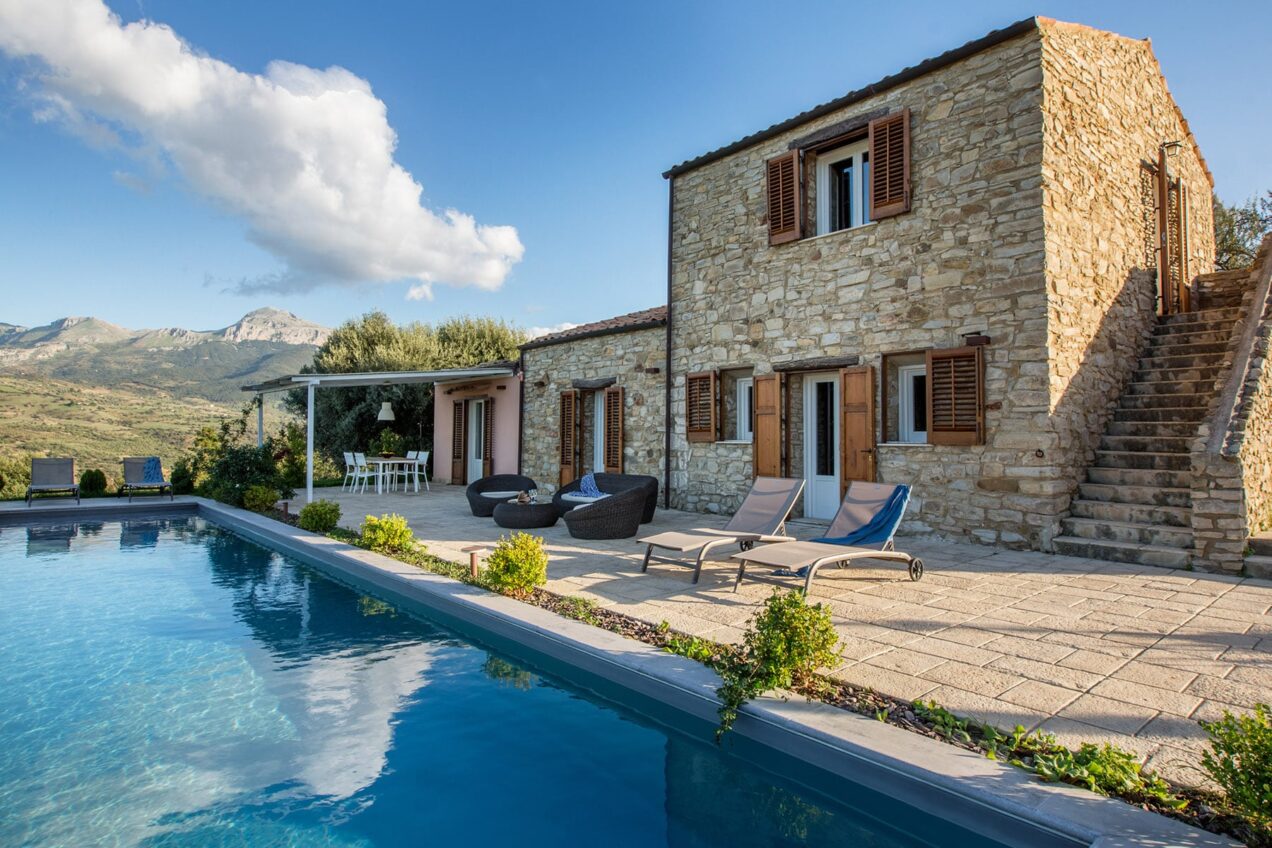
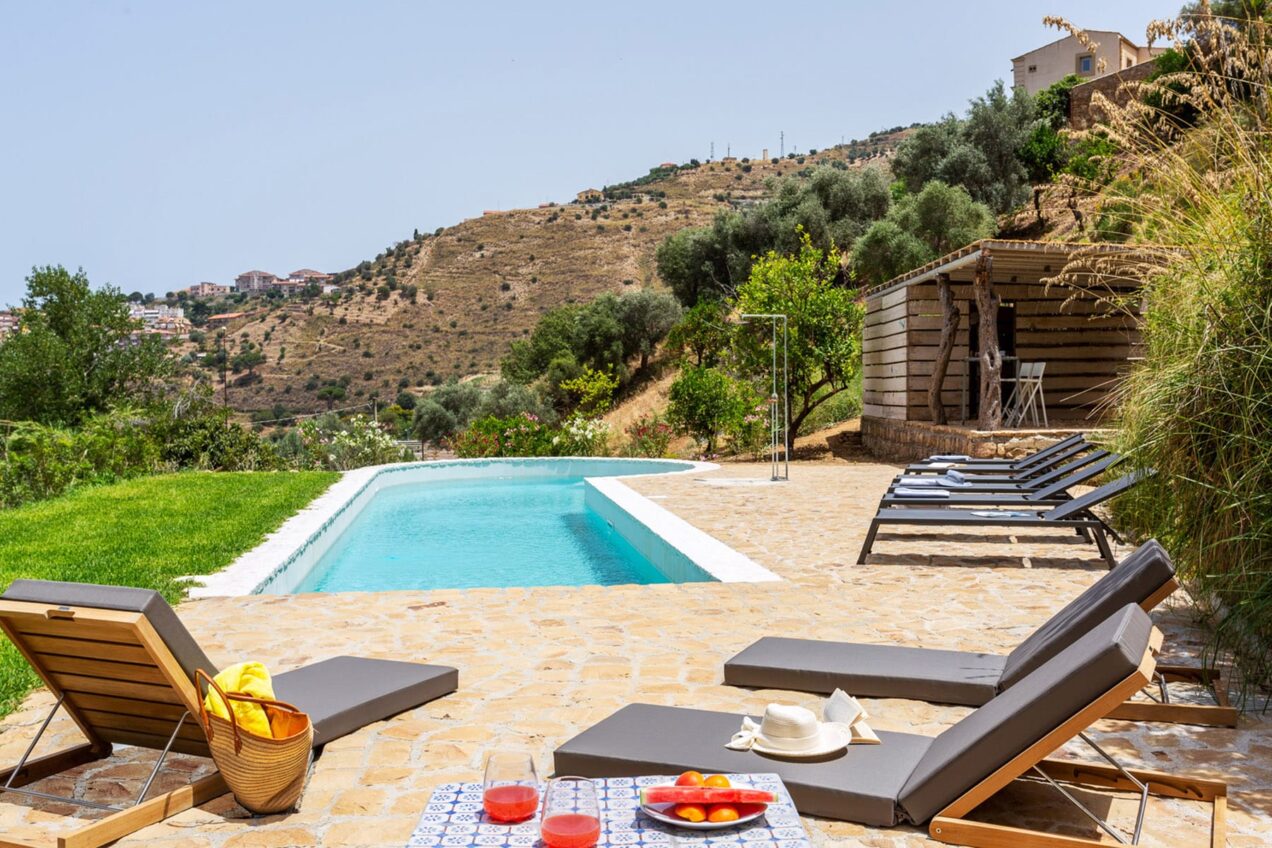
SopranoVillas’ Cefalù portfolio includes seafront properties with direct beach access or sea views, hillside villas with pool and panoramic terrace, and rural estate properties in the Madonie foothills that combine landscape character with easy access to the coast. We advise that July and August bookings are secured 6–9 months in advance for the best properties; September availability is better but premium properties still fill 3–4 months ahead. Our team can advise on which properties are best positioned for the specific combination of beach, culture and mountain access you require, arrange private chef introductions with Sicilian culinary expertise, and coordinate transfers from Palermo airport or Cefalù station.
Get in touch with us. Tell us dates, guests, and style — we’ll help you find the most suitable villas for your trip to Cefalù.
Ask our concierge