




Attraction
Abbey of Sant’Antimo
A Romanesque abbey set among olive groves and vineyards in the Val d’Orcia.
Attraction
A Romanesque abbey set among olive groves and vineyards in the Val d’Orcia.
Attraction
A historic Apennine mountain resort with seasonal skiing, forests and highland villages.
Attraction
A championship golf course set among wooded Umbrian hills beneath a medieval castle.
Attraction
A historic spa town spread along the Lima valley in the hills north of Lucca.
Attraction
A medieval Tuscan hill town overlooking the celebrated landscapes of the Val d’Orcia.
Attraction
A privately managed medieval castle estate in the countryside east of Siena.
Attraction
A compact Tuscan village beneath Monte Cetona, close to important prehistoric sites.
Attraction
A golf course set among the gentle Umbrian hills near Lake Trasimeno.
Attraction
A monumental Umbrian hill town of medieval palaces, stone streets and enduring civic traditions.
Attraction
A broad Umbrian lake surrounded by islands, historic towns and gentle countryside.
Attraction
A walled medieval town among olive groves and vineyards in the Tuscan Maremma.
Attraction
A medieval Maremma town overlooking the countryside between Saturnia and the Tuscan coast.
Attraction
A Renaissance hill town renowned for Vino Nobile and panoramic views across southern Tuscany.
Attraction
A small Sienese village enclosed by a complete medieval ring of walls and towers.
Attraction
An extinct volcanic mountain covered by beech and chestnut forests in southern Tuscany.
Attraction
Umbria’s regional capital, rich in Etruscan remains, medieval streets and important art collections.
Attraction
Tuscany’s busiest airport, connected directly with Pisa Centrale by the PisaMover.
Attraction
A striking hill town built on volcanic tuff, with a historic Jewish quarter and nearby Vie Cave.
Attraction
A dramatic tuff-built town of fortifications, steep lanes and ancient rock-cut routes.
Attraction
A compact medieval village beside an important landscape of Etruscan tombs and rock-cut roads.
Attraction
A fortified harbour village overlooking the Maremma coast and the Gulf of Argentario.
Attraction
A quiet mountain village surrounded by springs, woodland and the upper slopes of Monte Amiata.
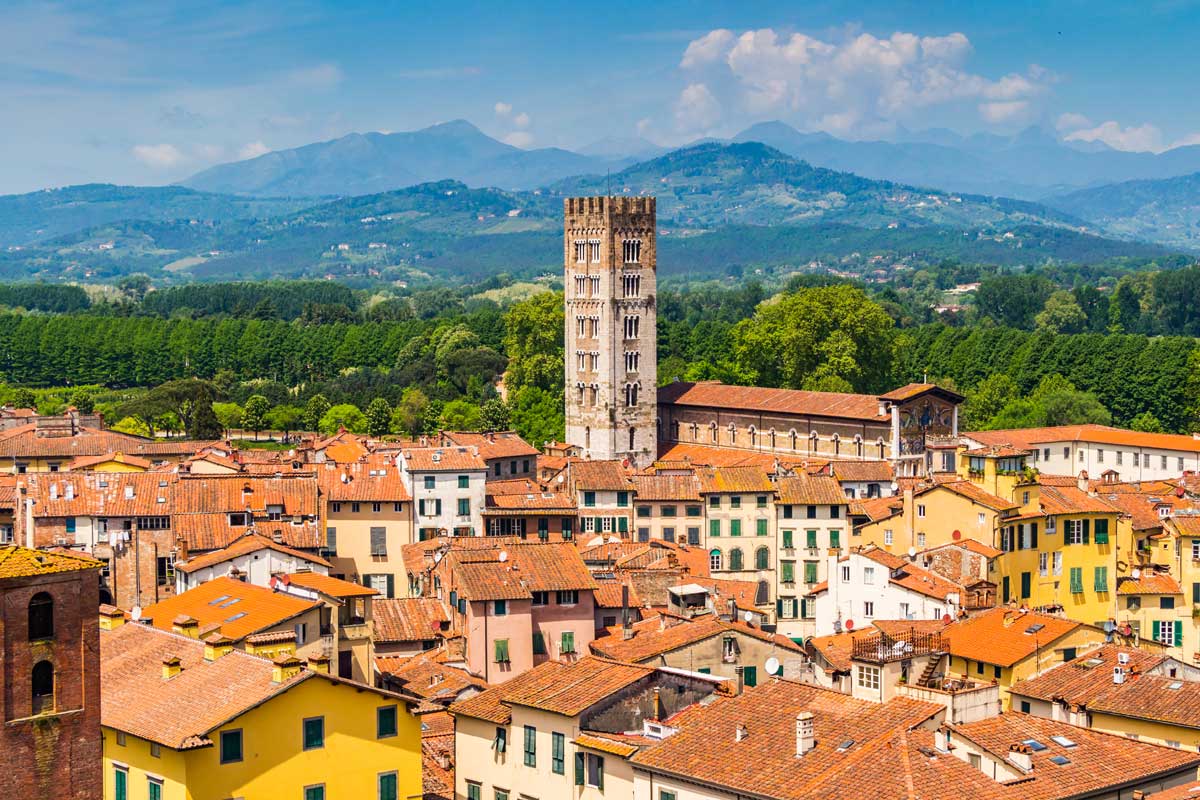
The walled Renaissance city and its surrounding hills — a refined, understated corner of Tuscany where cycling, opera and excellent cooking take precedence over tourism.
Lucca is one of Tuscany’s best-kept secrets: a perfectly preserved Renaissance city whose 16th-century walls — wide enough on top to carry a tree-lined promenade and a cycling track — still encircle the entire historic centre. Unlike Florence or Siena, Lucca has never been overwhelmed by mass tourism; its streets remain genuinely inhabited, its markets and restaurants oriented towards local life rather than visitor consumption. The city produced Puccini, and opera is woven into its identity — the summer outdoor concerts in the piazzas and the annual Puccini Festival at Torre del Lago maintain a musical culture that is both serious and accessible.
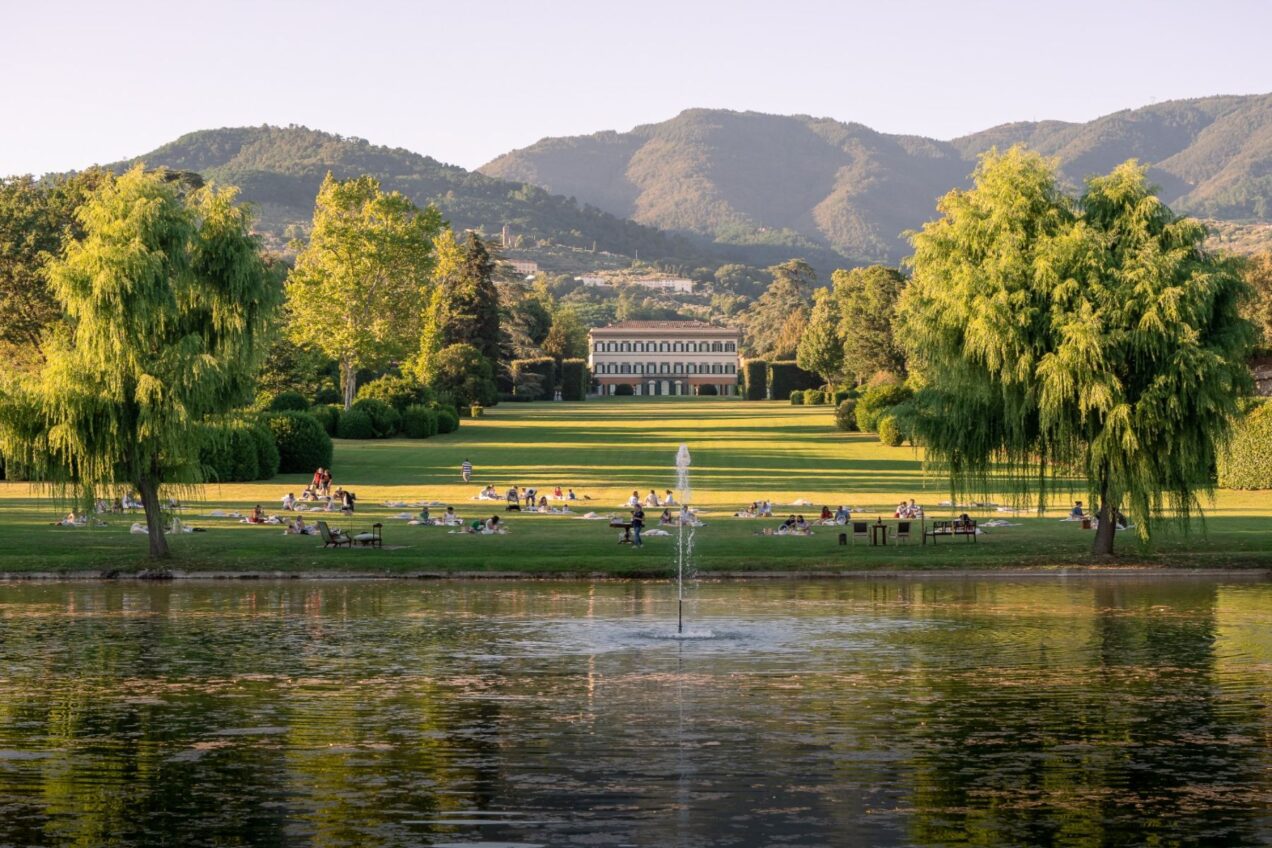
The surrounding hills — the Lucchesia — are some of the most beautiful and least-visited in Tuscany. Olive groves and vines cover the slopes of the Garfagnana and the Apuan Alps to the north; the Villa Reale at Marlia, the Villa Torrigiani and the Villa Mansi are among the finest Baroque garden estates in Italy, open for visits by appointment. Villa guests based in the Lucca hills have access to the city’s exceptional food culture (the local buttery olive oil, the farro grain from the Garfagnana, the lardo di Colonnata from the marble quarry villages of Carrara), the beaches of Viareggio and Forte dei Marmi 20 km west, and the full breadth of northern Tuscany within an easy day’s drive.
The Lucca hills and the city itself are genuinely rewarding year-round, but two periods stand out. April through June brings the Lucchesia to its most vivid: the olive groves are bright green, the villas’ garden estates are in bloom, and the temperatures (16–24 °C) are ideal for cycling the city walls, walking the hill roads and visiting the Baroque gardens at their seasonal peak. June evenings are long and warm, and the city’s outdoor restaurants and piazzas come to life in the way that only Italian cities can.
September and October are arguably even better. The olive harvest begins in late October, the surrounding hills take on autumn colour, and the Lucca Comics & Games festival in late October–early November transforms the city into one of the largest popular culture events in Europe — worth attending as a spectacle even for non-enthusiasts. The Puccini Festival at Torre del Lago on the coast runs through July and August, bringing world-class opera productions to an outdoor lakeside theatre that is genuinely special. Summer is hot but moderated by the sea breeze from the Versilia coast (20 km west); winter is mild and uncrowded, ideal for those who want the city’s restaurants and monuments entirely to themselves.
Lucca is exceptionally well connected by rail — the city has its own station on the Florence–Pisa line, with fast connections to both cities (Florence: 80 minutes, Pisa: 25 minutes). Pisa International (PSA), 20 km south, is the primary airport for the Lucca area with extensive European connections and some transatlantic services via Rome or London. Florence Peretola (FLR) is 80 km east — about 60 minutes by car via the A11 motorway, which runs directly between the two cities through the heart of the Lucchesia wine and olive zone. For guests arriving from Rome, the A1 and A11 combination places Lucca about 3 hours south of the capital.
The city itself is compact and best explored on foot or by bicycle — the 4 km circuit of the Renaissance walls on hired bikes is an essential introduction. The surrounding hills require a car: the Villa Reale at Marlia, the Villa Torrigiani and the Colline Lucchesi wine estates are all on minor roads through the olive groves north and east of the city. The Garfagnana mountain valley to the north (40 km) and the Versilia coast to the west (20 km at Viareggio, 30 km at Forte dei Marmi) are both easily reachable by car. Florence and Siena are within 60–90 minutes respectively.
The Renaissance walls of Lucca — 4.2 km of bastioned ramparts completed in 1650, now a tree-lined promenade and cycling path — are the city’s defining feature and the best possible introduction. The historic centre within is extraordinarily dense: the Piazza dell’Anfiteatro traces the oval of a Roman amphitheatre whose stones were incorporated into the medieval buildings surrounding it; the Duomo di San Martino contains the mysterious Volto Santo (a dark wooden crucifix of Byzantine origin, the subject of centuries of Lucchese devotion) and the exquisite Ilaria del Carretto tomb by Jacopo della Quercia. The Casa Natale di Puccini — the composer’s birthplace on Via di Poggio — is a small but moving museum in the rooms where Giacomo Puccini was born in 1858.
In the surrounding hills, the Villa Reale di Marlia (formerly a Napoleonic residence, with one of the finest Italian gardens in Tuscany) and the Villa Torrigiani at Camigliano (with a spectacular 17th-century baroque garden and bosco) are both open for guided visits. The Colline Lucchesi DOC wine estates — particularly the Tenuta di Valgiano and Macea — receive private visits and combine excellent wine with estate lunches in countryside of exceptional beauty. The marble quarry villages of Carrara and Colonnata (45 km north) are a remarkable industrial and gastronomic excursion: the quarries that supplied Michelangelo are still working, and the lardo di Colonnata — pork fat cured in marble vats with rosemary and sea salt — is one of Italy’s great forgotten delicacies.
Lucca’s food culture is among the most quietly distinguished in Tuscany. The defining local product is extra virgin olive oil — the Lucchesia produces one of Italy’s finest, from Frantoio and Leccino trees on hillside estates, with a delicate, buttery character quite different from the peppery oils of central Tuscany. The November pressing is a significant event; several estates welcome guests during the molitura to taste the oil directly from the press. The farro della Garfagnana IGP — a spelt grain grown in the mountain valley north of the city — produces exceptional soups and grain salads that appear on every serious restaurant menu in autumn.
The Colline Lucchesi DOC produces both red (Sangiovese-based) and white (Vermentino, Greco) wines from estates in the hills north-east of the city; Tenuta di Valgiano is the most celebrated producer, making wines of genuine complexity and international recognition. The Vernaccia di San Gimignano DOCG is accessible within 60 km. At table, Lucca’s restaurants are technically accomplished and ingredient-focused: tordelli lucchesi (pasta parcels filled with meat and cheese, a local speciality quite different from Florentine tortelli), slow-cooked bean soups, grilled meats with local olive oil and the extraordinary bakeries producing buccellato — a sweet anise bread unique to Lucca that has been made in the same style for 500 years.
How does Lucca compare to Florence as a Tuscany base?
Lucca is smaller, quieter and more authentically liveable than Florence, with none of the museological pressure that Florence’s extraordinary concentration of art can impose. It is better suited to guests who want to experience a real Italian city at a relaxed pace — excellent food, walkable streets, a manageable scale — rather than as a cultural endurance exercise. Florence is easily reached for a day visit (80 minutes by train or car), so guests based in Lucca are not missing the Uffizi or the Accademia; they are simply not based in them.
Is the Lucca area good for cycling?
Exceptionally so. The city walls circuit is an ideal starting point; beyond the walls, the flat Lucchesia plain between the city and the coast is perfect for road cycling, and the Garfagnana valley provides challenging mountain routes for more serious riders. Bike hire is available throughout the city; guided cycling excursions to the villa gardens and wine estates in the surrounding hills can be arranged through our concierge team.
Can we combine Lucca with the Versilia Riviera?
Easily — Forte dei Marmi and Viareggio are 25–30 minutes west by car, making a dual stay (or daily beach excursions from a Lucca hills villa) entirely practical. Forte dei Marmi in particular has a sophisticated beach resort culture — private beach clubs, excellent seafood restaurants, and a discreet clientele of Milanese and Florentine families — that pairs well with the cultural depth of the Lucca hinterland.
Get in touch with us. Tell us dates, guests, and style — we’ll help you find and the most suitable villas for your trip to Lucca.
Ask our concierge