




Attraction
Alagna Valsesia Ski Resort
A Walser mountain village with direct access to the high-altitude Monterosa ski area.
Attraction
A Walser mountain village with direct access to the high-altitude Monterosa ski area.
Attraction
A Piedmontese city known for medieval towers, Baroque streets and long-established wine traditions.
Attraction
An Alpine lake of elegant waterfront towns, gardens and the Borromean Islands.
Attraction
A historic golf course in the wooded hills above Lake Como.
Attraction
A car-free Alpine resort beneath the Matterhorn, renowned for skiing and mountain scenery.
The Matterhorn at Your Doorstep – Europe’s Greatest Alpine Village, Car-Free, Magnificent and Built for Those Who Accept Nothing Less
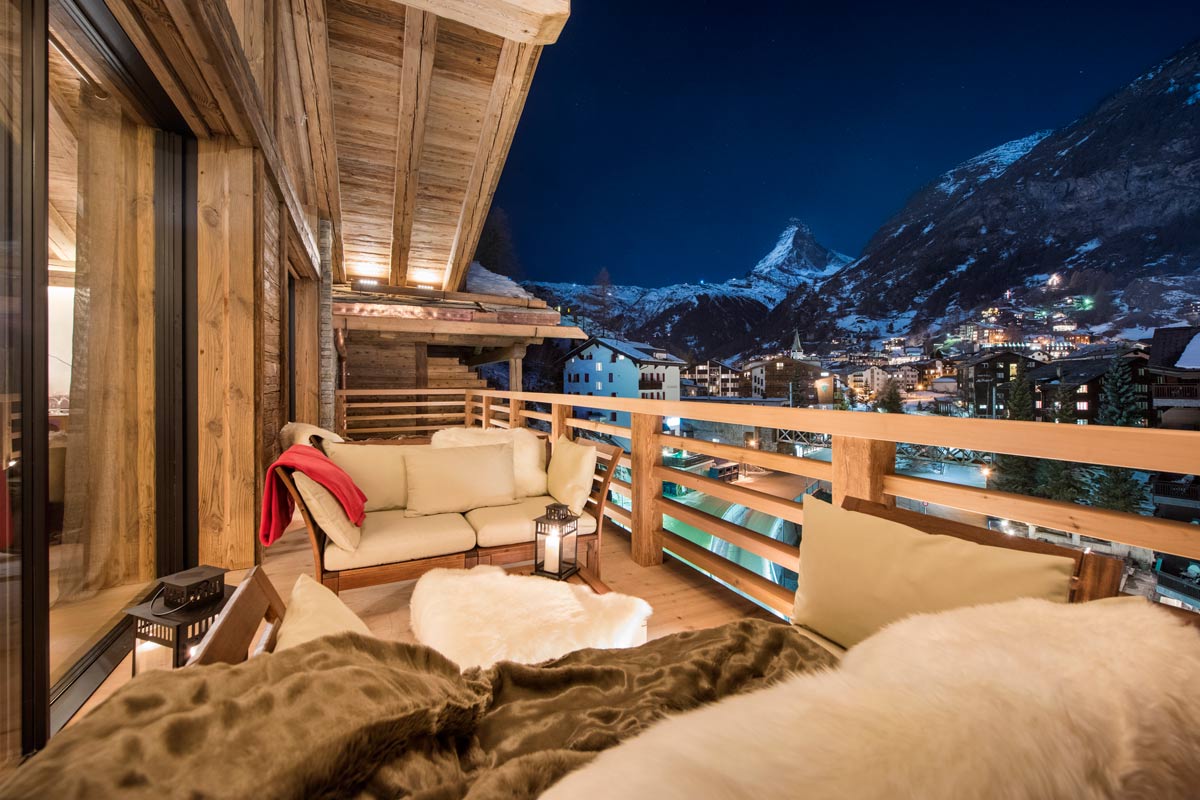
Zermatt occupies a singular position in the Alpine world: a car-free village at 1,620 metres, entirely encircled by peaks above 4,000 metres, presided over by the most photographed mountain on earth. The Matterhorn’s near-perfect pyramid dominates every sightline – from bedroom windows, from terrace daybeds, from the glass panorama carriages of the Gornergrat Railway. Zermatt has been drawing climbers, royals and discerning travellers since the 1860s, and it wears that heritage with quiet assurance. The stone and larch chalets have barely changed in silhouette; what lies inside them has changed entirely, evolving into one of Europe’s most sophisticated concentrations of fine dining, private wellness and bespoke service.
A luxury villa or chalet in Zermatt puts you inside that rarefied world rather than adjacent to it. Slope-side properties with direct ski-in access, panoramic terraces oriented precisely toward the Matterhorn’s north face, private saunas and outdoor hot tubs steaming against sub-zero nights – these are the hallmarks of a serious Zermatt stay. In summer the same terraces survey a landscape of wildflower meadows, glaciers and three-country viewpoints; the ski infrastructure quietly transforms into one of the finest trail networks in the Alps. Whether the goal is a week of 4,000-metre summits, helicopter skiing on the Monte Rosa massif or simply waking every morning to an improbable view over an espresso prepared by your private chef, Zermatt performs at the highest level for guests who have done everywhere else.
Zermatt operates year-round, and the rhythm of the seasons shapes the experience profoundly. Understanding what each period delivers allows you to match the destination to your precise ambitions – whether that means first tracks on freshly groomed pistes, wildflower meadows at altitude or the relative serenity of the shoulder months.
Zermatt’s winter season runs from late November through to late April, with the most reliable snow conditions occurring from Christmas through to March. The Klein Matterhorn glacier ensures skiing at 3,883 metres throughout the season, and on the right day – clear sky, fresh fall overnight – the experience of descending 2,200 vertical metres back to the village is genuinely matchless in the Alps. Christmas and New Year bring the highest concentration of guests and corresponding premium on villa availability; February half-term is similarly pressured. For those with flexibility, early January (between New Year and the first school holidays) and late March offer exceptional snow combined with noticeably thinner crowds on the lifts. April skiing on the glacier under spring sun, in shirt sleeves with a 360-degree panorama, is one of the Alps’ great pleasures.
May and early June mark the transition period when the main ski lifts have closed and the hiking infrastructure has not yet fully opened. The village is quietest, prices are at their lowest, and the Gorner Gorge and lower valley walks are exceptional as snowmelt swells the streams and the first wildflowers appear. Some of the finest alpine restaurants operate on reduced hours or close entirely; factor this into planning if dining is a priority.
Zermatt’s summer identity is increasingly celebrated by those who’ve grown tired of coastal crowds. From late June the Matterhorn Glacier Paradise and Sunnegga Express open for hikers and trail runners; the Five Lakes Walk (Fünf-Seen-Wanderung) – passing five mountain lakes each reflecting the Matterhorn from a different angle – is consistently rated among Europe’s most beautiful day hikes. July and August bring reliably warm days and cool nights; the village’s restaurant terraces are busy but never overwhelming in the way that coastal resorts become. The Zermatt Unplugged music festival in April and the Zermatt Marathon in late June attract specific audiences; both fill the best properties rapidly.
October is underrated: the larch forests turn gold and amber above the treeline, the glacier skiing reopens on the Klein Matterhorn (typically from mid-October), and the village transitions to its winter preparations with a calm energy that appeals to those who have visited in peak season. November is the quietest month and best suited to guests whose primary objective is the landscape itself, unmediated by crowds.
Zermatt averages roughly 300 sunny days per year, one of the highest figures in the Alps – a consequence of its position in the rain shadow of the main Alpine chain. That said, afternoon thunderstorms are common in summer; most serious hiking itineraries start early and aim to be back below 3,000 metres by early afternoon. For ski weeks, booking accommodation with a live webcam view of the Matterhorn north face allows real-time monitoring of conditions. Your villa concierge will typically have access to the same mountain guides and ski instructors used by the village’s most regular guests; advance booking for these services is essential in high season.
Zermatt’s car-free status defines arrival and movement within the village. The prohibition is absolute: private vehicles must be left at Täsch, 5 km down the valley, where the Matterhorn Terminal provides secure indoor parking and the Matterhorn Gotthard Bahn shuttle train runs to Zermatt every 20 minutes. Understanding the logistics before arrival prevents friction; for guests at the luxury end, private transfer services remove almost all of it.
The nearest international airport is Geneva (GVA), 225 km to the west, with direct rail connections via the Swiss rail network (approximately 3 hours 40 minutes including one change at Visp or Brig). Zurich (ZRH), 3 hours 30 minutes by rail, is the preferred hub for long-haul arrivals given its superior intercontinental connections. Basel (BSL/EAP) serves as a secondary option with slightly longer rail travel time. For guests travelling on private aviation, Sion Airport (SIR), 50 km from Zermatt, accommodates aircraft up to business-jet size and reduces ground transfer to under an hour; a dedicated fixed-base operator provides standard private terminal services. Some operators also use Saanen/Gstaad Airport for charters with flexible scheduling.
Air Zermatt operates one of the most capable mountain helicopter services in Europe. Direct helicopter transfers from Geneva Airport, Zurich, or any suitable landing point in Switzerland are available on demand; the Zermatt helipad is located adjacent to the railway station. For villa guests, a helicopter arrival over the Matterhorn massif – touching down after flying up the Matter Valley at close range – constitutes an arrival experience without equivalent in European mountain travel. Air Zermatt also offers private mountain flights, glacier landings on the Monte Rosa and rescue-certified mountain excursions; your villa management will arrange these seamlessly.
The Swiss Federal Railways (SBB) route from Geneva Cornavin to Zermatt runs via Visp and requires a single change; the journey takes approximately 3 hours 40 minutes. First-class panorama carriages are available on many services; the Glacier Express (Zermatt to St Moritz) passes through and offers one of the most celebrated train journeys in Europe for guests wishing to combine destinations. From Zurich Hauptbahnhof, the route runs via Bern and Visp in approximately 3 hours 30 minutes. The Matterhorn Gotthard Bahn operates the final section from Visp or Brig to Zermatt. SBB offers private train charters for groups; enquire through dedicated business travel channels.
Within the village, movement is by foot, electric taxi (small battery-powered vehicles operated by hotels and taxi services), electric golf carts or horse-drawn carriage. The village is compact: most villa properties are within 10–15 minutes’ walk of the main lift departures. For properties further from the centre or for guests with limited mobility, villa management typically arranges electric taxi service as a standard inclusion. The ski lift infrastructure – seven cable cars, numerous gondolas, over 360 km of marked runs – is accessed via the Zermatt Card, which your villa manager will arrange and which covers all public electric transport within the village as well as lifts across the ski area. E-bikes and mountain bikes are available for hire from multiple points in the village for summer use.
Heavy ski bags and luggage are handled through a dedicated luggage transfer service (Gepäcktransport) coordinated with Zermatt Bahnhof. If arriving by rail, bags can be checked through from Geneva or Zurich airports directly to Zermatt station via the Swiss baggage forwarding system (Fly Rail Baggage). Villa management will collect from the station and deliver to the property; departure morning collection is equally seamless. For helicopter arrivals, luggage capacity is defined by aircraft type; villa management will advise on specific limits when coordinating your transfer.
Zermatt’s activity calendar is structured around the mountain at every season. The Matterhorn is not merely backdrop; it is participant – the objective of guided climbs, the subject of morning observation through a villa telescope, the feature that orients every walk and every terrace. Beyond the peak, the surrounding massif encompasses 38 mountains above 4,000 metres, making this the densest concentration of high Alpine terrain in the world. The agenda for a serious week here is rarely in doubt.
The Zermatt ski area – shared with Cervinia in Italy through a linked system via the Klein Matterhorn – is the highest and one of the largest in the Alps: 360 km of marked runs across three distinct sectors (Rothorn, Sunnegga-Blauherd and Klein Matterhorn). Heliskiing on the Monte Rosa massif, guided off-piste touring on the Haute Route between Chamonix and Zermatt, and private instruction from elite UIAGM-certified guides are all accessible through connections that villa management can establish in advance. The Matterhorn Ski Safari – a full-day guided traverse of the entire ski area – is a fixture for serious skiers on their first visit.
The Zermatt Alpine Center houses one of the most experienced guide offices in Europe. The Matterhorn – Hörnligrat (Northeast Ridge) – is the classic objective for clients with appropriate alpine experience; the ascent requires a minimum of two days, including an overnight at the Hörnli Hut at 3,260 metres, and is typically booked months in advance during the peak summer season (July–August). Other 4,000-metre objectives – the Breithorn (the most accessible), Monte Rosa, Dom and Weisshorn – are matched to client fitness and technical experience. Your villa management can coordinate guide introductions; the best guides maintain client relationships over years.
Over 400 km of marked hiking trails open from late June, ranging from valley-floor thermal spa walks to demanding ridge traverses. The Five Lakes Walk (Fünf-Seen-Wanderung) from Sunnegga down to Zermatt via the Stellisee, Grindjisee, Grünsee, Moosjisee and Leisee is the classic day hike: approximately 9 km, 600 m descent, with five different Matterhorn reflections. The Gorner Gorge (Gornergorge), carved by glacial meltwater, is a dramatic 45-minute walk accessible from early spring. The Europaweg – a two-day high-altitude trail between Zermatt and Grächen – is one of the finest multi-day routes in the Alps. Trail running has grown significantly in recent years; the UTML (Ultra Trail Tour du Matterhorn) in late August is one of Europe’s most prestigious trail running events.
Air Zermatt’s fleet operates private mountain flights year-round: glacier landings on the Theodul or Monte Rosa glaciers, high-altitude panorama circuits combining the Matterhorn, Monte Rosa and Weisshorn, and cross-border flights into the Aosta Valley for lunch in Cervinia before returning. For winter guests, private helicopter drops onto untracked terrain (with guide and avalanche safety equipment) represent the ultimate off-piste experience. These are subject to weather and permit constraints; villa management will coordinate with Air Zermatt and advise on lead times.
Zermatt’s village core preserves a remarkable number of historic mazots (elevated grain stores on stone mushroom supports) and traditional Walliser farmhouses alongside the modern hotel infrastructure. The Matterhorn Museum – Zermattium, built into the ground beneath the main square, tells the story of the mountain through artefacts from the first ascent in 1865. The English Church (dating to 1870) and the Mountaineers’ Cemetery, where the first Matterhorn climbers who perished on the descent are buried, carry a particular weight of Alpine history. For those who collect contemporary art, the Matterhorn Gallery in the village centre maintains a programme of exhibitions by Swiss and international artists through the main seasons.
For days when the mountain demands rest rather than effort, Zermatt’s luxury hotel spas (several accessible to villa guests by arrangement) provide altitude-adapted thermal pools, high-pressure cryotherapy, deep-tissue sports massage and guided recovery programming calibrated to athletic guests. The village’s elevation means acclimatisation takes 24–36 hours; building a recovery day into the first two days of a ski or climbing week is consistently recommended by the guides who know this mountain best.
Zermatt’s dining scene is proportionally richer than its size would suggest: a village of fewer than 6,000 permanent residents supports multiple Michelin-starred restaurants, a constellation of ambitious alpine dining rooms, and a number of high-altitude restaurants that transform lunch into an event in their own right. The Swiss commitment to provenance – Valais wines, Raclette du Valais AOP, air-dried meats from the Matter Valley – gives the cuisine a specificity that earns the highest billing.
The Michelin constellation in Zermatt is anchored by a handful of restaurants operating at the summit of Swiss alpine cuisine. Restaurant Capri at The Omnia offers a contemporary European tasting menu in a room with panoramic Matterhorn views accessed by a tunnel through the rock from the village centre. Restaurant Prato Borni at the Grand Hotel Zermatterhof holds a Michelin star for its precise Italian-influenced alpine cooking. Chez Vrony at Findeln – a farmhouse restaurant above the village accessible by ski in winter and on foot in summer – is considered by many the finest table in Zermatt: seasonal Valais produce, impeccable wine list, and a terrace that places the Matterhorn at the far end of the table. Reservations at these restaurants should be secured before arrival, particularly in peak season.
Zermatt’s on-mountain dining infrastructure is among the most developed in the Alps. Olympia Stübli at the Gornergrat (3,100 m) and the Trockener Steg restaurants serve serious food at altitude; the Klein Matterhorn glacier restaurant at 3,883 m is the highest in Europe. For a private lunch experience, villa management can arrange a dedicated mountain guide to escort your group to Fluhalp or Findeln via ski or snowshoe, securing a table away from the main ski traffic, with a wine selection curated in advance. In summer, the terraces at Sunnegga and Riffelalp (accessible by rack railway) offer Matterhorn views alongside serious Valais-accented menus.
The Valais is Switzerland’s largest wine-producing canton and arguably its finest: the terraced south-facing slopes along the Rhône Valley between Martigny and Visp produce Fendant (Chasselas), Johannisberg (Sylvaner), Humagne Rouge, Cornalin and the powerful Heida, a white grape grown at altitudes above 1,000 metres that has no precise equivalent elsewhere. Swiss wine exports at minimal volume; the best Valais producers – Marie-Thérèse Chappaz (biodynamic, international acclaim), Didier Joris, Jean-René Germanier – are best encountered in Zermatt’s wine-serious restaurants rather than sought in export markets. Raclette du Valais AOP, produced from the milk of cows grazing the high Alpine pastures, and the intense dried meats (Walliser Trockenfleisch) belong on every table. Your villa’s private chef can incorporate a Valais cheese and charcuterie board as a signature element of any dinner; most have established supplier relationships that access the finest artisan producers.
For guests preferring the privacy and rhythm of a chef-catered villa, Zermatt’s supplier ecosystem fully supports an exceptional in-villa programme. Fresh produce arrives daily from the valley market combined with artisan mountain products: chestnut honey from Val d’Anniviers, single-origin chocolate from Villars or Camille Bloch, organic dairy from Valais cooperatives. A skilled private chef will design a week’s menu around the mountain schedule – early alpine breakfasts, energy-dense packed lunches for summit days, elaborate shared dinners with the fireplace lit and wine from the villa cellar. Villa management can source the chef, arrange provisioning, and coordinate with the sommelier for wine pairing if desired. For special occasions, arranging a Raclette evening with a traditional Raclette au feu de bois (over an open wood fire) rather than the table-top electric versions found in restaurants is a signature Zermatt hospitality gesture.
Zermatt’s après-ski has calibrated significantly upward in recent years. The Brown Cow Pub and Papperla Pub handle the boisterous end of the spectrum; the Vernissage Bar at the Backstage Hotel and the Cervo Mountain Bar operate at a more considered register. The Igloo Bar above the village – literally carved from ice and snow, rebuilt each winter – is a theatrical experience worth the gondola journey up. For villa guests who prefer a private close to the ski day, the villa terrace with a hot tub, a bottle of vintage Champagne and the Matterhorn flushing pink in the alpenglow is consistently the most memorable of all options.
Yes, absolutely. Private motor vehicles are prohibited within Zermatt village; the prohibition has been in place since 1946. The nearest parking is at Täsch, 5 km down the valley, where the Matterhorn Terminal provides secure multi-storey covered parking with direct access to the shuttle train. The shuttle (Matterhorn Gotthard Bahn) runs every 20 minutes from early morning until late evening and the journey takes 12 minutes. For villa guests arriving by private car, villa management will arrange an electric taxi to meet you at Zermatt station and transport luggage to the property. Within the village, all movement is by foot, electric taxi or horse-drawn carriage.
Helicopter transfer from Geneva or Zurich airport directly to the Zermatt helipad is the most dramatically appropriate arrival and requires no intermediate ground transport. For those arriving by private jet into Sion Airport (50 km), the road transfer to Täsch takes approximately 45 minutes followed by the shuttle train. For those on commercial flights, the Swiss Federal Railways first-class service from Geneva or Zurich is genuinely excellent and the panoramic views on the Matterhorn Gotthard Bahn section from Visp are worthy of the journey in themselves. Villa management will coordinate whichever combination of transfers suits your schedule and luggage volume.
No. Zermatt is one of the most internationally experienced resort villages in the Alps; English is spoken fluently in all restaurants, ski hire shops, lift offices, hotel concierge desks and guide offices. The local language is Wallisertiitsch (a Swiss German dialect), and the administrative language is German, but English is entirely sufficient for all day-to-day interactions. French is appreciated at the handful of restaurants with Romand-influenced wine programmes. Italian is useful if you ski across to Cervinia.
The village sits at 1,620 metres, which is well within the range tolerated comfortably by most healthy adults. Altitude-related fatigue or mild headaches on arrival are occasional rather than routine at this elevation. The ski area rises to 3,883 metres at the Klein Matterhorn; guests who are not acclimatised to high altitude should ascend progressively over the first day or two rather than heading immediately to the glacier. The guides at the Zermatt Alpine Center are experienced in advising clients on acclimatisation protocols for mountaineering objectives above 4,000 metres. Villa management can liaise with the local medical practice if any guest requires altitude-specific medical advice during the stay.
SopranoVillas’ Zermatt portfolio comprises private chalets and luxury apartments selected for exceptional Matterhorn views, direct slope access where available, and the quality of private facilities including saunas, outdoor hot tubs, private wine cellars and fully equipped kitchen infrastructure for private chef use. Most properties are managed by dedicated chalet management companies with year-round caretaker presence; this means that the villa is fully heated, provisioned and operational on arrival. We recommend securing your preferred dates 6–12 months in advance for peak Christmas, New Year and February half-term periods; summer bookings have grown significantly in recent years and popular properties are now filling 4–6 months out. Our team has direct relationships with the key villa managers in the resort and can advise on which properties offer the best value at specific dates, negotiate flexible booking conditions and coordinate all pre-arrival services from airport transfers to grocery provisioning and private chef placement.
Get in touch with us. Tell us dates, guests, and style — we’ll help you find and the most suitable villas for your trip to Zermatt.
Ask our concierge