


Attraction
Capo Graziano Archaeological Site
A Bronze Age settlement on Filicudi that reveals the island’s earliest organised communities.
Attraction
A Bronze Age settlement on Filicudi that reveals the island’s earliest organised communities.
Attraction
A vibrant Sicilian city of lava-stone Baroque architecture, markets and views towards Mount Etna.
Attraction
A high inland Sicilian city crowned by a castle and overlooking the centre of the island.
Attraction
A Sicilian golf course in the countryside between the Madonie mountains and Cefalù.
Attraction
Palermo’s best-known seaside district, centred on a sandy bay beneath Monte Pellegrino.
Attraction
Europe’s most active volcano, offering lava landscapes, high-altitude routes and constantly changing conditions.
Attraction
Sicily’s main western airport and the principal air gateway for Palermo.
Attraction
The principal arrival point for Panarea, linking boats with the island’s main settlement.
Attraction
A vast historic park beneath Monte Pellegrino on the edge of Palermo.
Attraction
A small pebble beach and harbour in the village of Pecorini a Mare on Filicudi.
Attraction
A Sicilian hill town closely associated with the mosaics of the nearby Villa Romana del Casale.
Attraction
An abandoned historic settlement on Filicudi, reached through steep and isolated island terrain.
Italy’s Most Unspoiled Island Escape
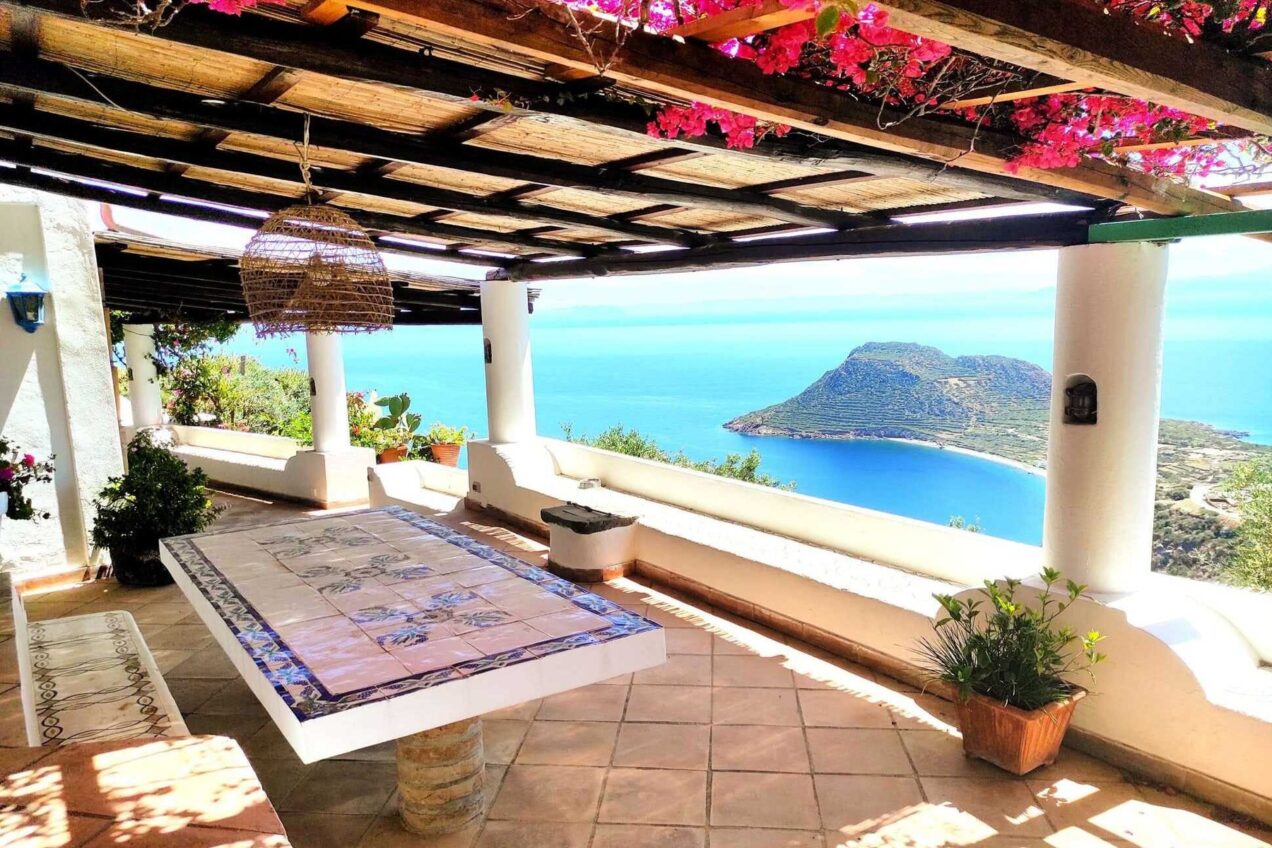
Filicudi is one of the seven Aeolian Islands and one of the least visited — by choice, not by accident. With no mass tourism, no traffic, and barely 300 permanent residents, it offers something increasingly rare in the Mediterranean: genuine quietness. Renting a villa on Filicudi means waking up to views of volcanic rock rising from turquoise sea, days spent snorkelling in waters so clear they feel unreal, and evenings eating fresh-caught fish at a table on the harbour. UNESCO declared the Aeolian Islands a World Heritage Site in 2000. Filicudi is their best-kept secret.
SopranoVillas offers a handpicked selection of villas on Filicudi — each personally verified, ranging from traditional stone houses to contemporary retreats with panoramic sea views. Whether you are seeking total solitude or a base for island-hopping across the Aeolian archipelago, there is a property here suited to your needs.
Filicudi is a summer destination at heart, but the window is longer than most visitors expect. Here is an honest breakdown by season.
The sea is warm, the island is quiet, and the light is extraordinary. June sees Filicudi before the summer crowd arrives; September is when it returns to near-solitude after August. Both months offer sea temperatures of 22–25°C, full ferry connections, and all restaurants open. These are the months that repeat visitors consistently choose.
The island reaches its peak population — still tiny by any measure — and the energy shifts noticeably. Ferries fill up, the handful of restaurants get busy, and villa prices are at their highest. That said, Filicudi in August is nothing like Capri or the Amalfi Coast: the transformation is relative. Book ferries and boat excursions in advance.
Warm enough to swim from mid-May, with the island almost entirely to yourself. Some smaller restaurants and boat operators open only from June, so check ahead. October brings dramatic skies and the sea at its warmest after a full summer of heat. Ideal for those who want true solitude and don’t mind limited services.
Filicudi in winter belongs to its 250 residents. Ferry connections reduce to a few per week. Most villas and restaurants close. Not recommended unless you specifically seek complete isolation and have confirmed your villa’s winter availability.
| Month | Avg. Temp | Sea Temp | Crowds | Vibe |
|---|---|---|---|---|
| May | 20°C / 68°F | 19°C | Very Low | Quiet, some services limited |
| June | 24°C / 75°F | 22°C | Low | Ideal — everything open, near-empty |
| July | 28°C / 82°F | 25°C | Medium | Lively, book ahead |
| August | 31°C / 88°F | 26°C | High (relative) | Peak — still calm vs mainland resorts |
| September | 27°C / 81°F | 25°C | Low | ⭐ Local favourite — warm sea, quiet island |
| October | 22°C / 72°F | 23°C | Very Low | Warm, atmospheric, very few visitors |
Filicudi requires a little planning to reach — and that is part of what keeps it unspoiled. There is no airport and no bridge. The only way in is by sea.
Milazzo, on the north-east coast of Sicily, is the main departure point for the Aeolian Islands. Liberty Lines hydrofoils reach Filicudi in approximately 2.5–3 hours, stopping at Vulcano, Lipari, and Salina en route. Siremar car ferries take around 4.5 hours. Both services run daily in summer, with reduced schedules from October to May. Check timetables carefully — Filicudi is not always the final stop and connections can be tight.
In July and August, Liberty Lines operates direct hydrofoil services from Naples and Palermo. Journey time from Naples is approximately 5–6 hours; from Palermo around 3 hours. These routes run seasonally — confirm dates before booking.
The most enjoyable approach. Many guests fly into Catania or Palermo, spend a night on Lipari or Salina, and continue to Filicudi by hydrofoil the following morning. This turns the transfer into the beginning of the holiday. Inter-island connections run frequently in summer.
Filicudi has no conventional road network. The main settlement, Filicudi Porto, is where the ferry docks. Steep paths connect to Val di Chiesa and Pecorini a Mare. Most movement is on foot or by scooter. Arrange luggage transfer with your villa host in advance if you are arriving with large bags.
Filicudi does not have a programme. There are no organised tour desks or excursion boards. What it has instead is a short but exceptional list of natural and historical experiences — and the rare gift of time to enjoy them properly.
Filicudi’s most celebrated natural feature: a sea cave on the island’s north-west coast, accessible only by boat. Inside, light refracts off the water to create extraordinary colour effects. Most boat operators offer excursions here as part of a half-day or full-day trip around the coastline. Book through your villa or directly at the port.
On the headland above Filicudi Porto sit the remains of a Bronze Age village dating to 1700–1400 BC — one of the earliest known settlements in the Aeolian Islands. The site is partially excavated and freely accessible. The walk up takes around 20 minutes and rewards with sweeping views of the archipelago. A small archaeological museum at the port displays finds from the site.
The volcanic seabed around Filicudi is among the finest dive sites in the Tyrrhenian Sea. Visibility routinely exceeds 30 metres and the marine life is abundant: grouper, barracuda, moray eels and dense sea fans at depth. There are accessible lava formations and, for experienced divers, a Roman-era wreck. A dive centre operates from the port in summer.
A dramatic volcanic rock spire rising 71 metres vertically from the sea off Filicudi’s south-western coast. Unmissable on any boat excursion — it photographs magnificently in the morning light.
A trail leads to the island’s highest point at 774 metres — a demanding climb through fern-covered volcanic terrain. On clear days, all seven Aeolian Islands are visible from the summit. Allow 3–4 hours for the round trip and start early to avoid the midday heat.
Eating on Filicudi is one of its quiet pleasures. There are no celebrity chefs and no printed wine lists. What there is: extraordinarily fresh fish, island-grown capers and tomatoes, and a handful of family-run restaurants where the kitchen decides the menu based on what arrived that morning.
Pesce alla ghiotta — the quintessential Aeolian preparation: white fish braised with olives, capers, cherry tomatoes and white wine. Every restaurant does a version; every version is slightly different.
Spaghetti ai ricci — sea urchin pasta. The waters around Filicudi produce excellent ricci from May to August. Rich, briny, and entirely unlike anything from a supermarket.
Insalata di mare — mixed seafood salad, often served as a starter with local capers and lemon. The Aeolian caper is considered among the finest in Italy — you will taste the difference.
La Sirena at Filicudi Porto is the island’s most established restaurant, with tables on a terrace above the harbour and a menu built entirely around the day’s catch. Pecorini a Mare has one or two seasonal spots with their feet practically in the water. Reservations are not always taken — arrive, ask, and be flexible.
Grocery options on the island are extremely limited — a small alimentari at the port covers basics. For a well-stocked villa kitchen, we recommend arranging a provisions delivery through our concierge: fresh fish, local vegetables, Sicilian wine, Aeolian capers and olive oil, delivered to your villa on arrival and mid-week if needed.
Filicudi rewards preparation. The following will help you arrive ready.
The island has no bank and a single seasonal ATM that is not always reliable. Bring sufficient cash from the mainland — for restaurants, boat excursions, and day-to-day expenses. Most villa payments are handled in advance, but island life runs on cash.
Mobile signal exists across most of the island (TIM and Vodafone tend to perform best). Wi-Fi is available at most villas but speeds are modest by mainland standards. Most guests find the limited connectivity a feature rather than a bug.
Filicudi is not suitable for guests with significant mobility restrictions. The terrain is volcanic and steep throughout — paths between the port, Val di Chiesa, and Pecorini a Mare involve prolonged climbing on uneven ground. Discuss this with us before booking if mobility is a concern.
Arriving with large rigid suitcases on an island with no roads is genuinely difficult. We strongly recommend soft bags or rucksacks for Filicudi. Arrange luggage transfer with your villa host before arrival — most can organise assistance for the uphill sections. Share your arrival ferry details when booking and we will coordinate this for you.
There is a seasonal medical post on the island in summer. For anything beyond minor issues, the nearest full medical facility is in Lipari (approx. 30 minutes by hydrofoil). Travel insurance covering medical evacuation is strongly recommended.
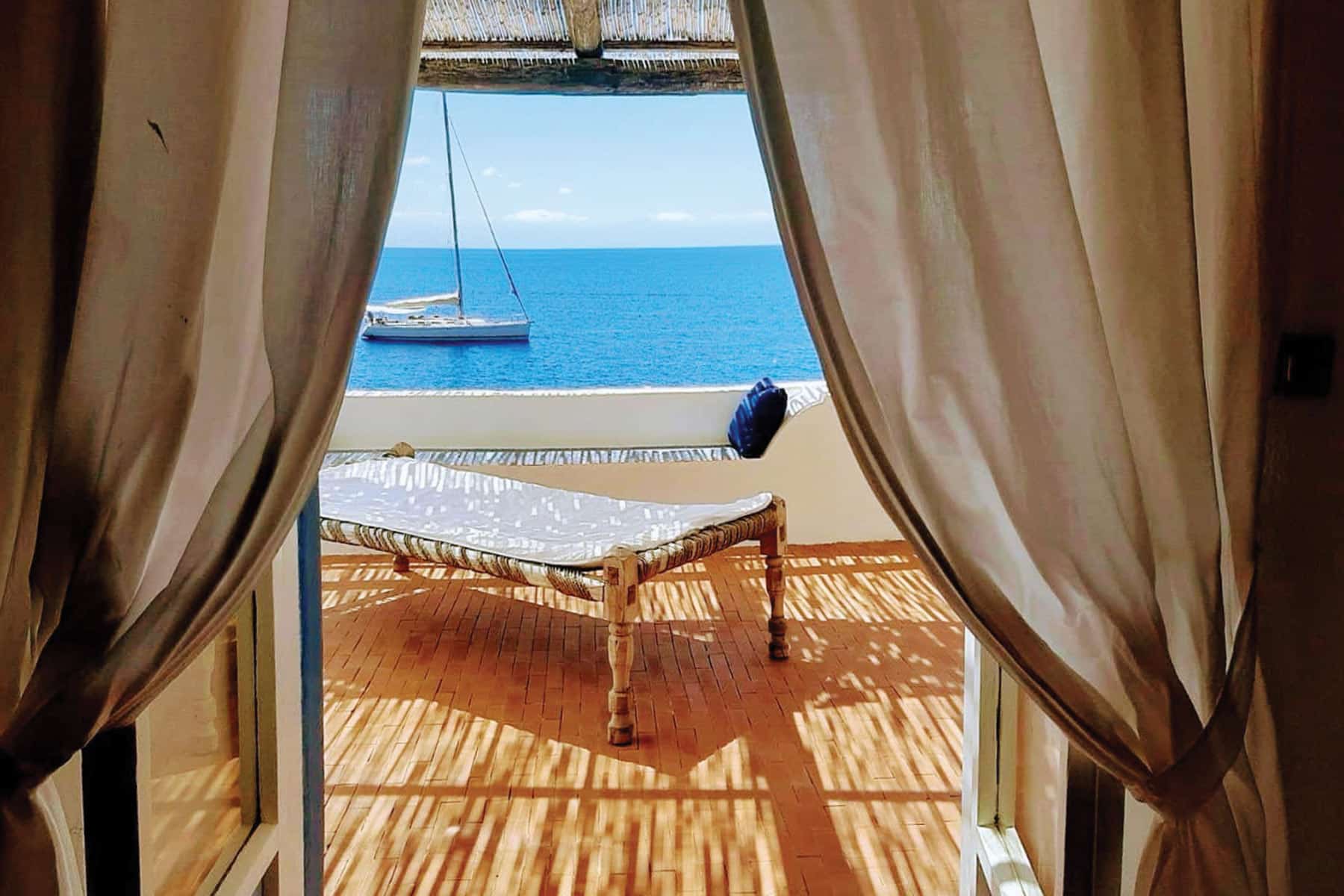
Get in touch with us. Tell us dates, guests, and style — we’ll help you find and the most suitable villas for your trip to Filicudi.
Ask our concierge